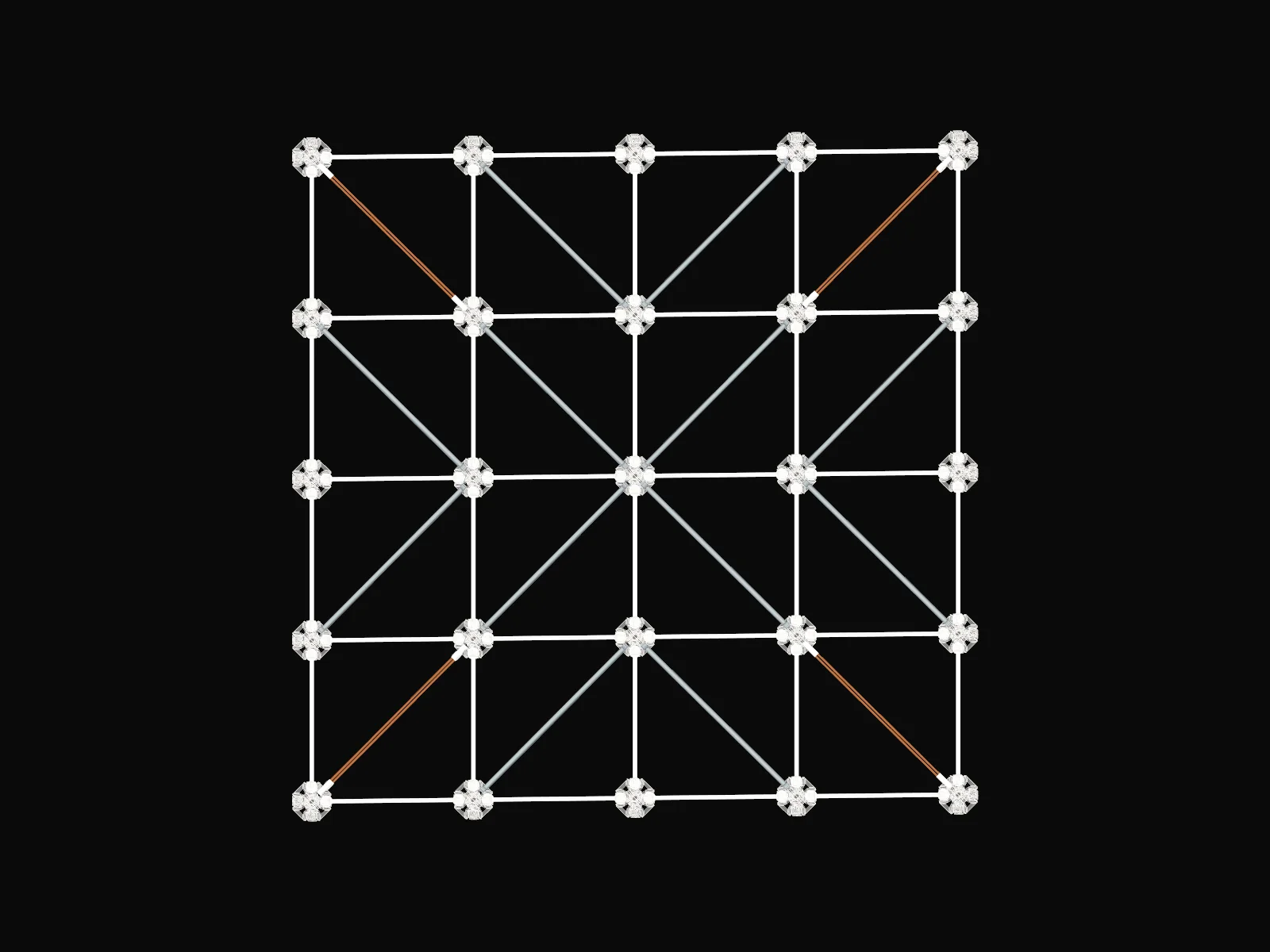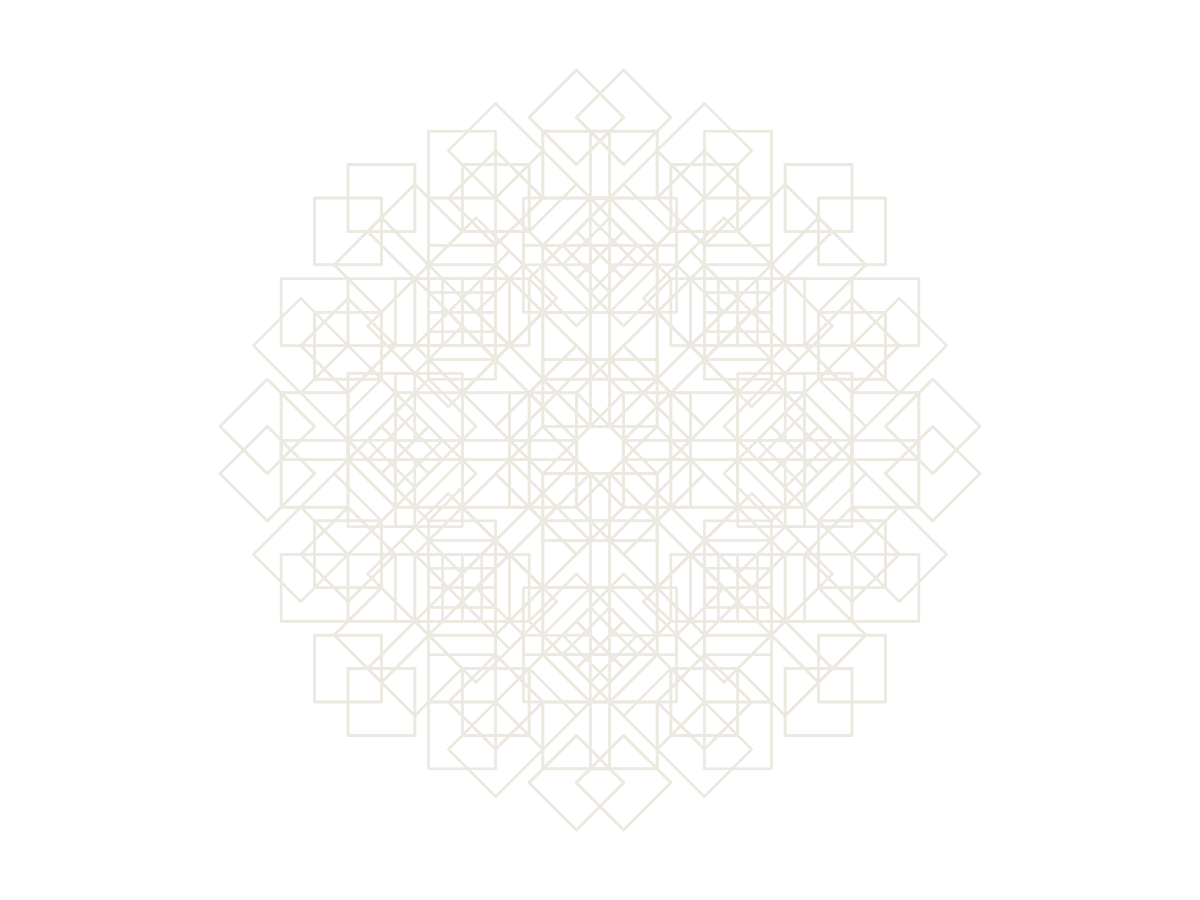
Patterns into space.
Gereh drawings, spatial studies and a folded dome model. The work moves between a flat pattern, raised geometry and pieces assembled by hand.
Make a muqarnas.
Start with a plan. Change its symmetry and tiers, then give the cells depth and curvature. The model, plan and section change together.
Drag to turn · scroll or pinch to zoom · select a tier in the plan
Nested outlines set the plan. Ordered connections divide the space between each pair of tiers into cells. Shared curves give neighbouring cells matching edges.
A new generative surface study, adapted from the layer-line method by Hamekasi, Samavati and Nasri. It explores muqarnas geometry; it is not a reconstruction of a particular building or a fabrication-ready model.
Read the geometric method ↗A drawing moves into space.
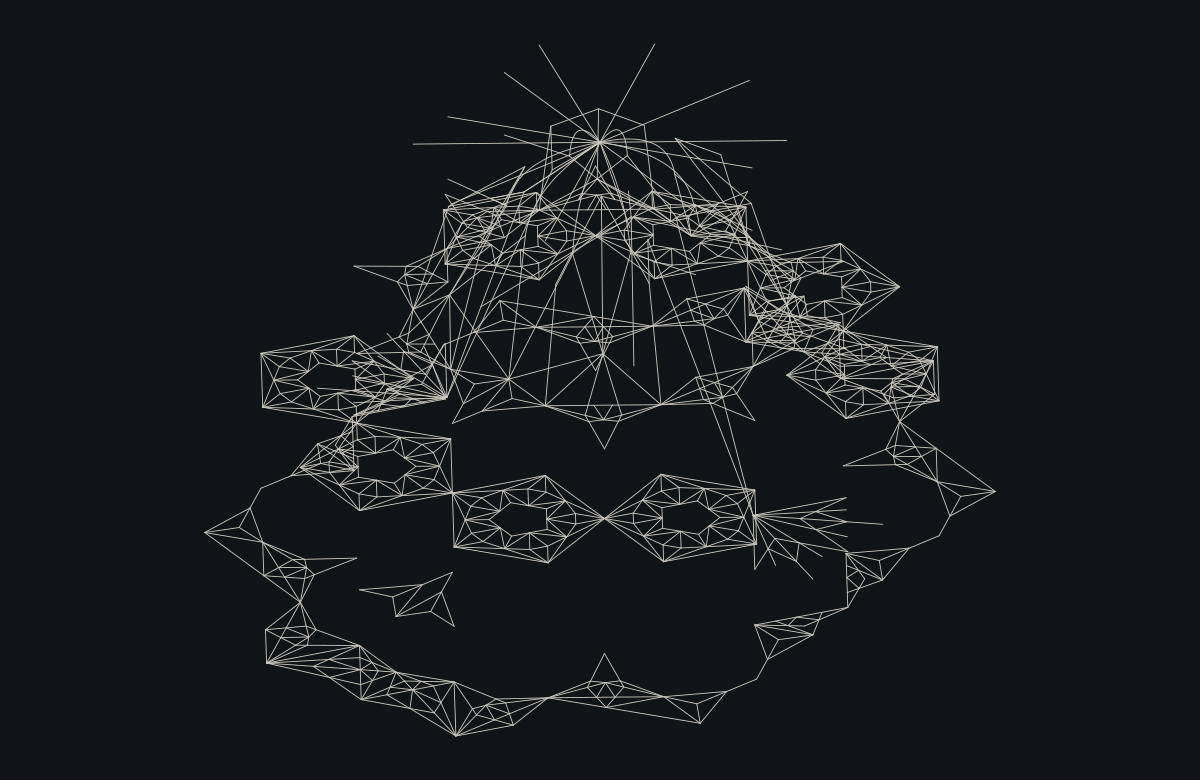
Flat lines become raised curves. This axonometric follows the geometry in the saved gereh3d.3dm model.
Views from the working archive.
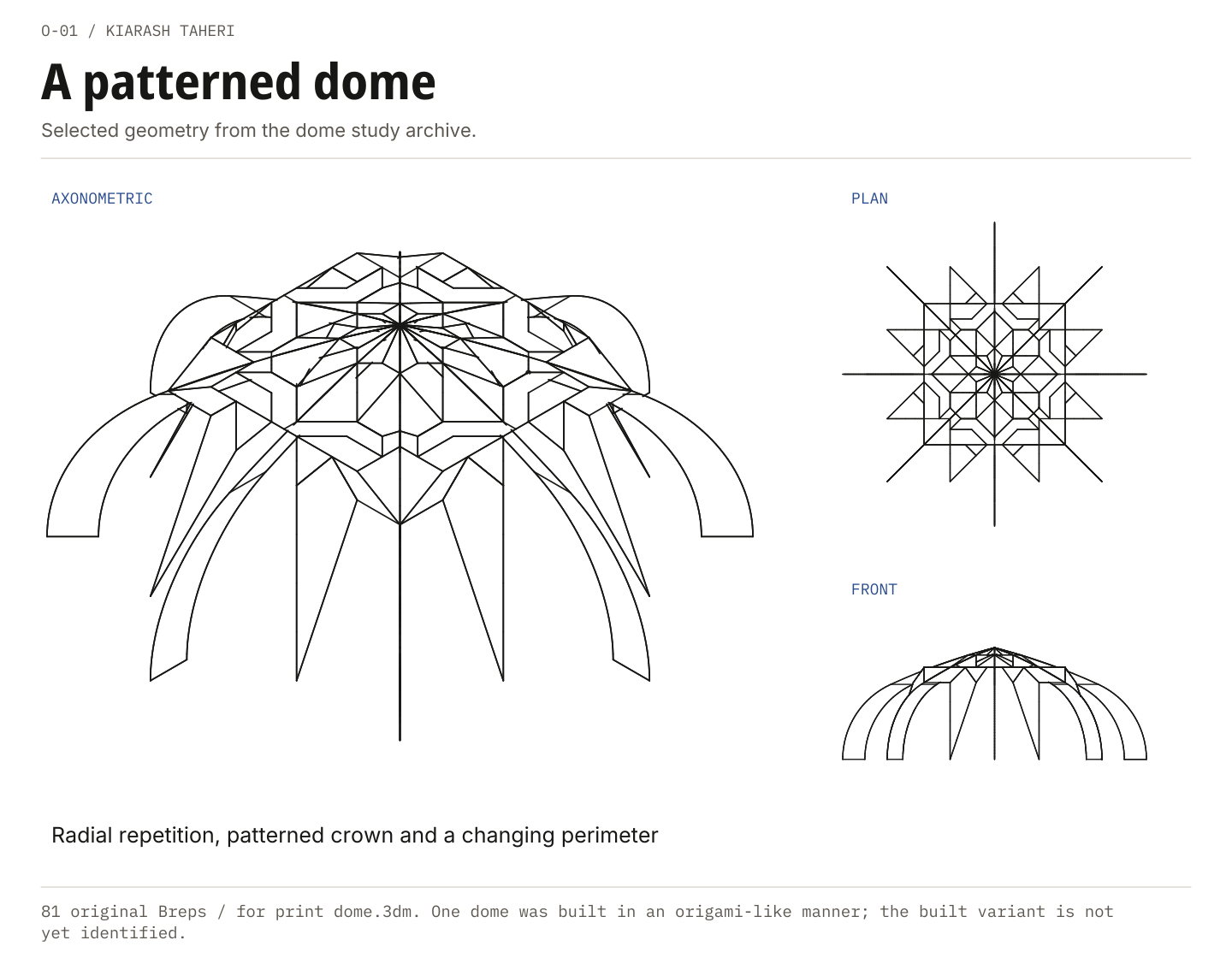
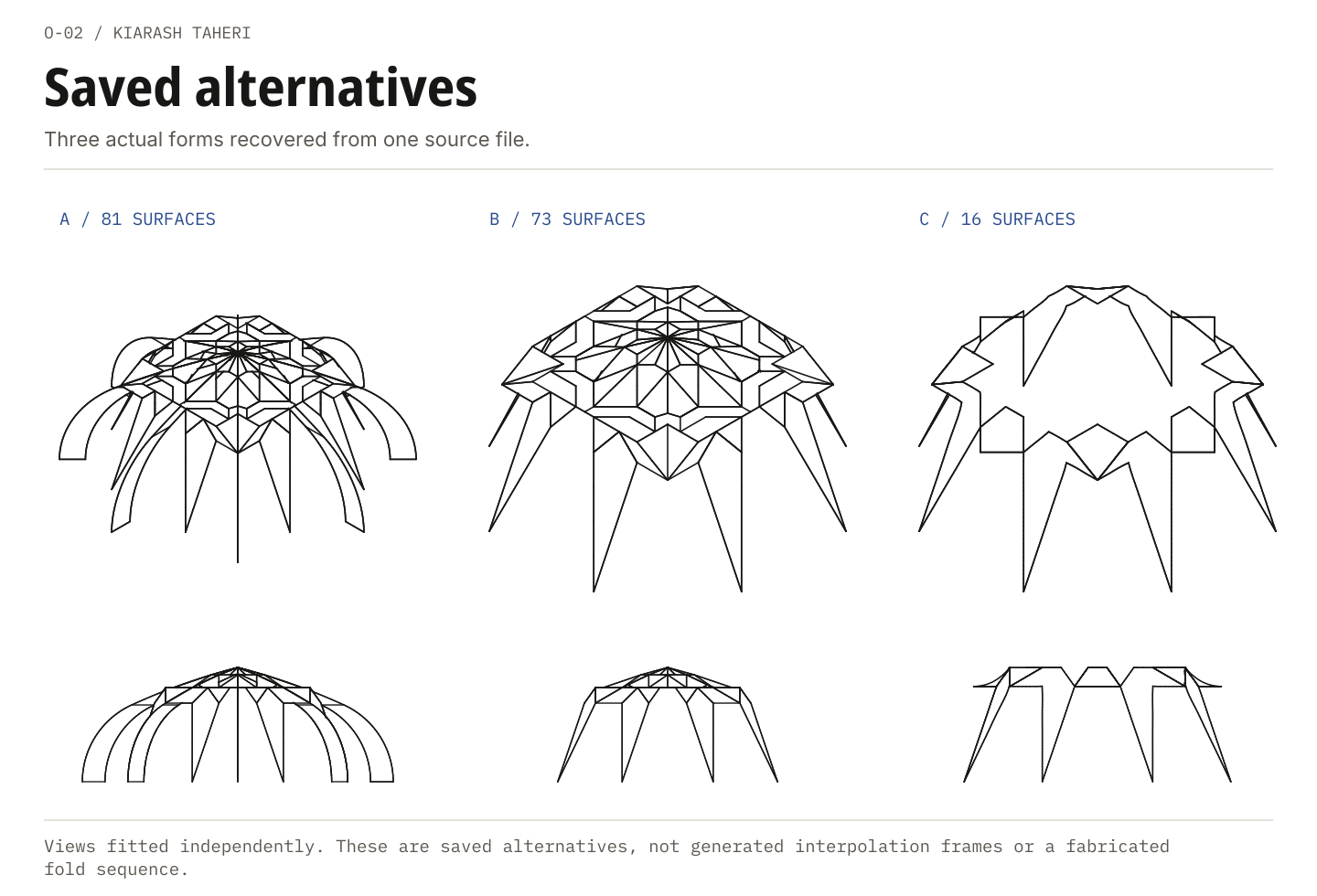
Plan, front and axonometric views make different parts of the geometry visible. These drawings show selected studies from the Rhino archive.
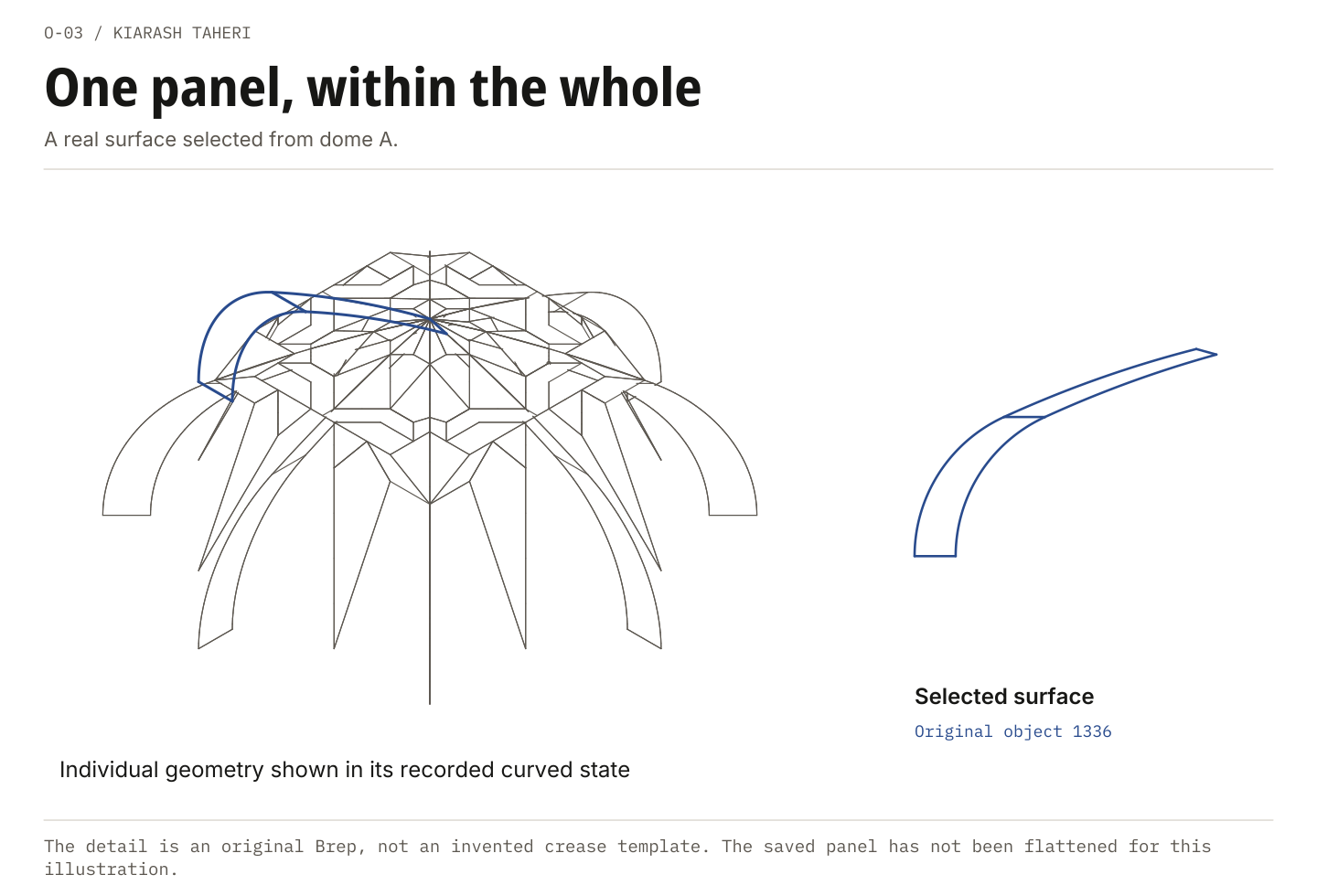
One surface; separate pieces.
A curved panel sits within the whole; a separate sheet studies flat pieces. They record two ways of thinking about the surface and its parts.
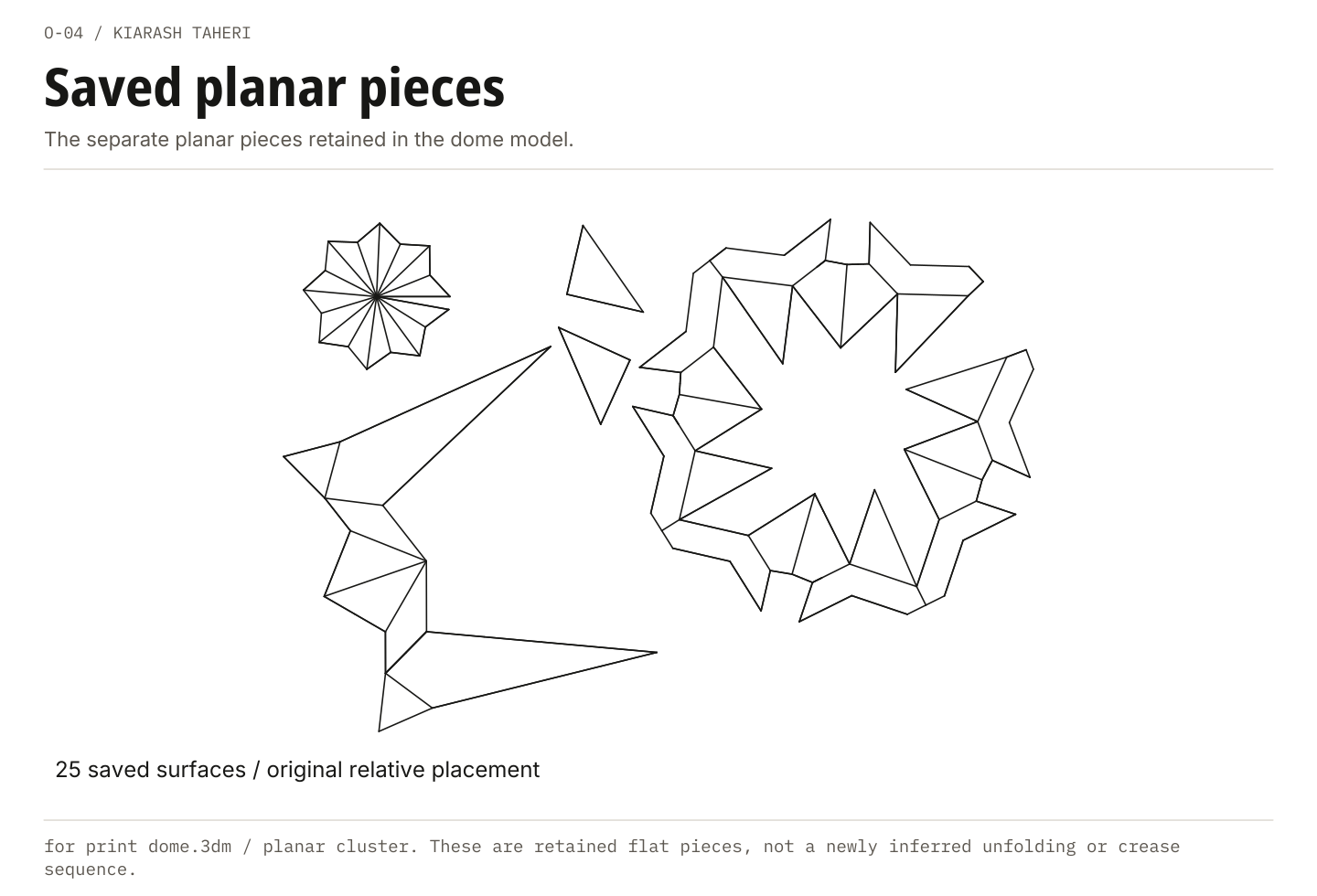
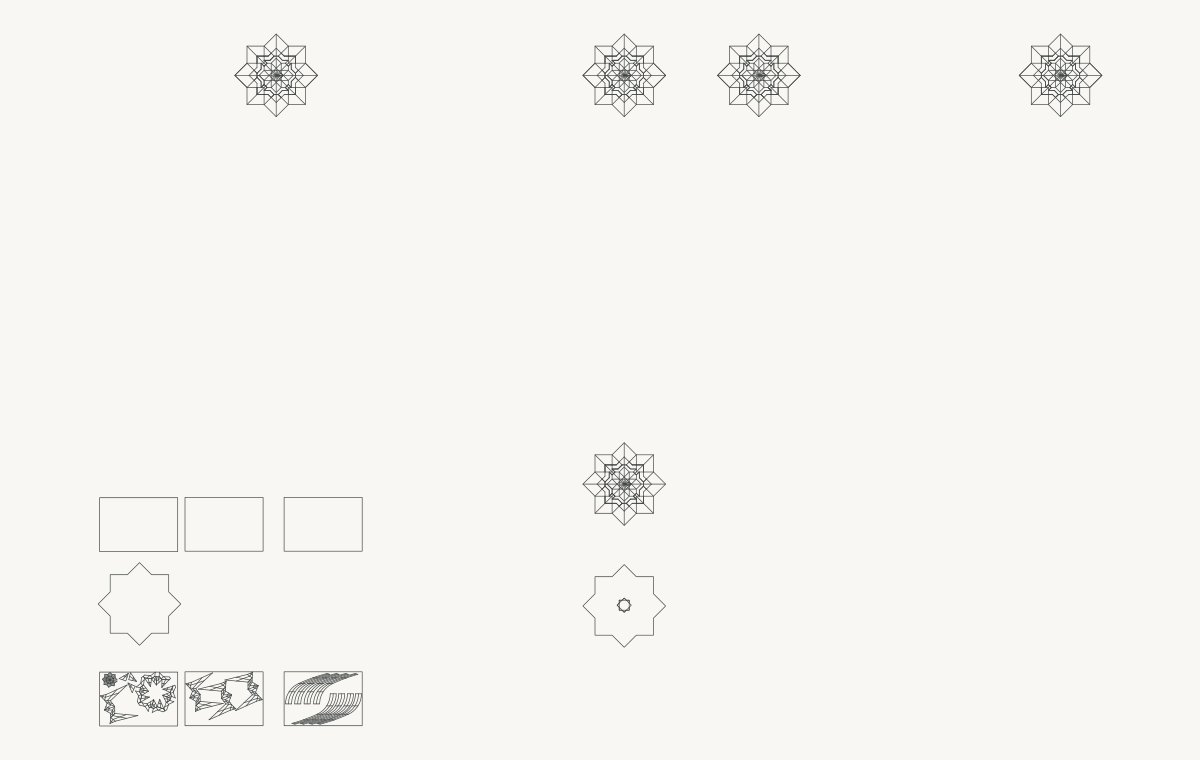
The print drawing group.
Planar clusters, angled forms and curved strips arranged for print. Open the complete sheet to see the surrounding layout.
The folded model.
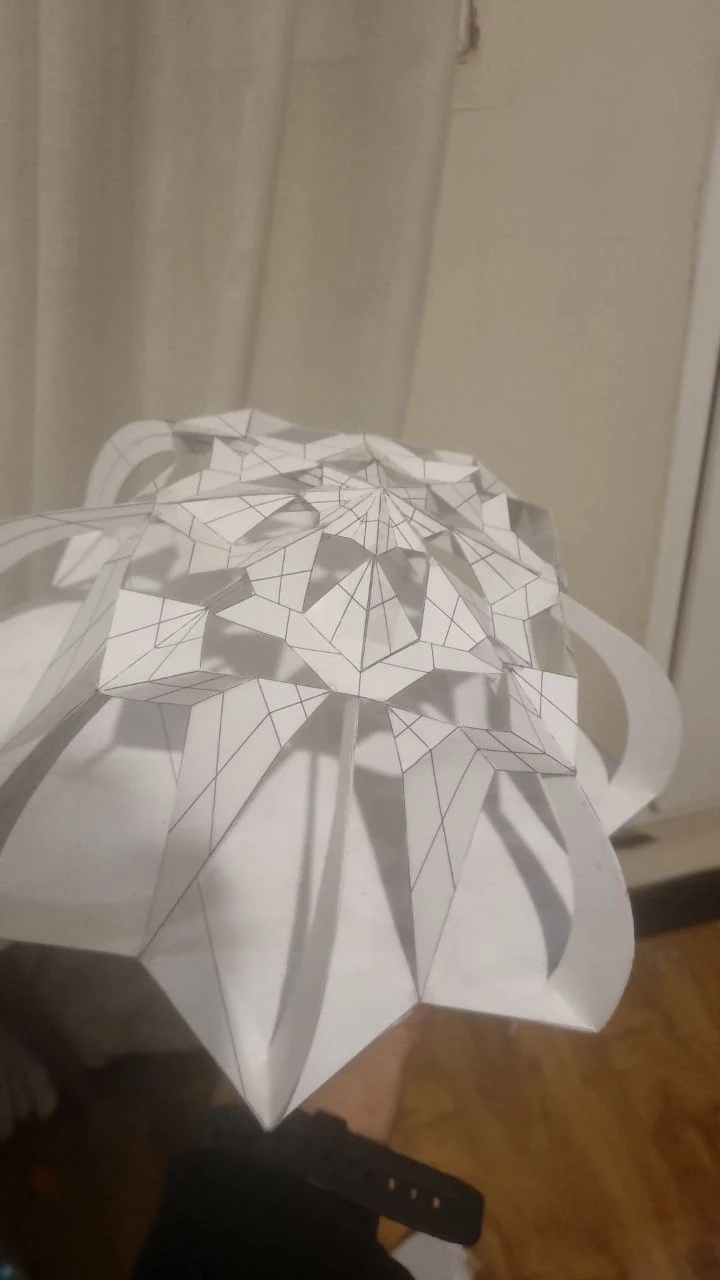
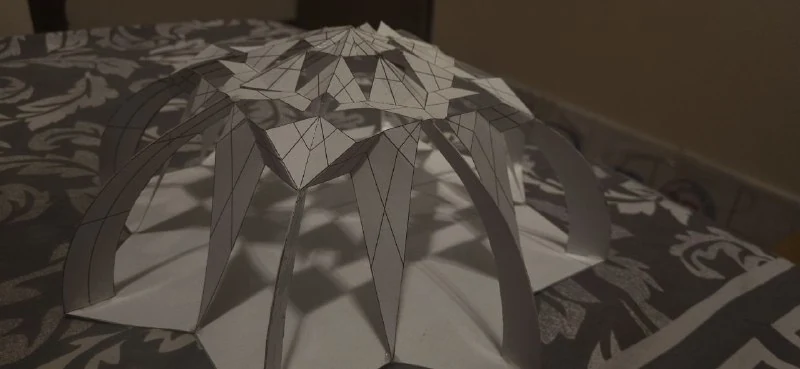
The physical study brings the pattern into a small dome of overlapping facets. These two photographs show it from different angles.