Universal Joints.
I designed and printed the six-way nodes, sphere-ended rods, thread clips and bracing bars, then built them into a frame. I kept adjusting the parts through repeated print trials. The rods can pivot at the nodes; the thread works in tension and the clip-ended bars in compression.
From a joint to a frame.
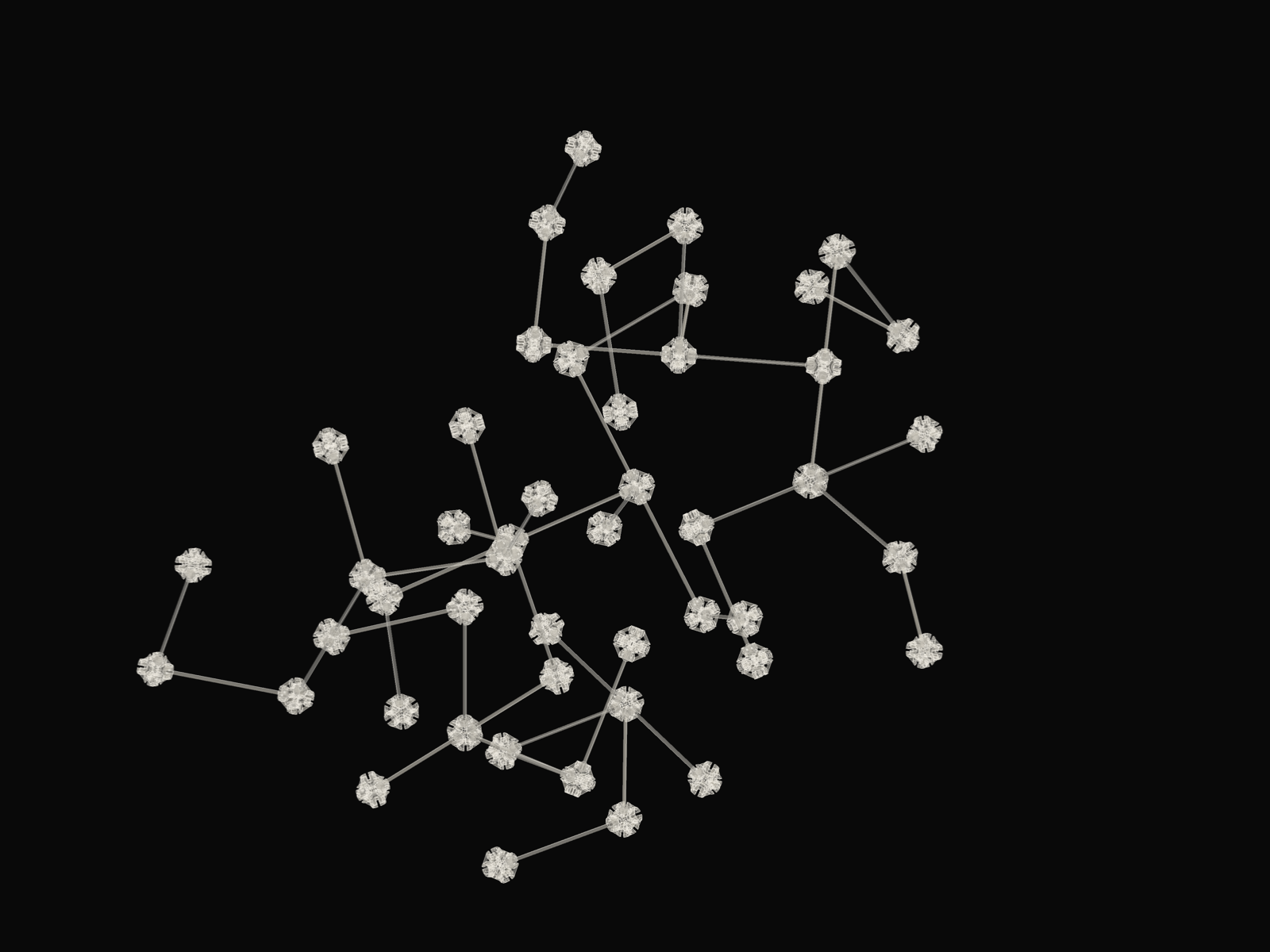
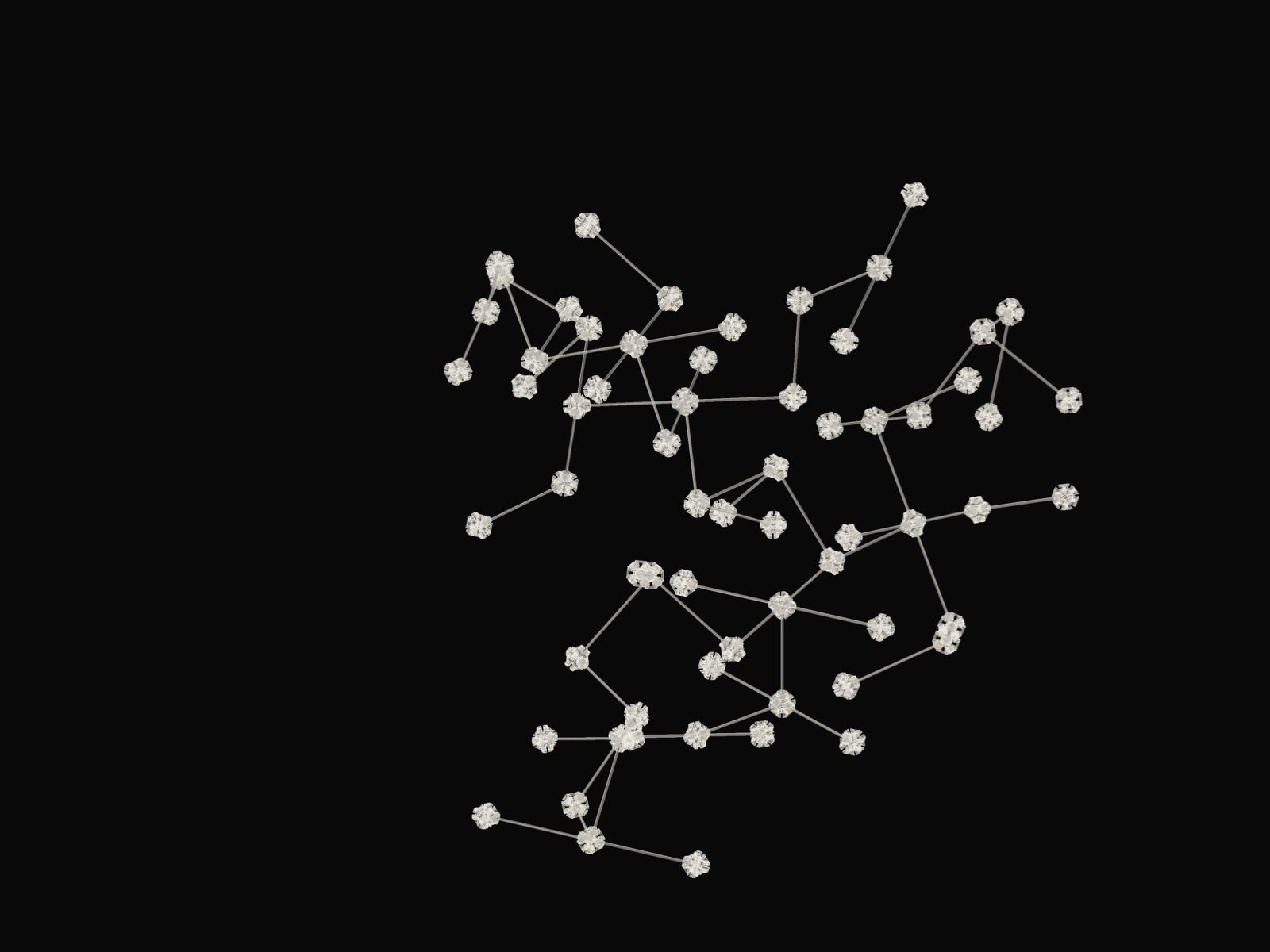
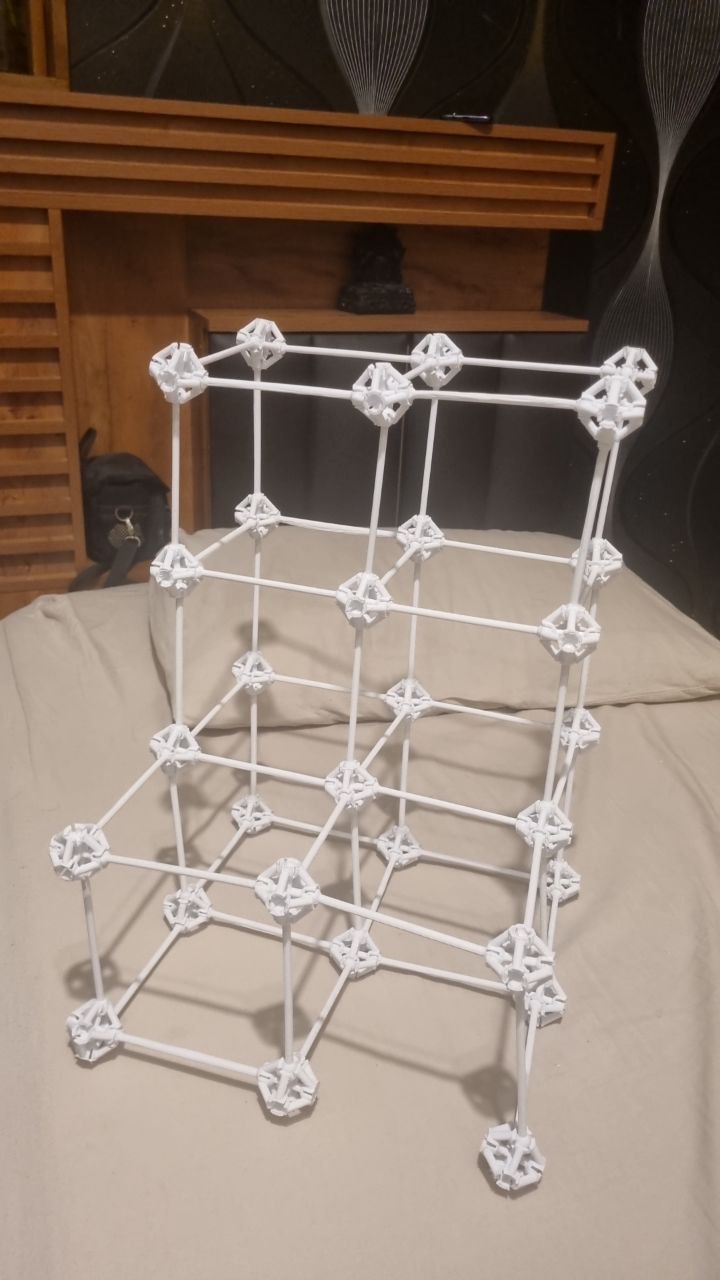
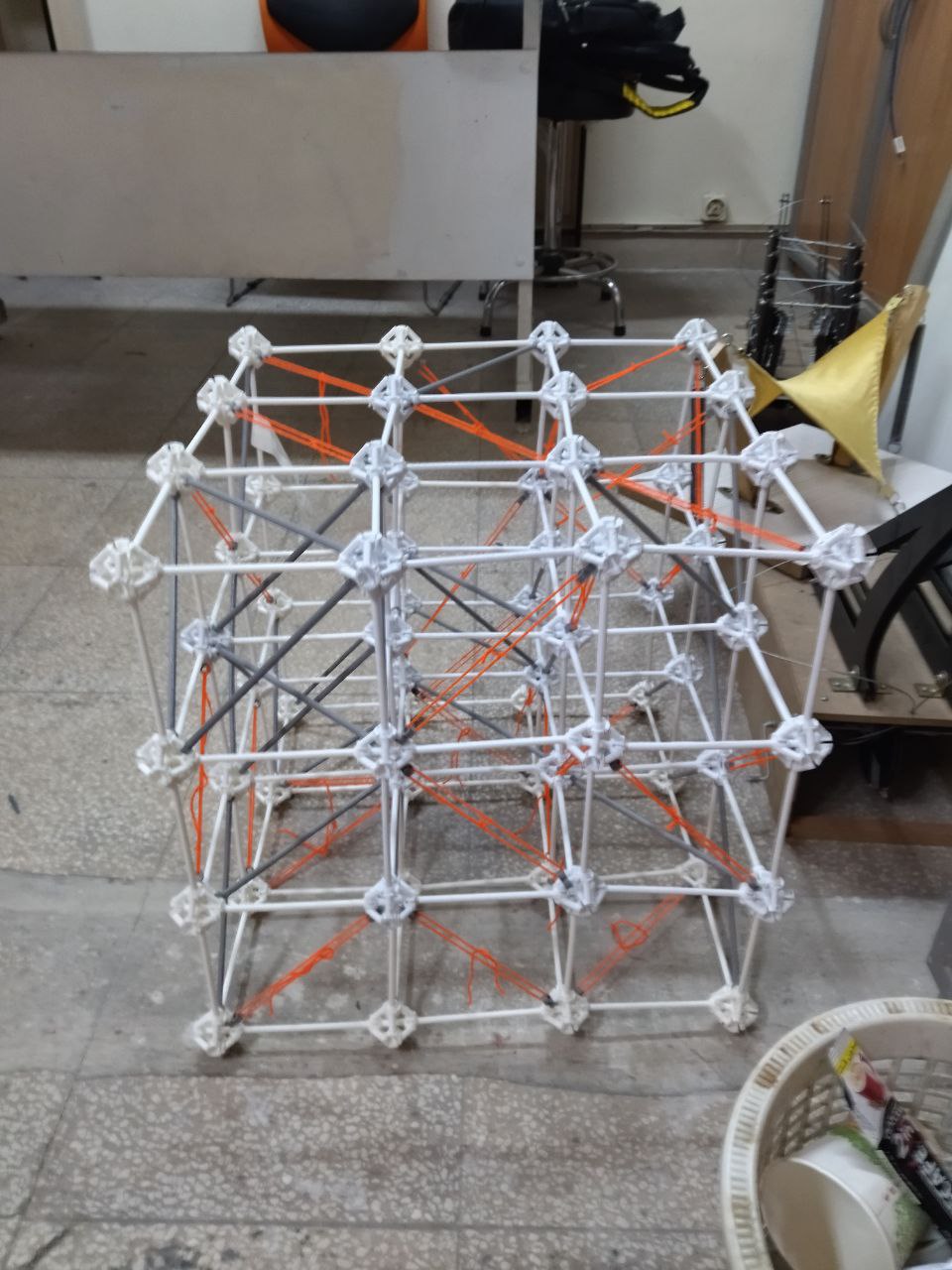
I assembled the kit in different configurations. The white rods and nodes make the frame; orange thread and gray clip-ended bars brace selected parts of it.
Make the connection.
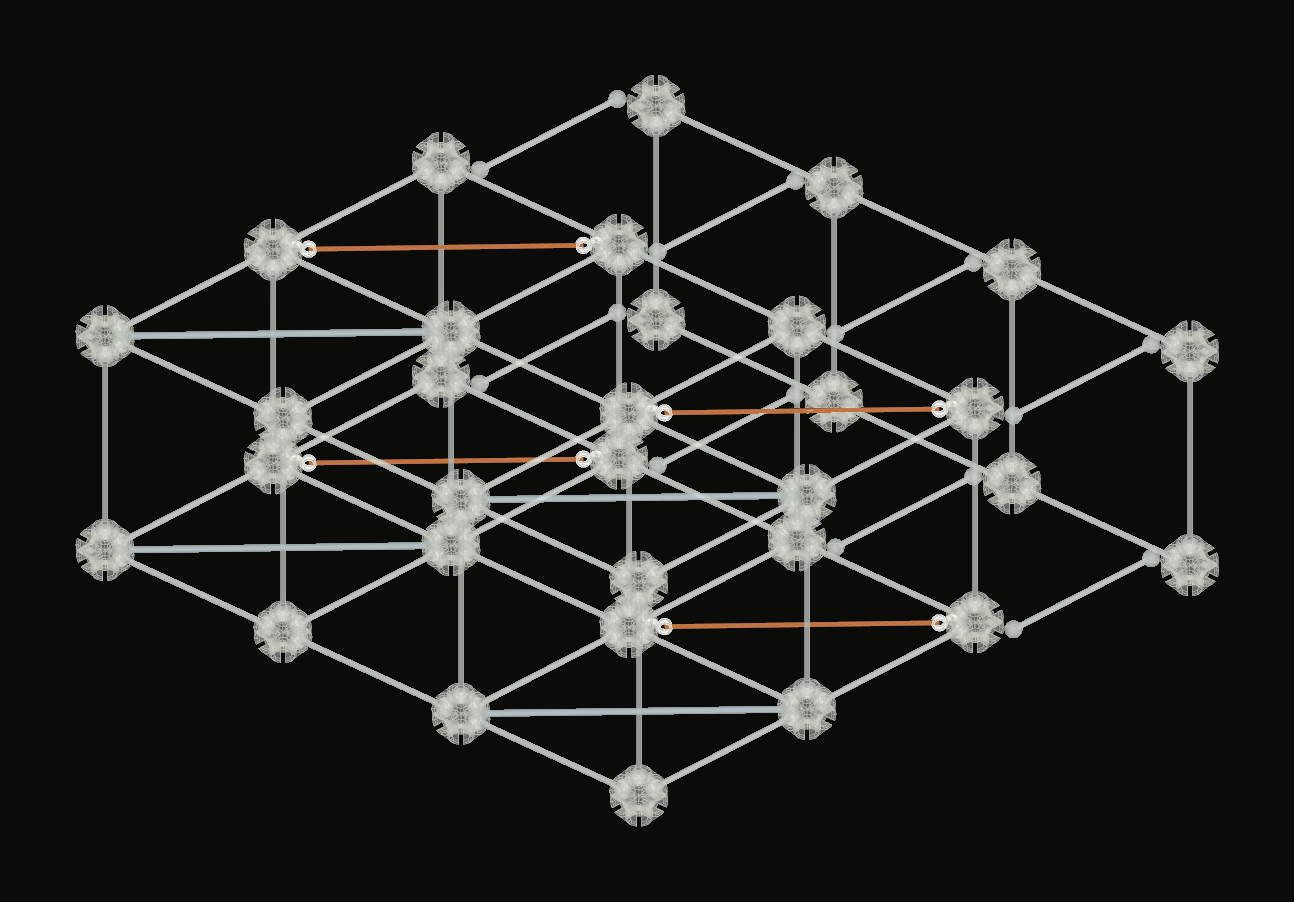
Orbit the frame, place a node, seat a sphere-ended member, then add an orange thread tie or a gray two-grip bar at node edges. The four printed parts are taken from the saved Rhino model.
Choose a part, click a node to reveal its contacts, then build the connection. Drag to orbit; scroll or pinch to zoom.
This is an interactive assembly study using the saved part meshes. The angle control illustrates the joints’ movement; it is not a force simulation or a verified fit test.
Three kinds of contact.
Six bowl sockets turn the node outward in every direction. A sphere at each end of the main rod sits in a bowl and lets the rod change angle. Small clips grip the designated node edges: their closed eyes carry the orange thread loops. The long gray bars use open C grips at both ends.
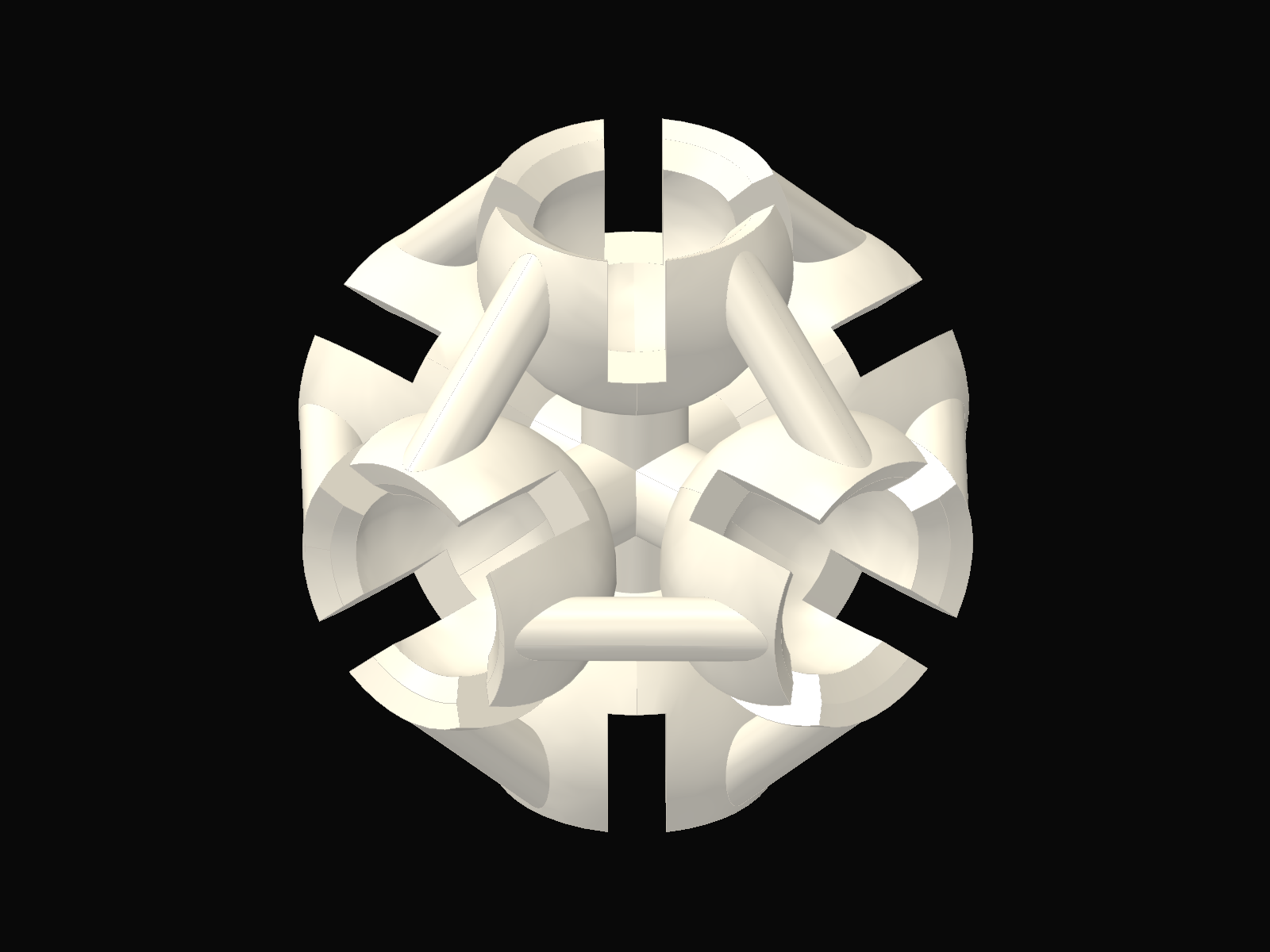
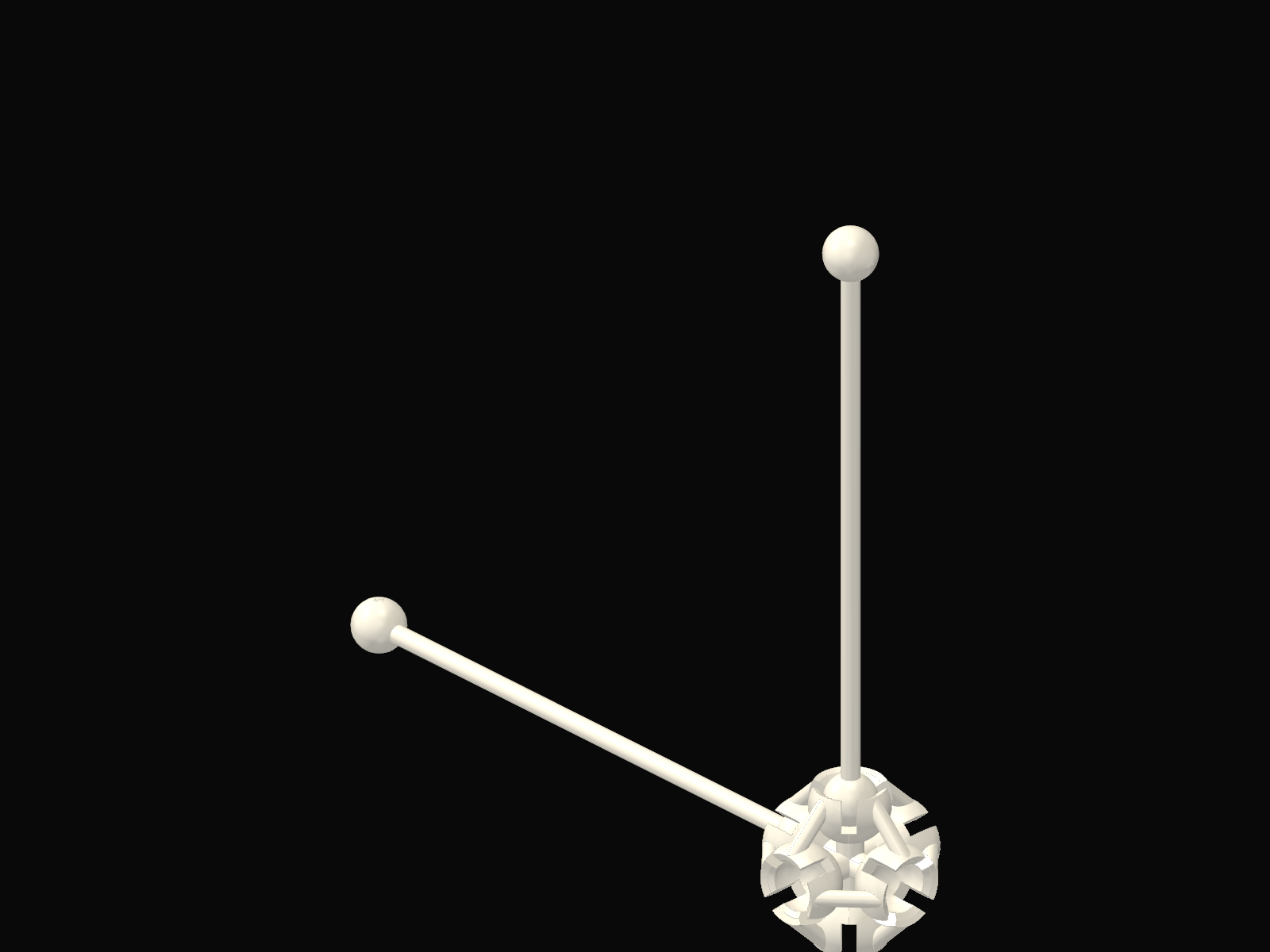
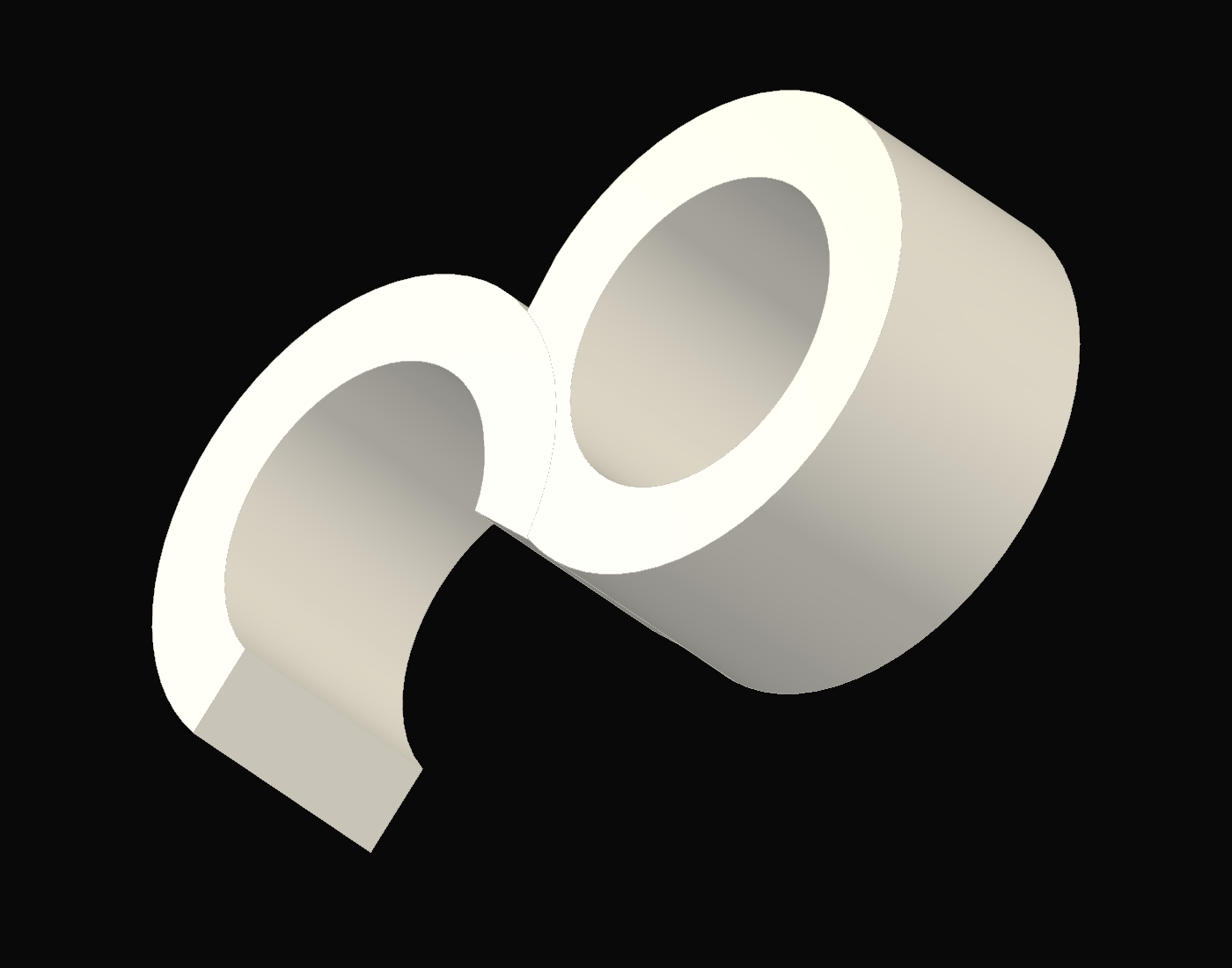
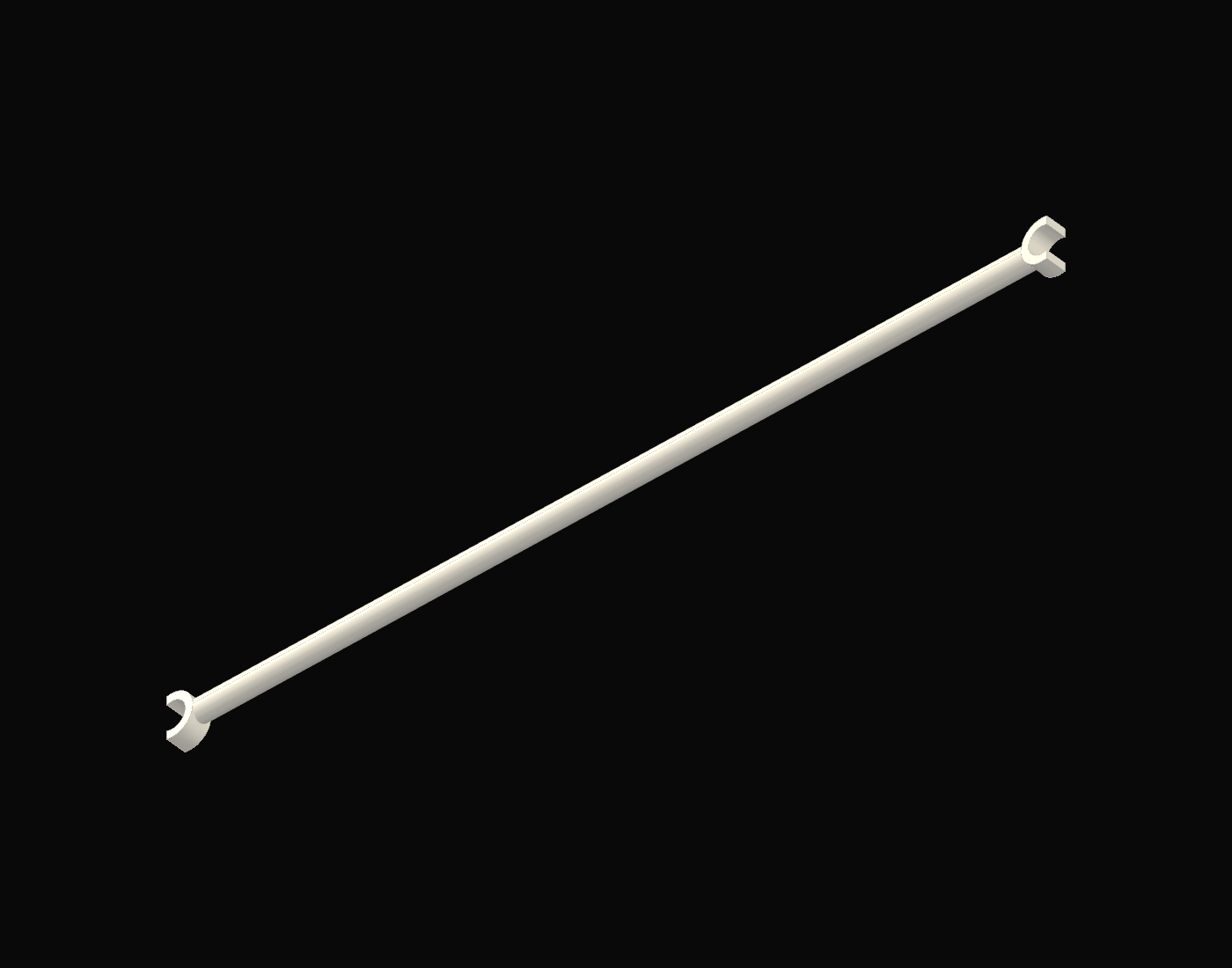
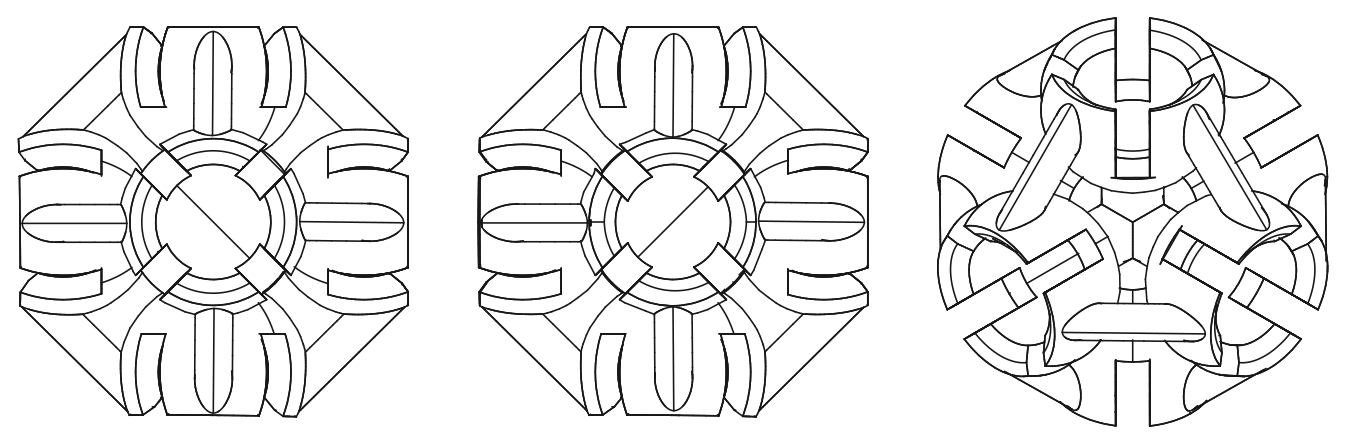
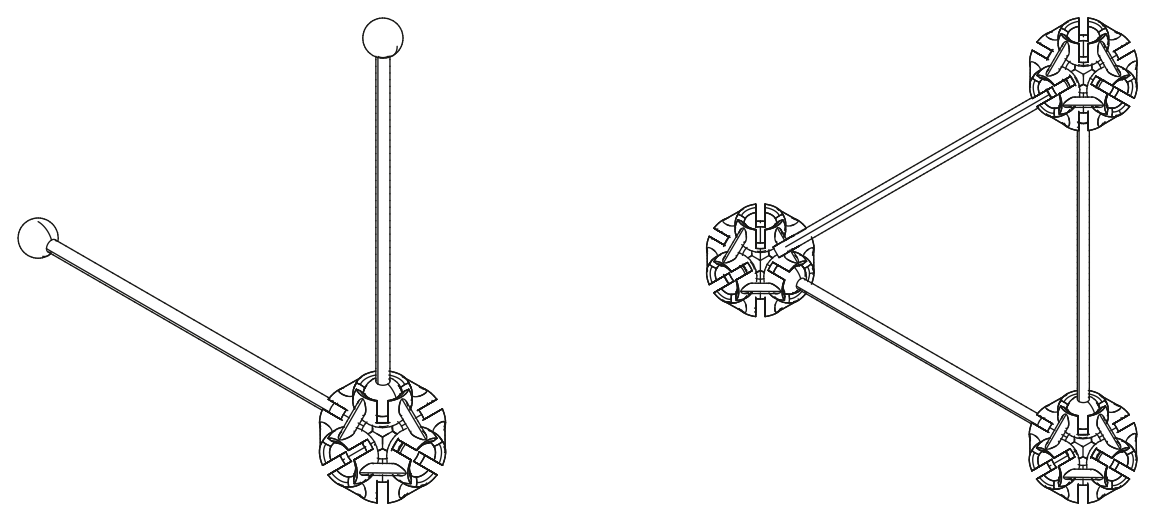
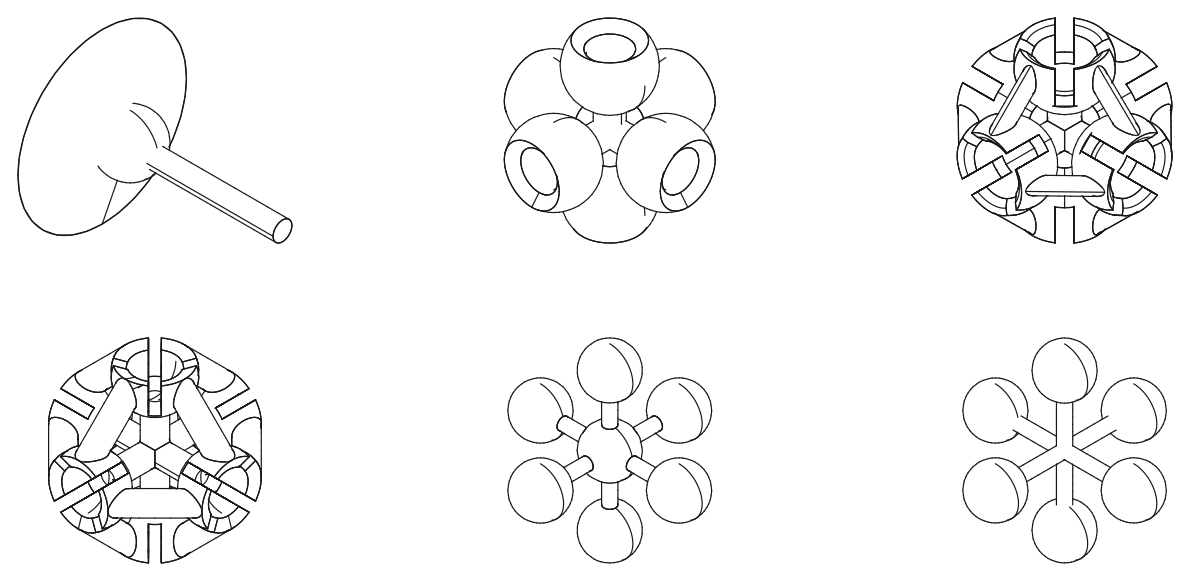
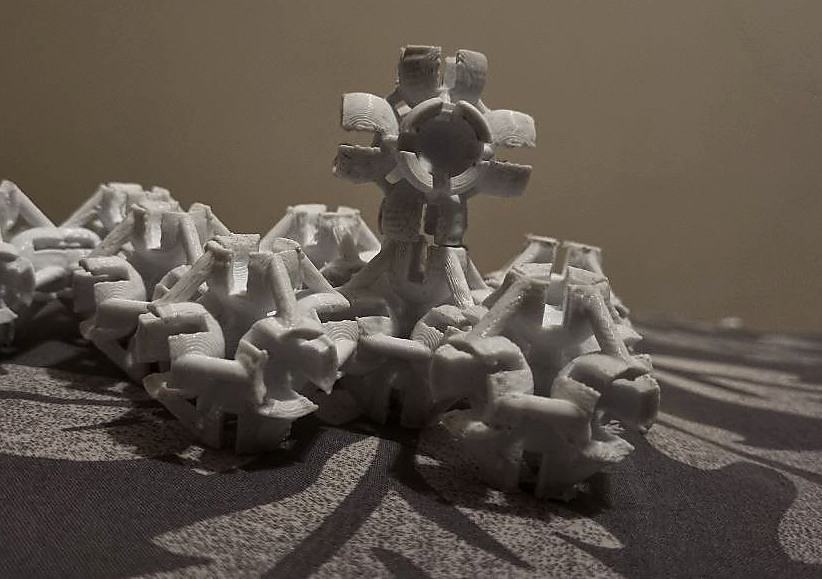
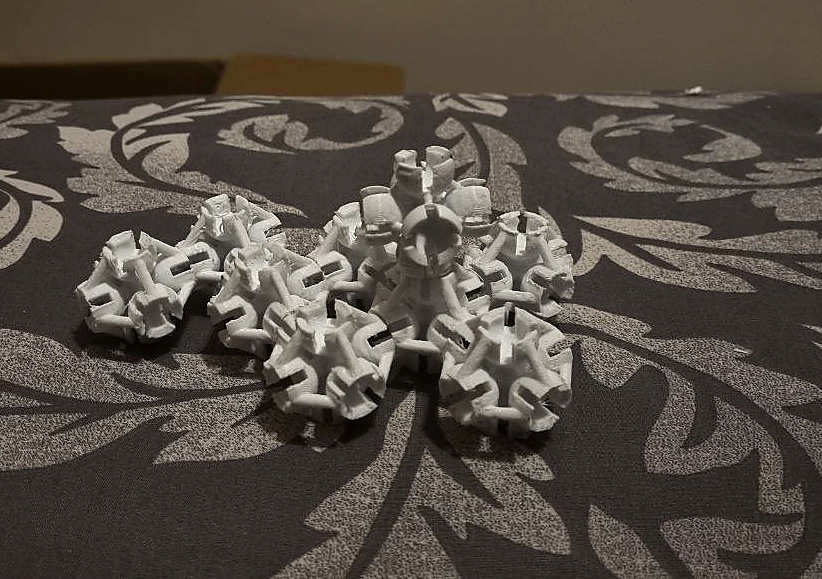
The connection took trials.
A printed joint needs to fit, release and hold in the hand, not just look right in a model. I printed it repeatedly, changed settings and made small adjustments before assembling the larger frame.
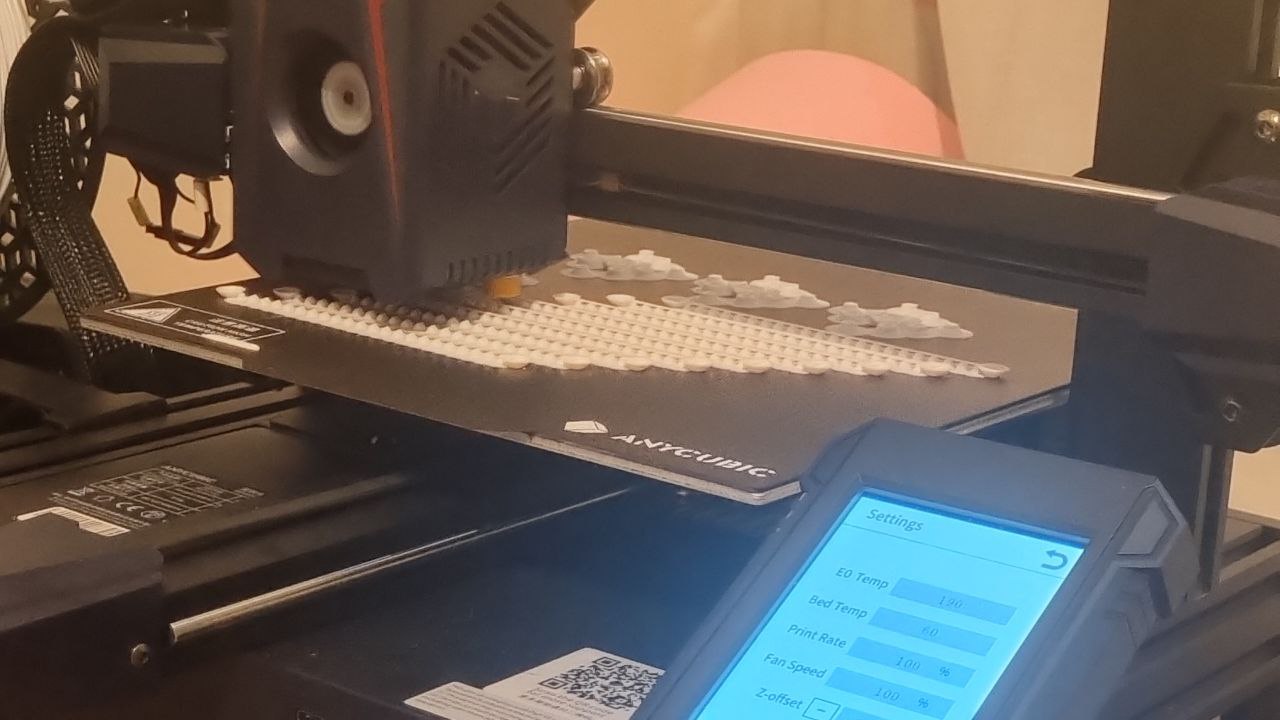
Two print setups
Two saved slicer projects, with creation metadata dated 26 December 2023 and 24 January 2024, retain different settings:
- Layer height
- 0.20 / 0.10 mm
- Bed temperature
- 60 / 70°C
- Support interface
- 3 / 1 layers
- Support spacing
- 2.5 / 5 mm
These files capture two settings among repeated print and fit trials; their metadata is not a complete making timeline.
Beyond the square bay.
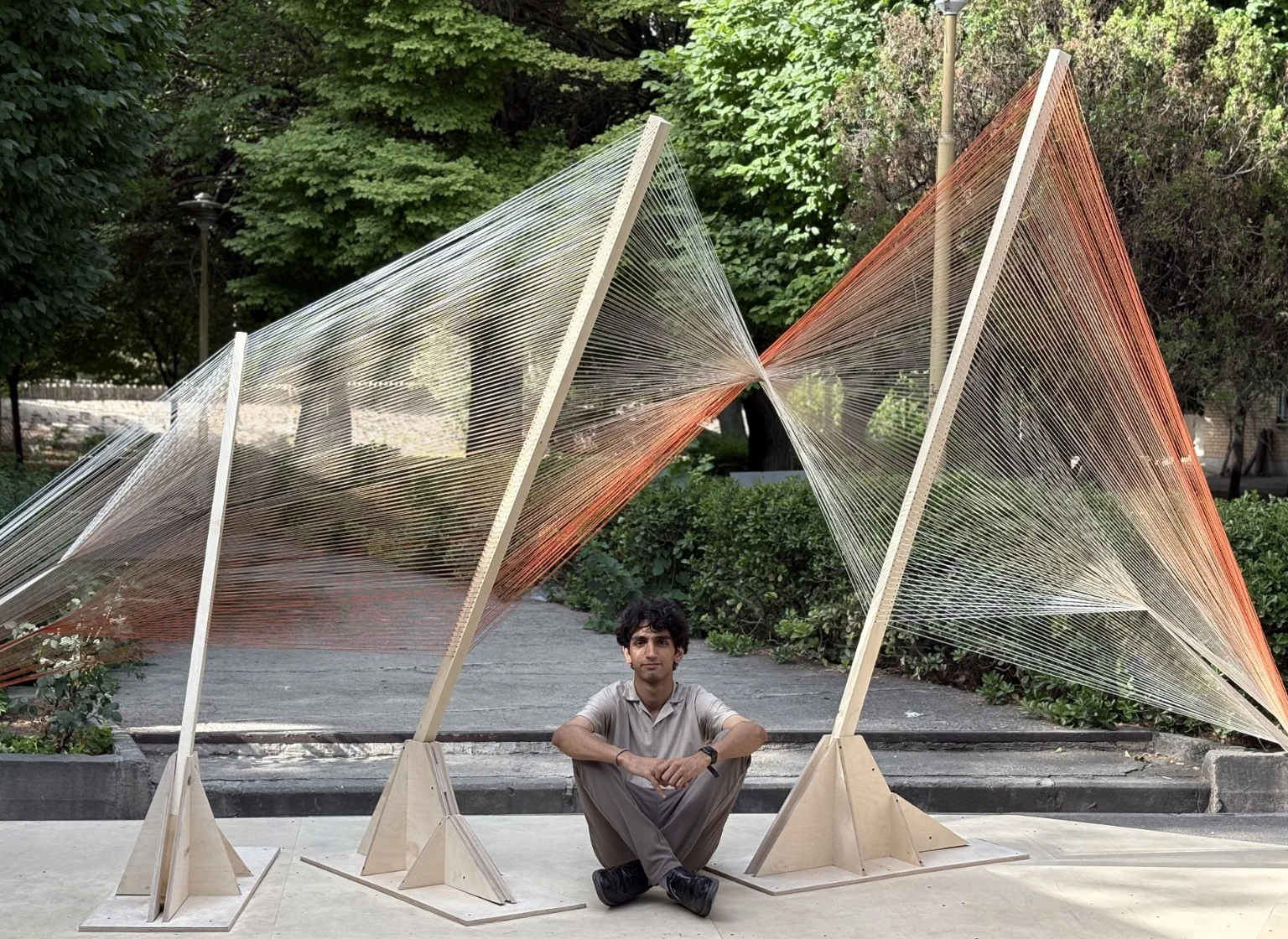
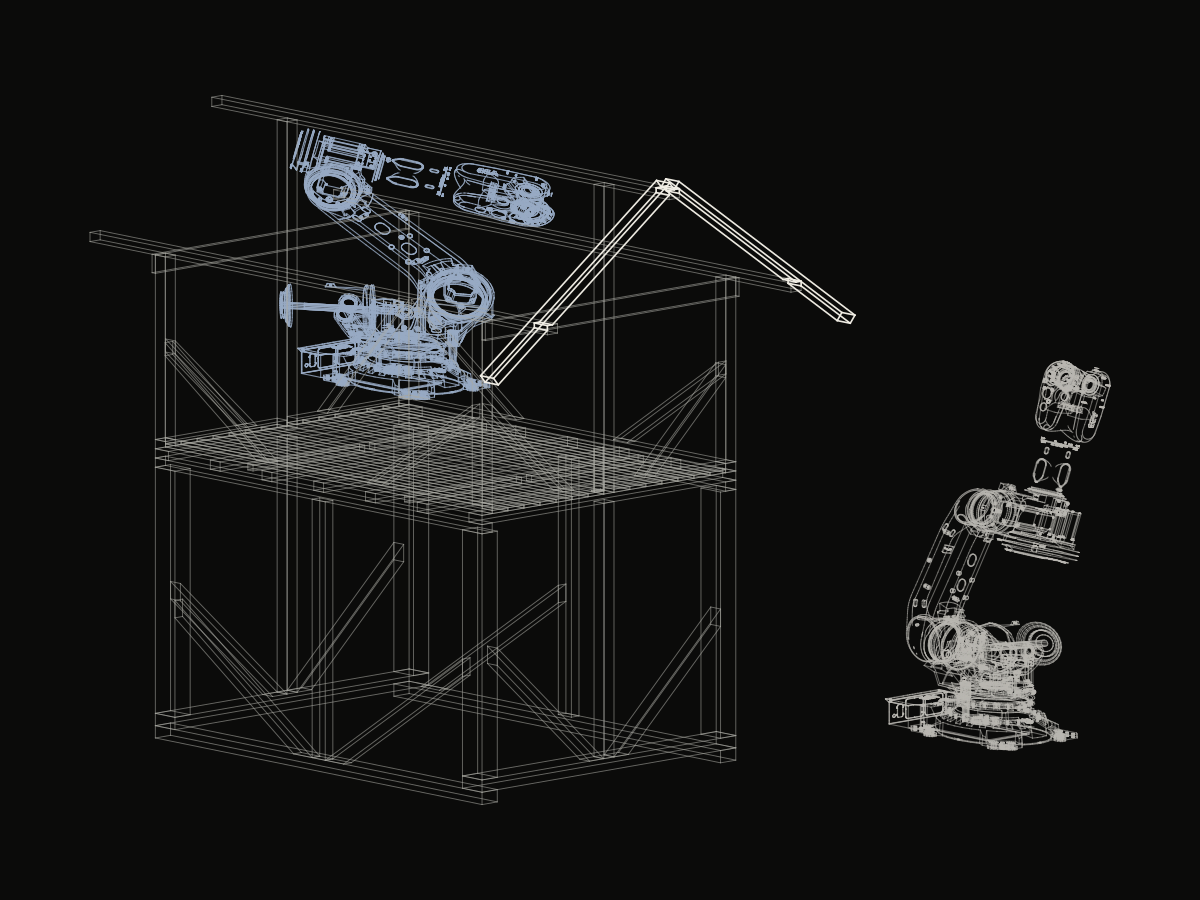
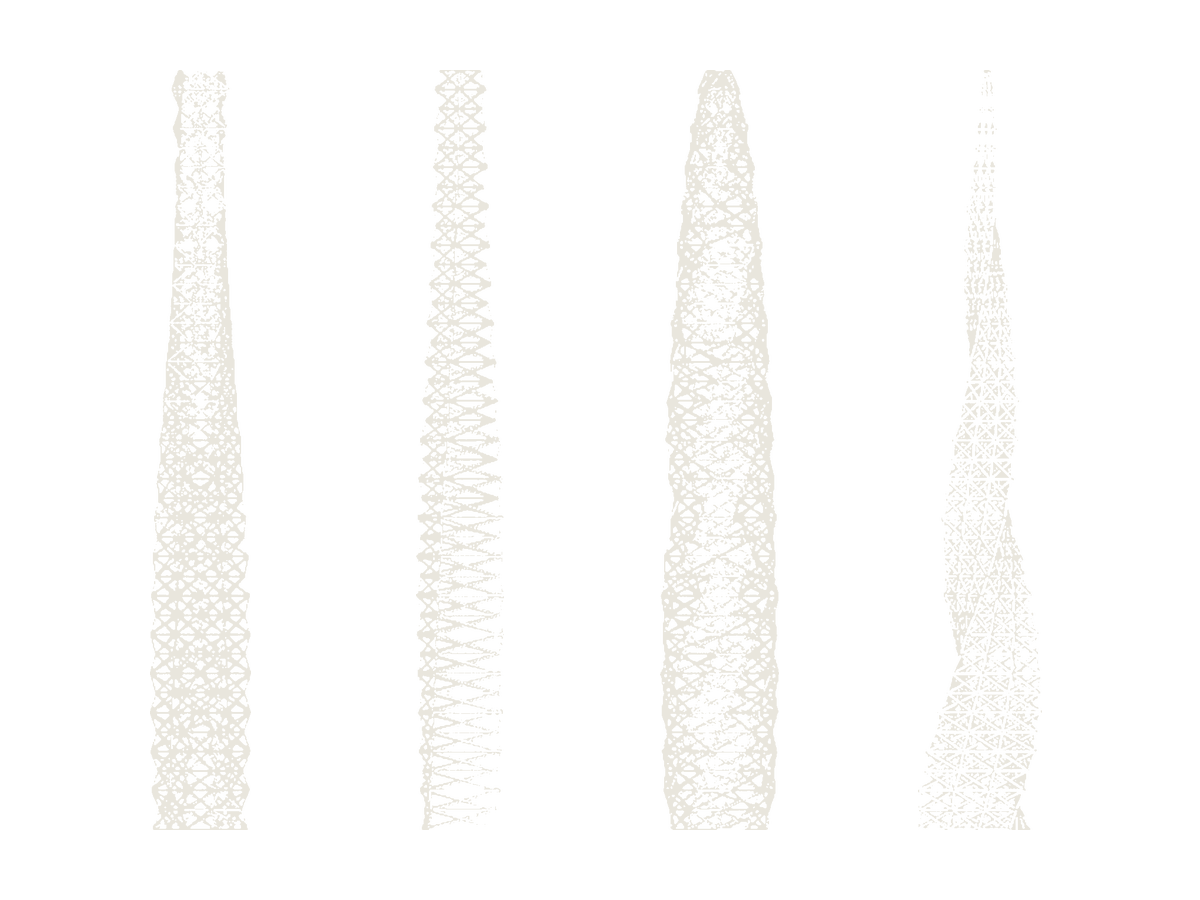
The same joints can produce a folded field rather than a regular grid. Here the rows change direction in plan and section, while every member keeps the original saved span.