01 / HEADSET FITTING
Leave time for the headset to settle.
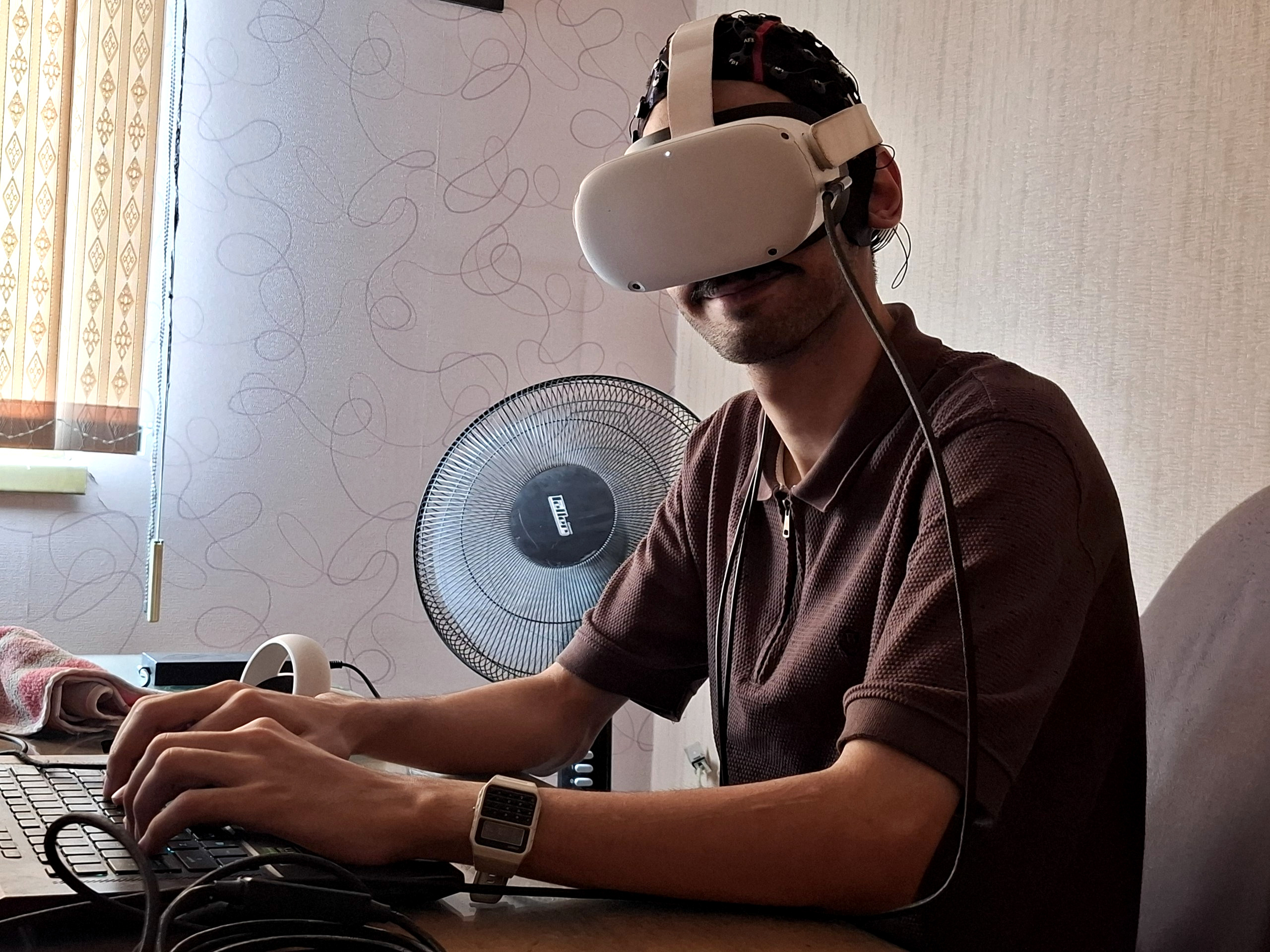
The pilot recording shows a large disturbance around headset fitting, followed by settling. This makes preparation and settling time part of the protocol, before comparing the VR exposures.
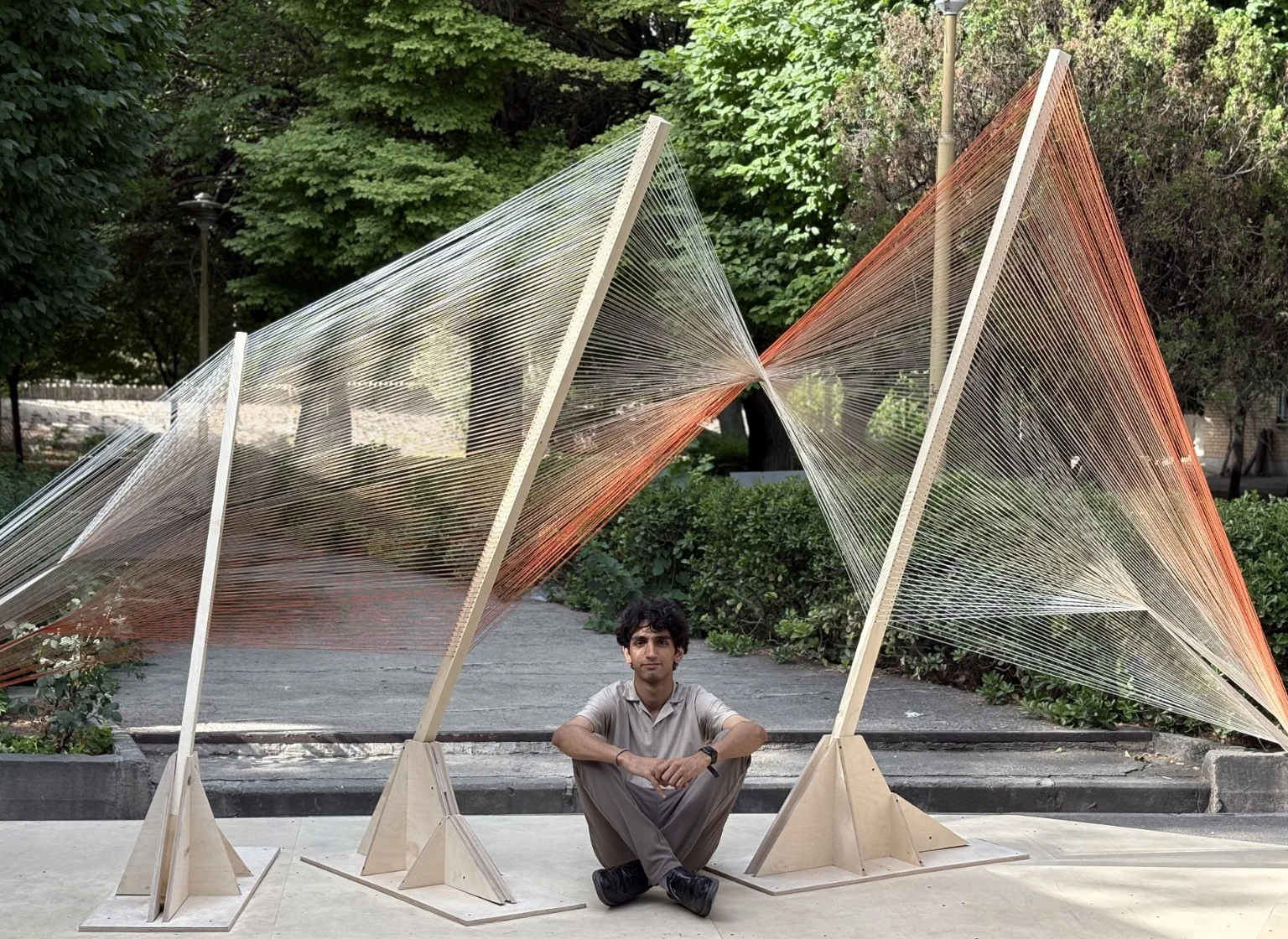
I work on ways to study how people experience architecture, combining research methods, a programmable study workbench, and practical experiments with EEG and VR.
Research assistant to Dr. Bushra AbbasiHow to turn a change in an architectural environment into a meaningful, controlled comparison of experience.
Research methods, NeuroArch software development, and investigation of the practical relationship between EEG and VR.
A workbench in development, a completed technical pilot, and a controlled spatial study being designed.
A change in light, geometry or a view needs a clear comparison. My interest is in connecting what we design to what people encounter, report and do, alongside the signals we record.
These questions guide the study design. Explore the research framework ↗
I am developing NeuroArch to connect study design, running a session, reviewing recordings and analysing data. It keeps the study version and the original records connected, so an interpretation can be traced back to the conditions that produced it.
A sequence through the implemented software, using development test studies.
NeuroArch connects study authoring, event recording, signal review and analysis. Each result stays linked to the study version and recording it came from.
In an October 2026 software test, NeuroArch froze six generated observations with their original rows and an analysis recipe. The exported reproduction completed successfully and matched the retained summary. This checks the software’s path from source data to a repeatable result; the values are synthetic.
Development evidence: frozen observation analysis and reproduction, 8 October 2026.
Before comparing spaces, we need to understand the equipment. A technical pilot on 31 August 2026 examined how wearing a Meta Quest 2 over an EEG cap affected contact and the recorded signal. It used a Mitsar SmartBCI X64 and one participant.
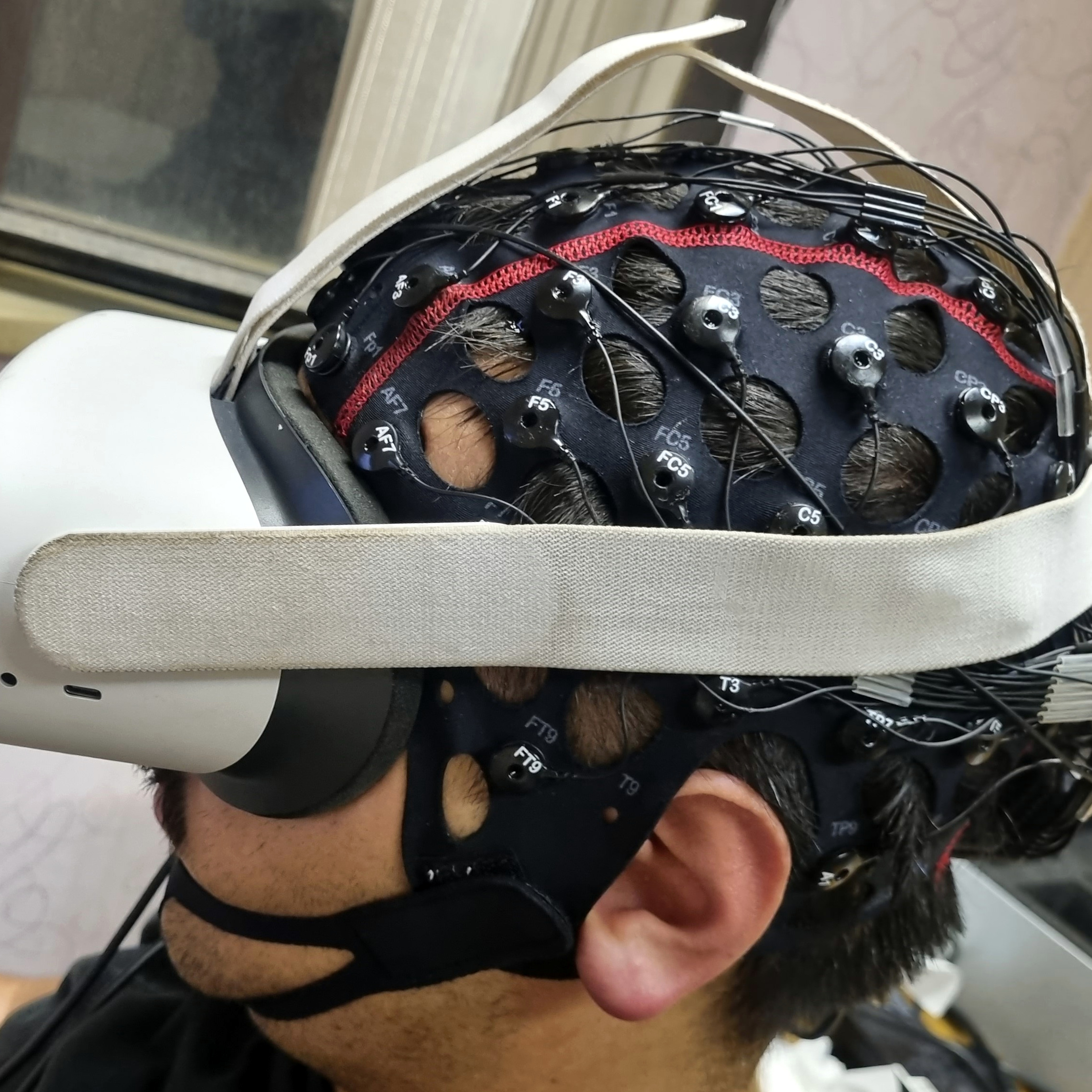
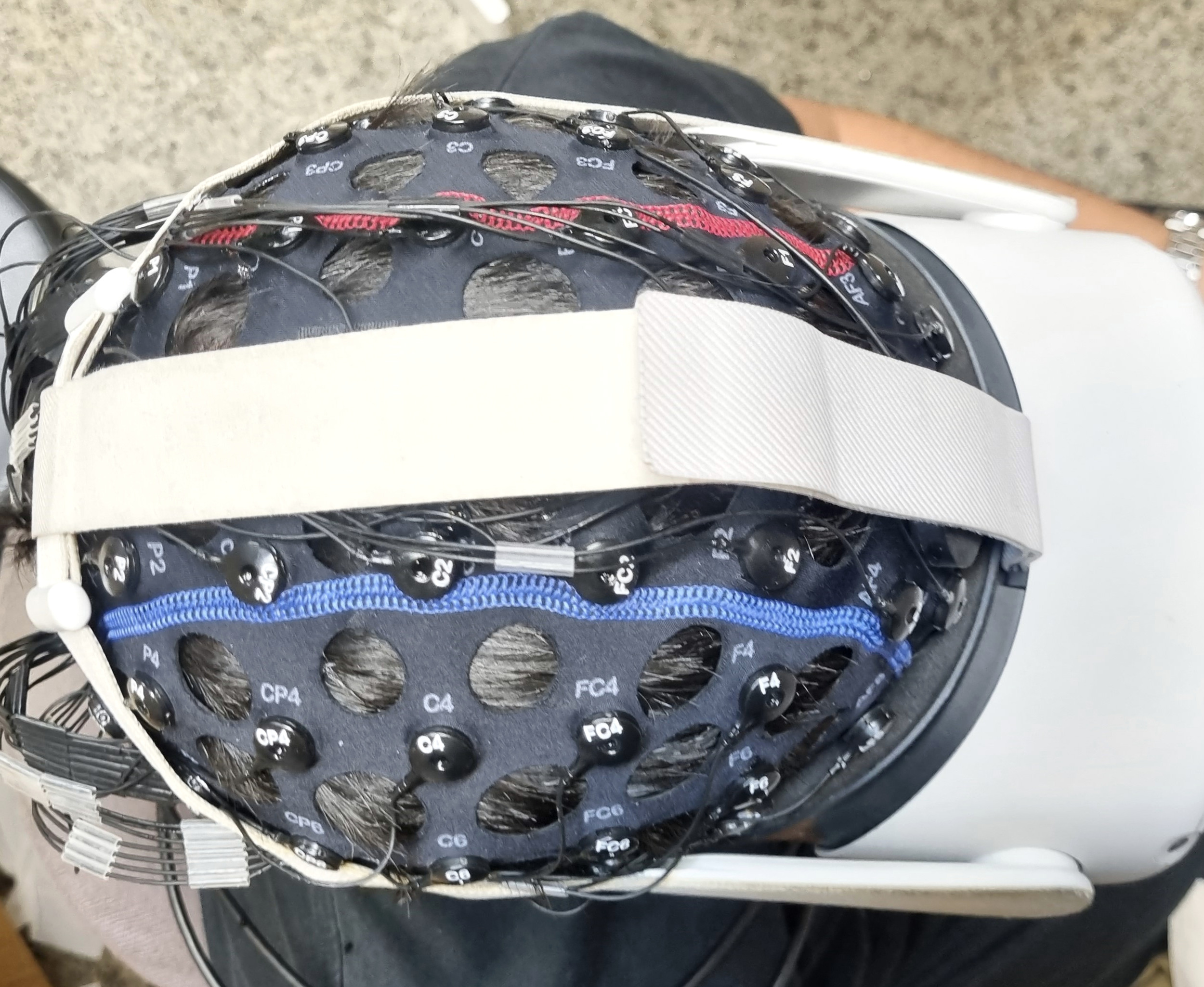
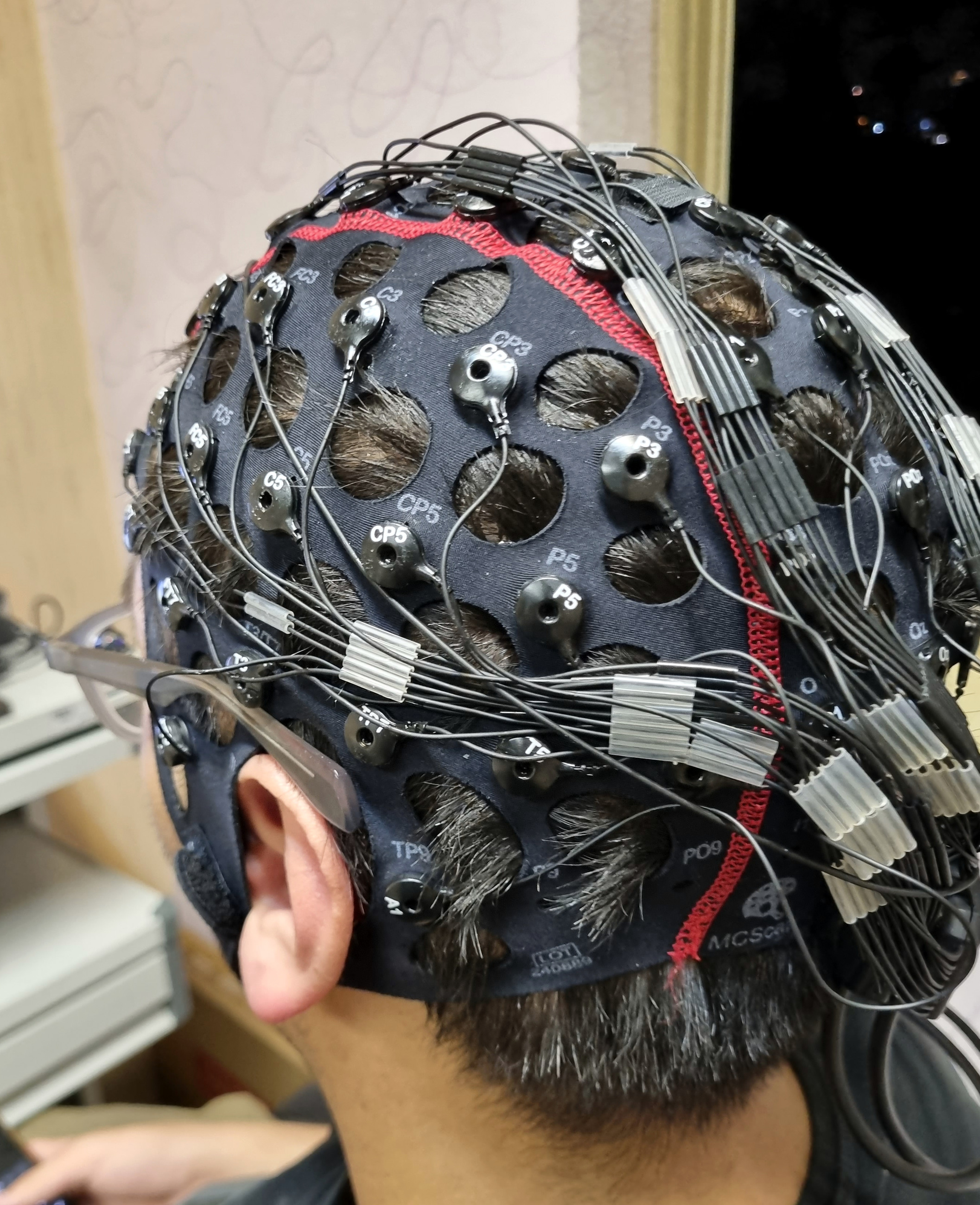
The recording moved through eyes-open and eyes-closed baselines, headset wear, two VR scenes and a later movement condition. Keeping that order visible helps explain what each comparison can tell us.
The conditions were presented once in a fixed order. Physical display onset was not measured, and the final movement block's eye state was unspecified.
The useful outcome was a set of practical lessons: allow the equipment to settle, check a recognizable physiological response, and separate scene differences from changes in time and participant state.
The pilot recording shows a large disturbance around headset fitting, followed by settling. This makes preparation and settling time part of the protocol, before comparing the VR exposures.
The eyes-closed and eyes-open comparison showed a recognizable posterior alpha response. It provides a useful check on the recorded physiology before looking at more complicated conditions.
The Gray and Valley intervals differ, but they also occurred at different times in the session. Order, eye state, movement and headset contact must be controlled before a difference can be attributed to the environment.
The next step is a controlled comparison of a defined spatial change. I want the design of the environment, the participant’s experience and the analysis to remain connected through the whole study.