Kurdistan, in two seasons.
I visited Bijar twice for the same design studio, a carpet museum for the city. In winter I went alone by bus to see the site and meet people. In spring I returned with the university, travelling through Hawraman/Uramanat and Marivan before passing through Bijar again. The two trips became part of my thinking for the museum.
Explore ↓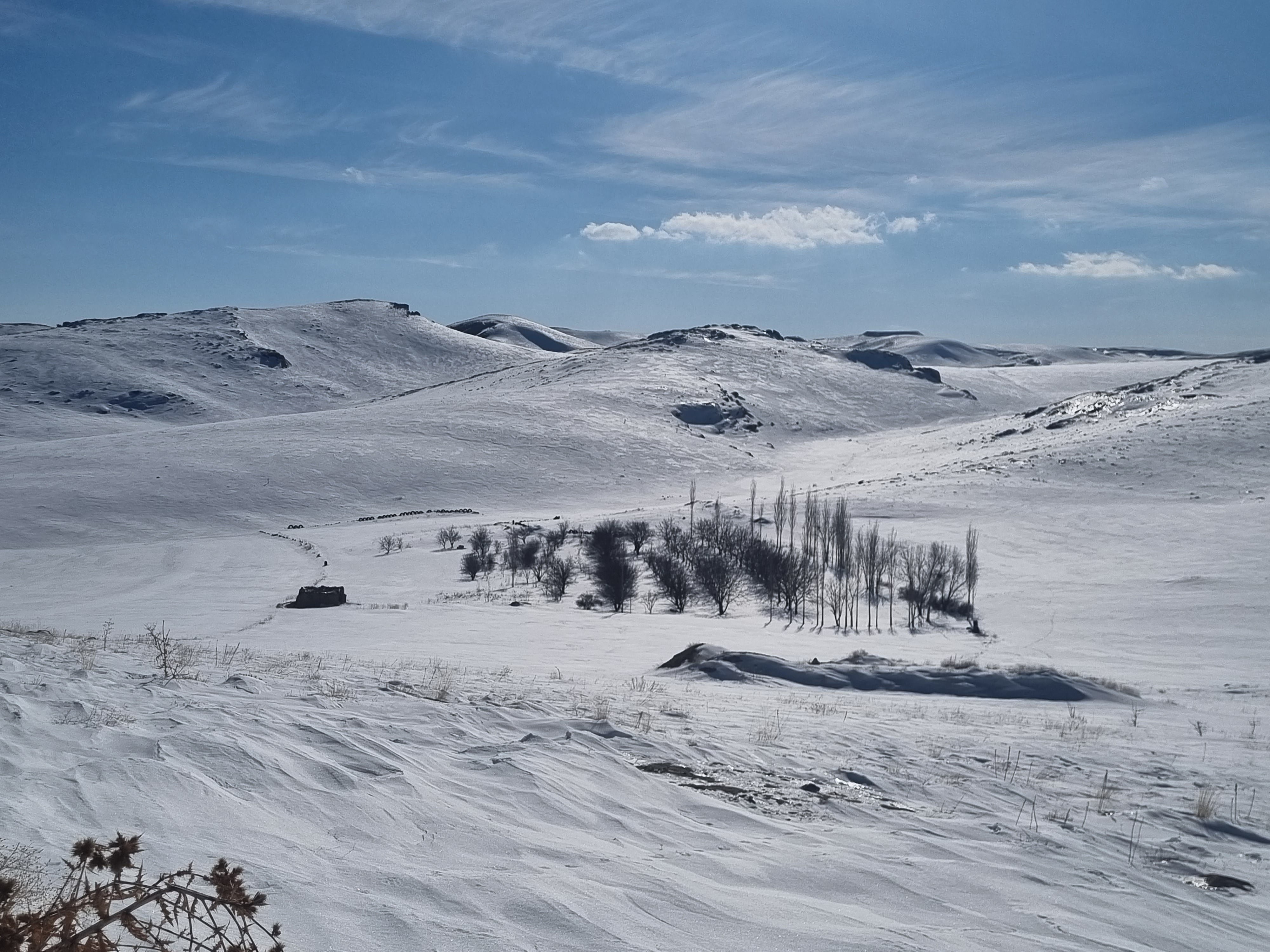
Alone in the cold.
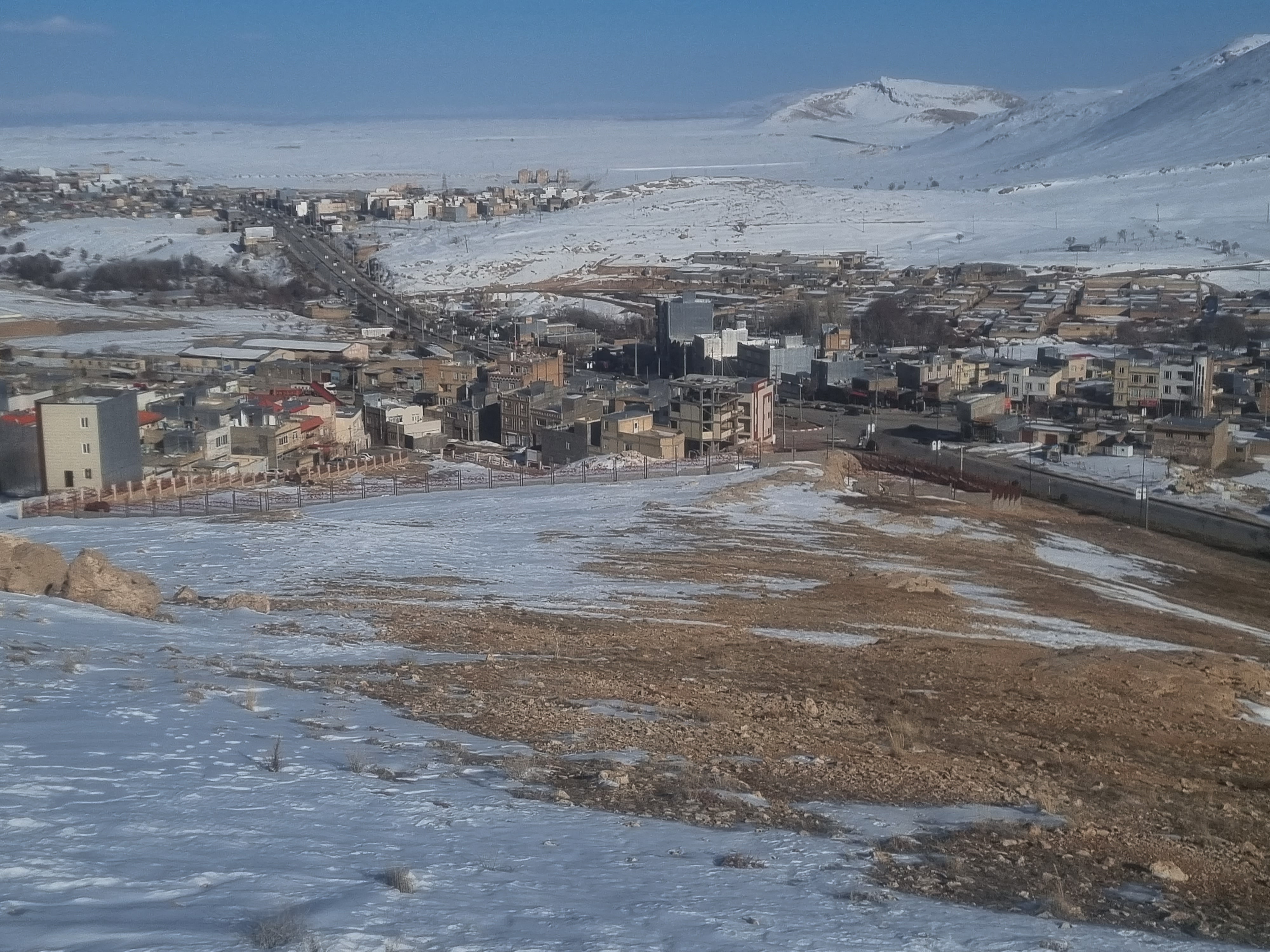
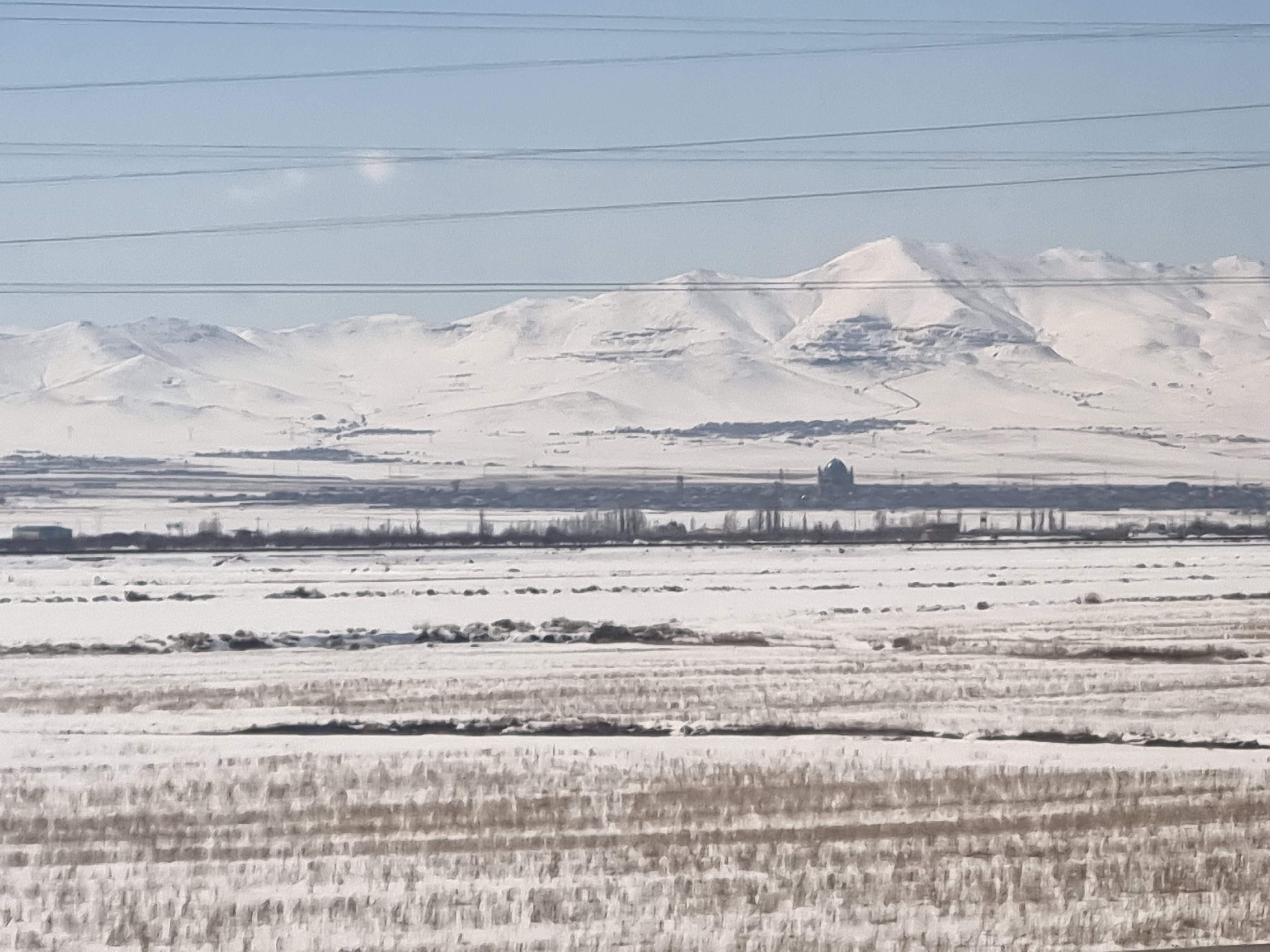
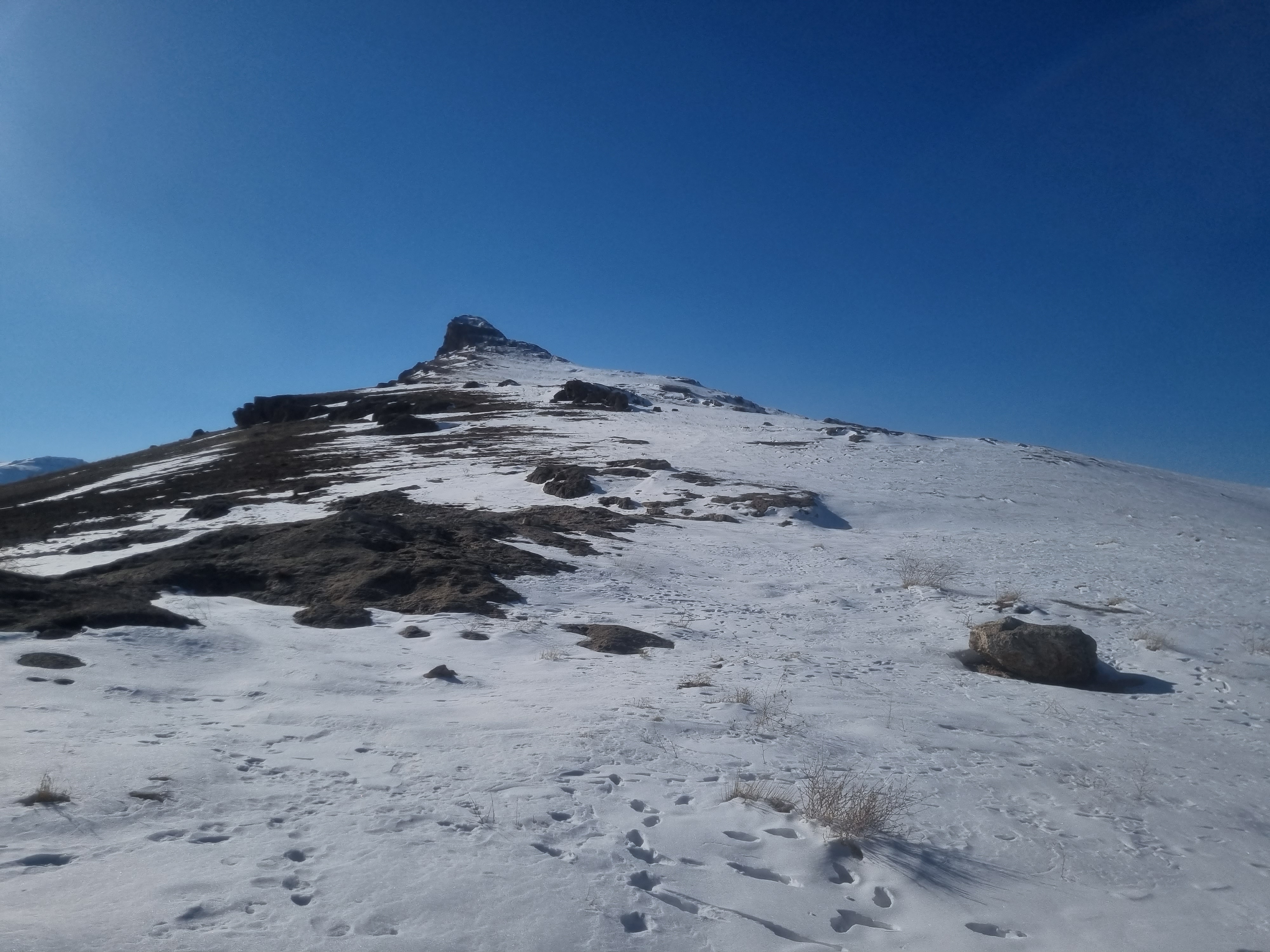
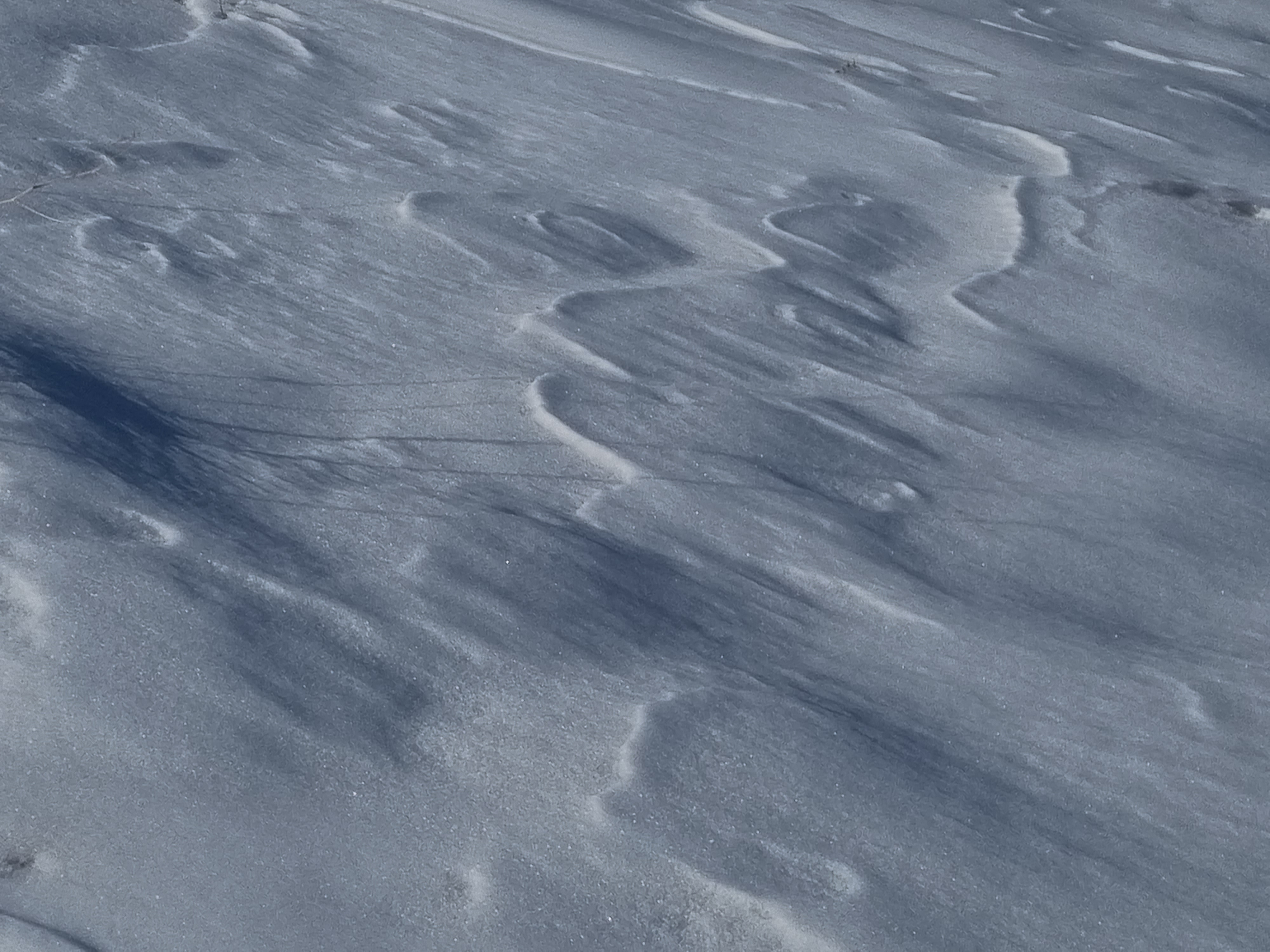
In February I took a two-day solo trip to Bijar to see the land for our museum project. Snow covered the hills and fields. Walking there, I felt how severe the winter could be; later, the same region’s spring greenery would be almost difficult to reconcile with it. The surviving photographs from Bijar date to 26 to 27 February 2025.
A house drawn from memory.
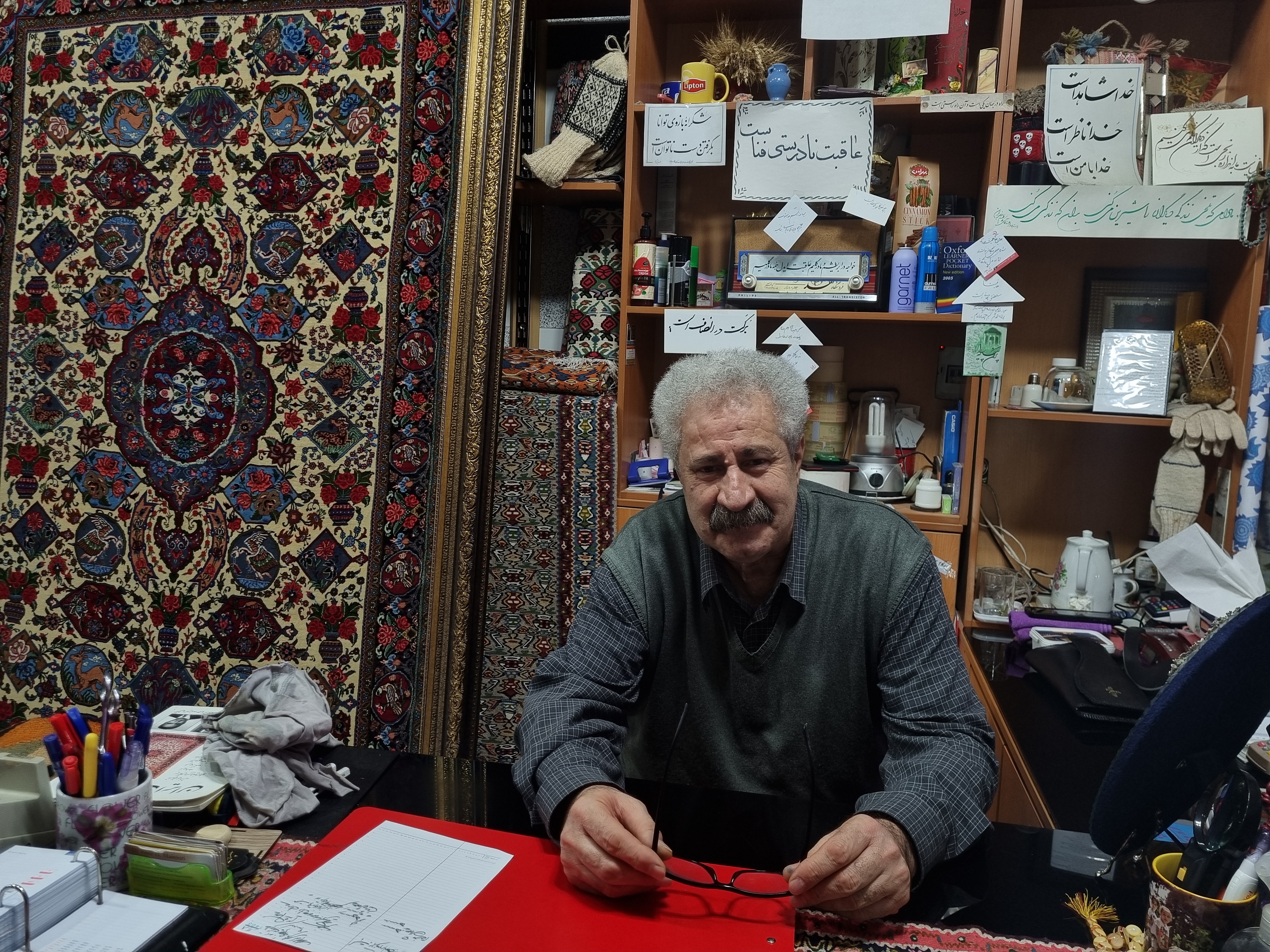
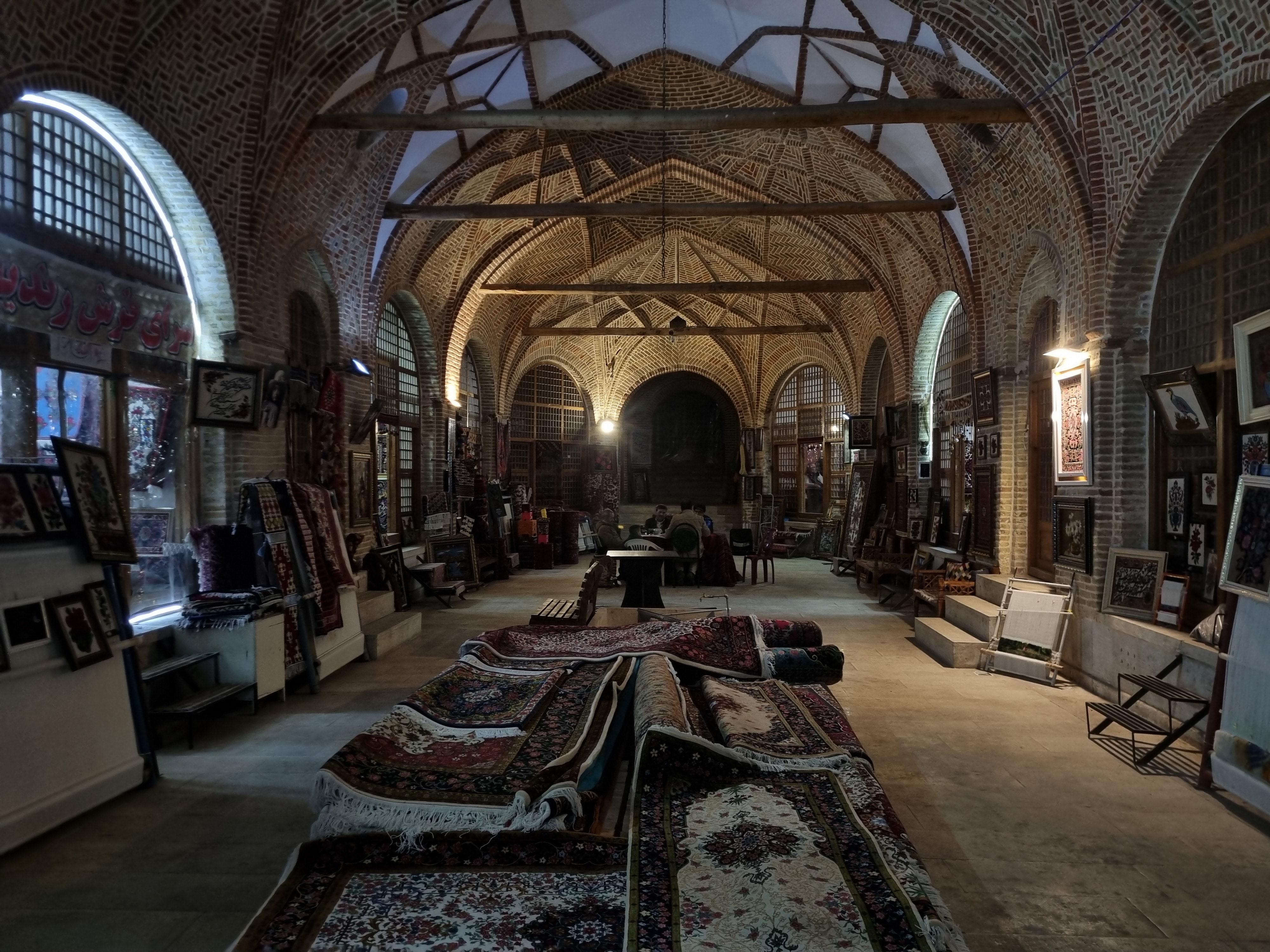
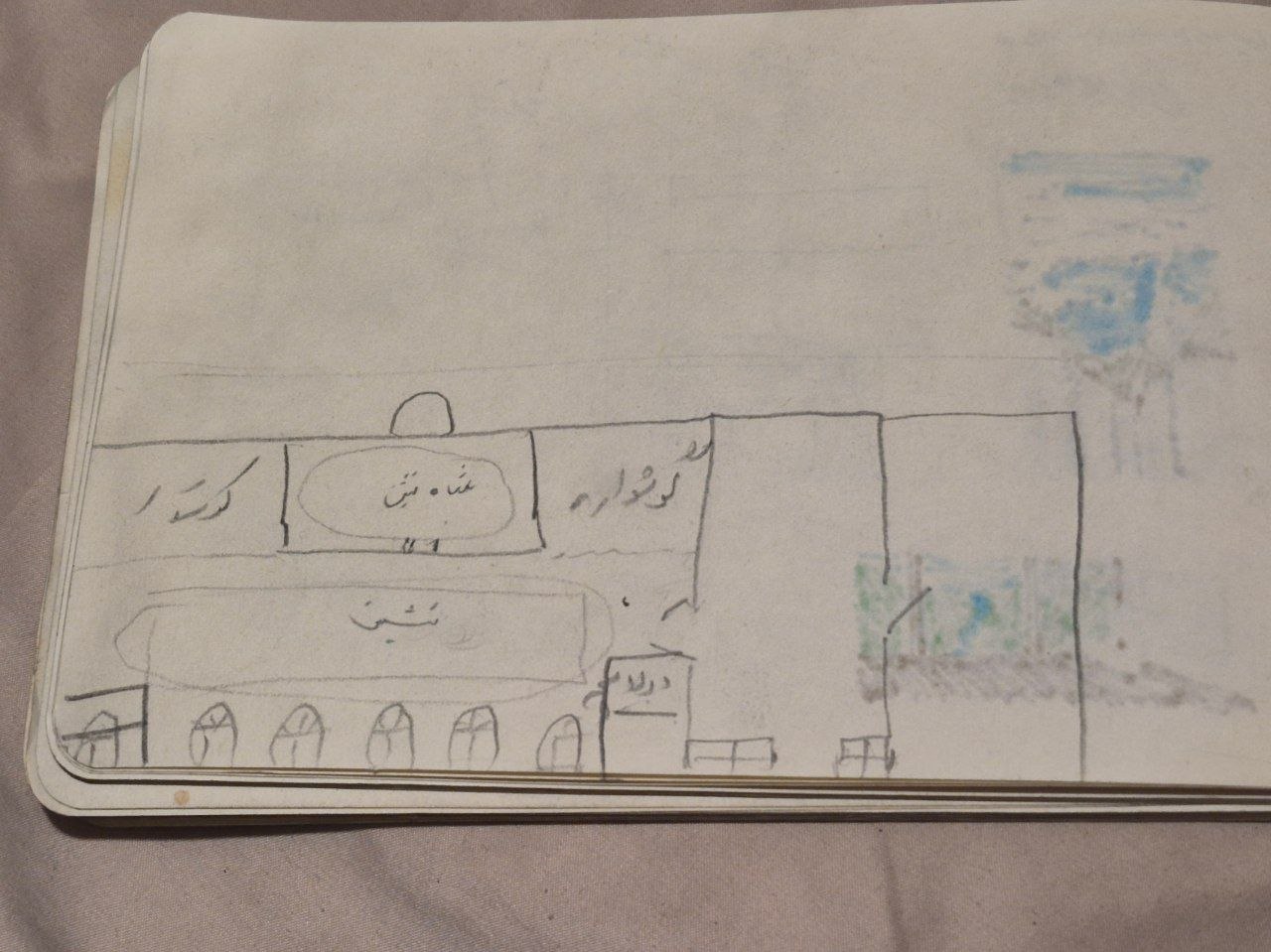
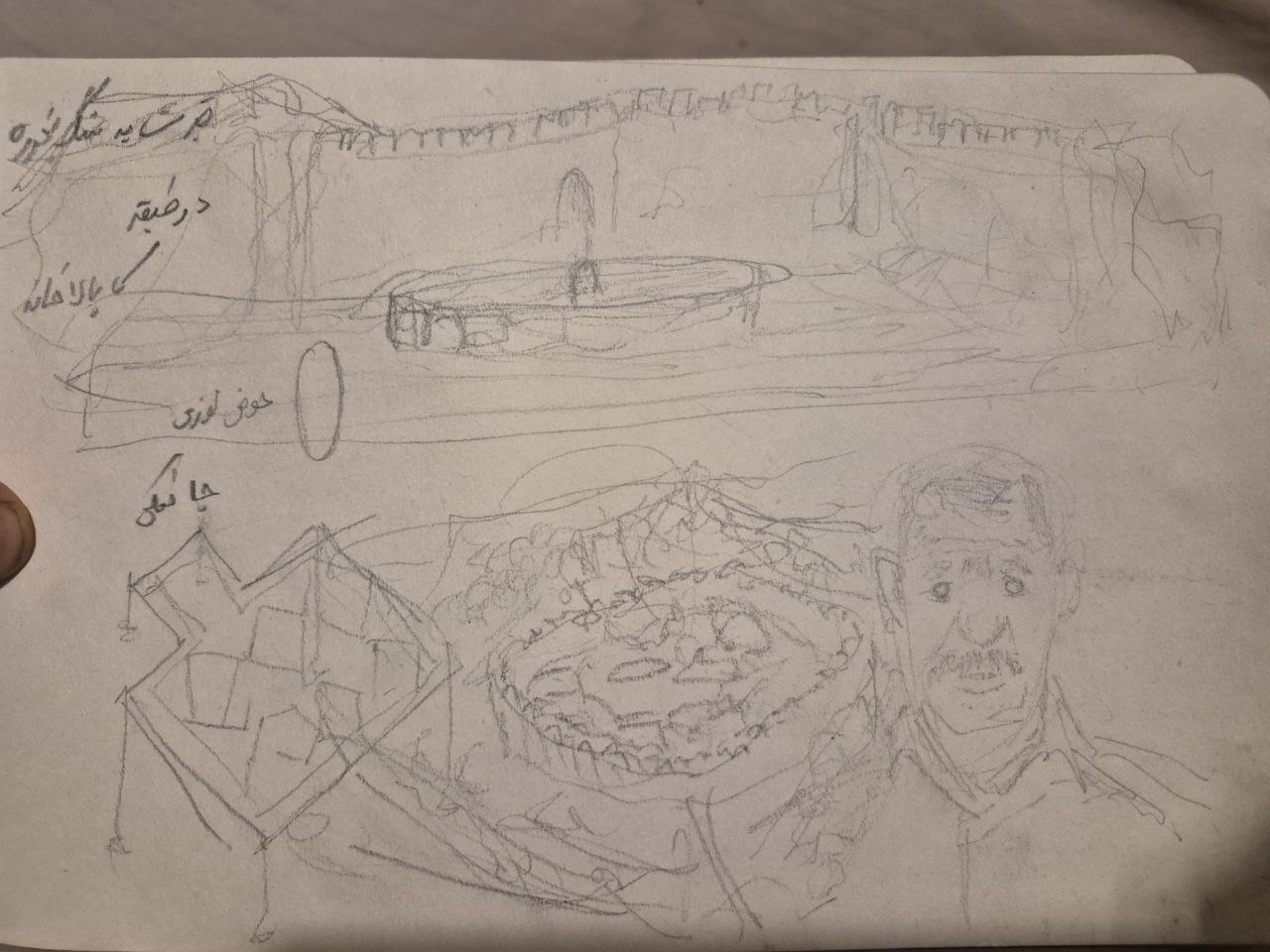
People made room for a stranger. One older man invited me home for a local ash soup; in the old bazaar, I was offered tea beneath a korsi, the low table covered with blankets. The man whose home I visited drew the plan of his former house in my notebook. I drew him while he described Bijar as it had been when he was young. These pages belong to that winter visit.
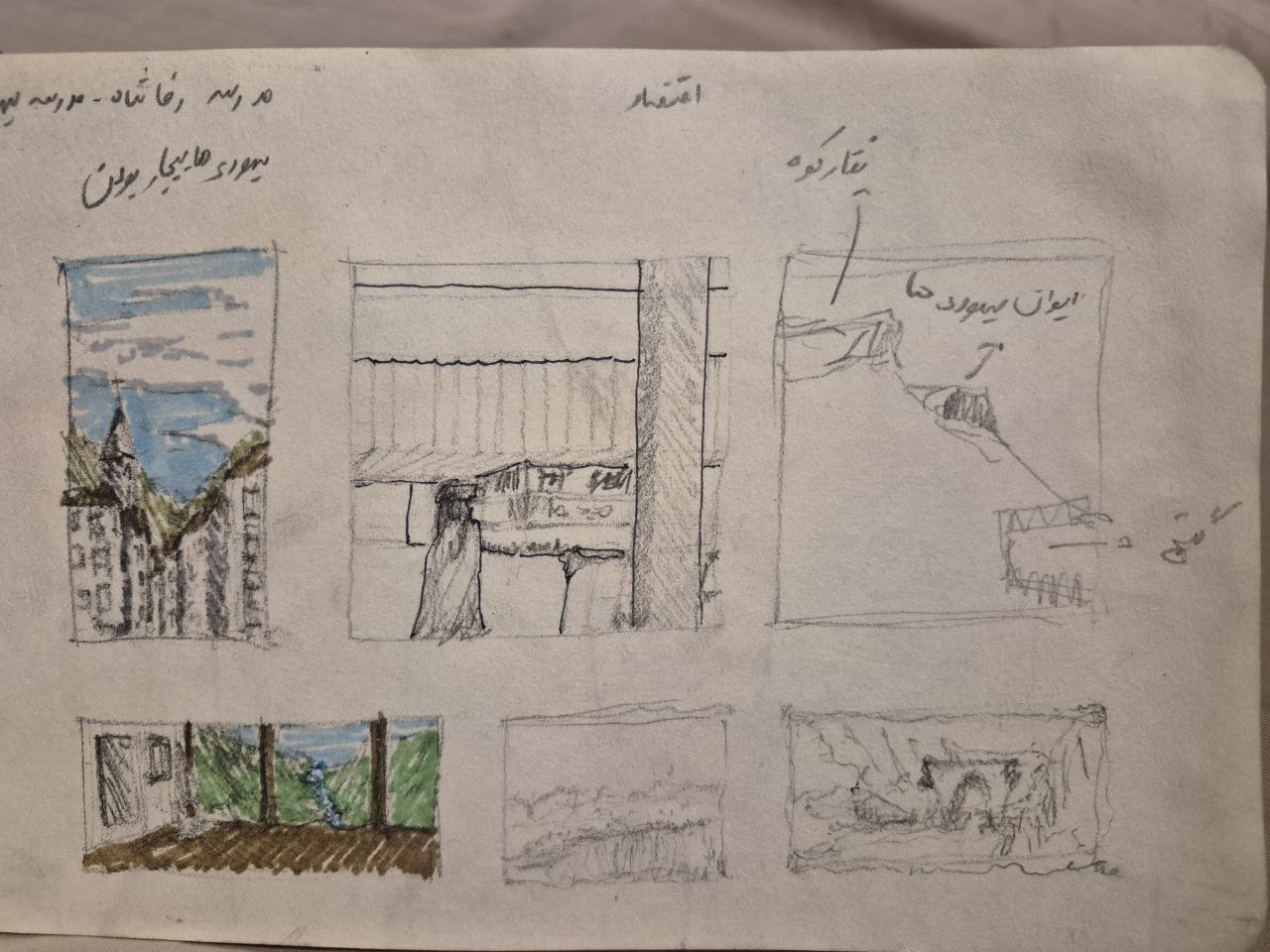
Before the finished carpet.
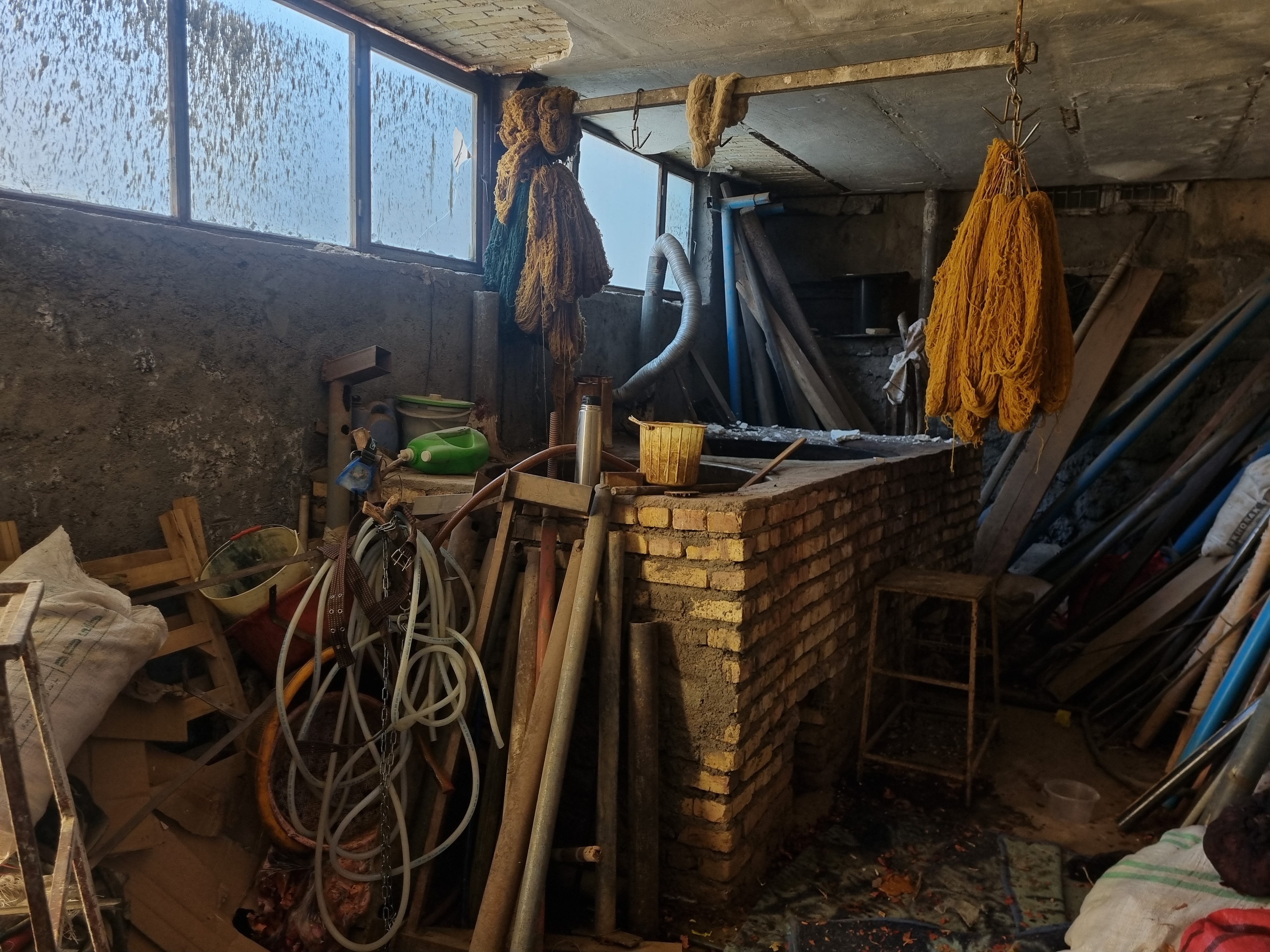
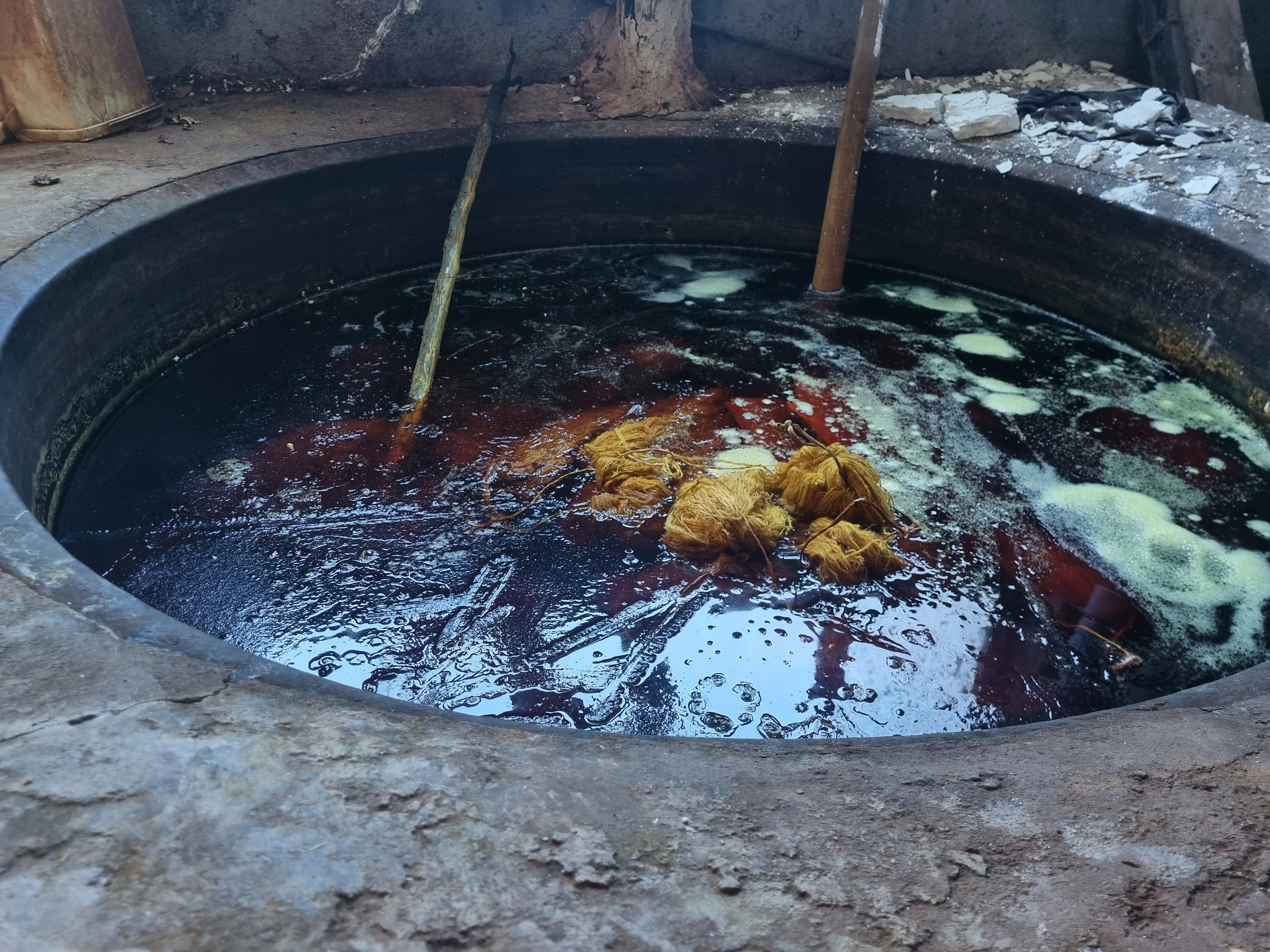
Those conversations also opened a way into carpet workshops. I watched weaving at the loom and saw the yarn and dyeing process. A carpet’s softness and beauty conceal a great deal of difficult work. That contrast became part of how I thought about the museum: the finished object alongside the materials, effort and lives that make it possible.
Back with the university.
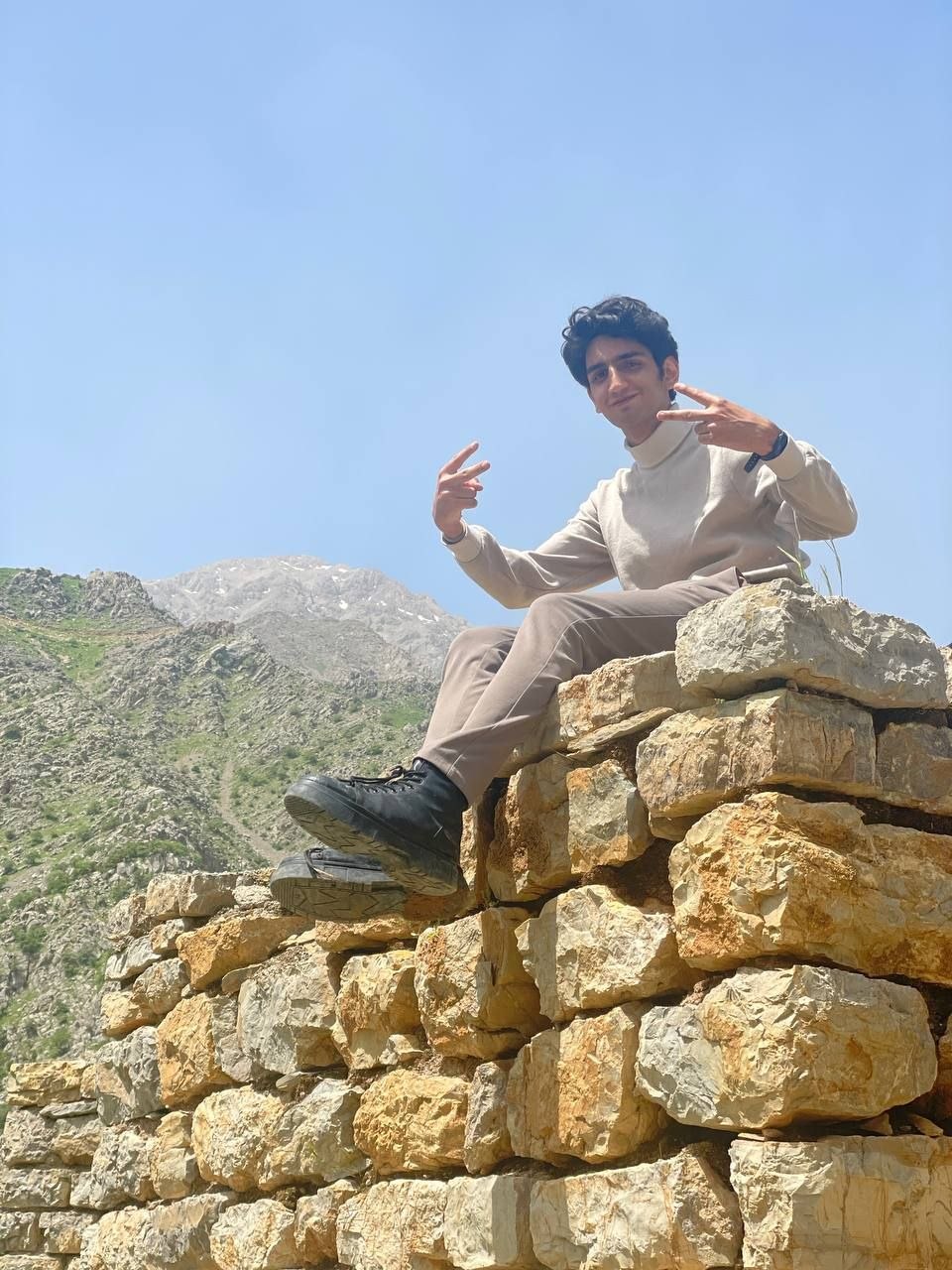
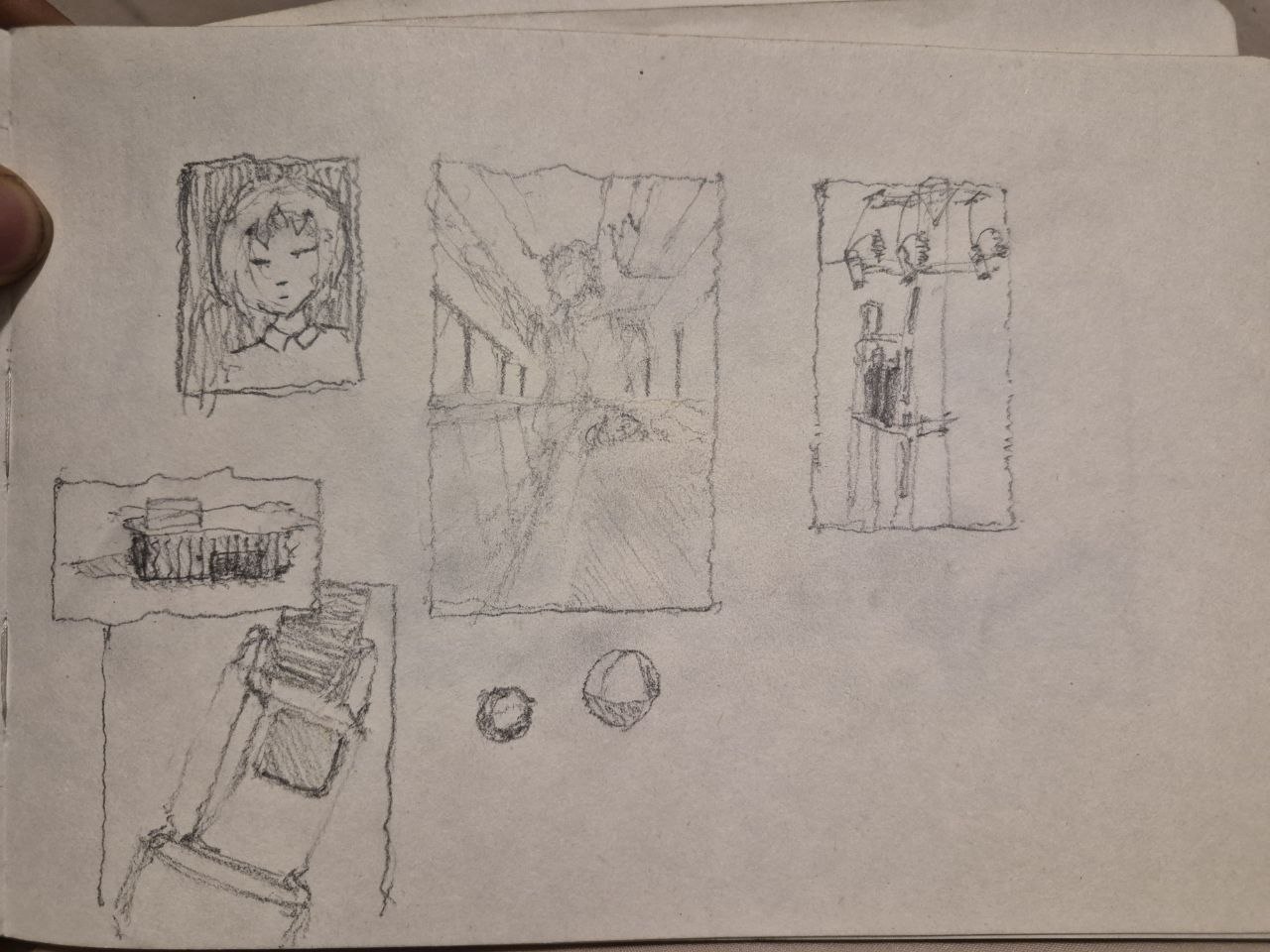
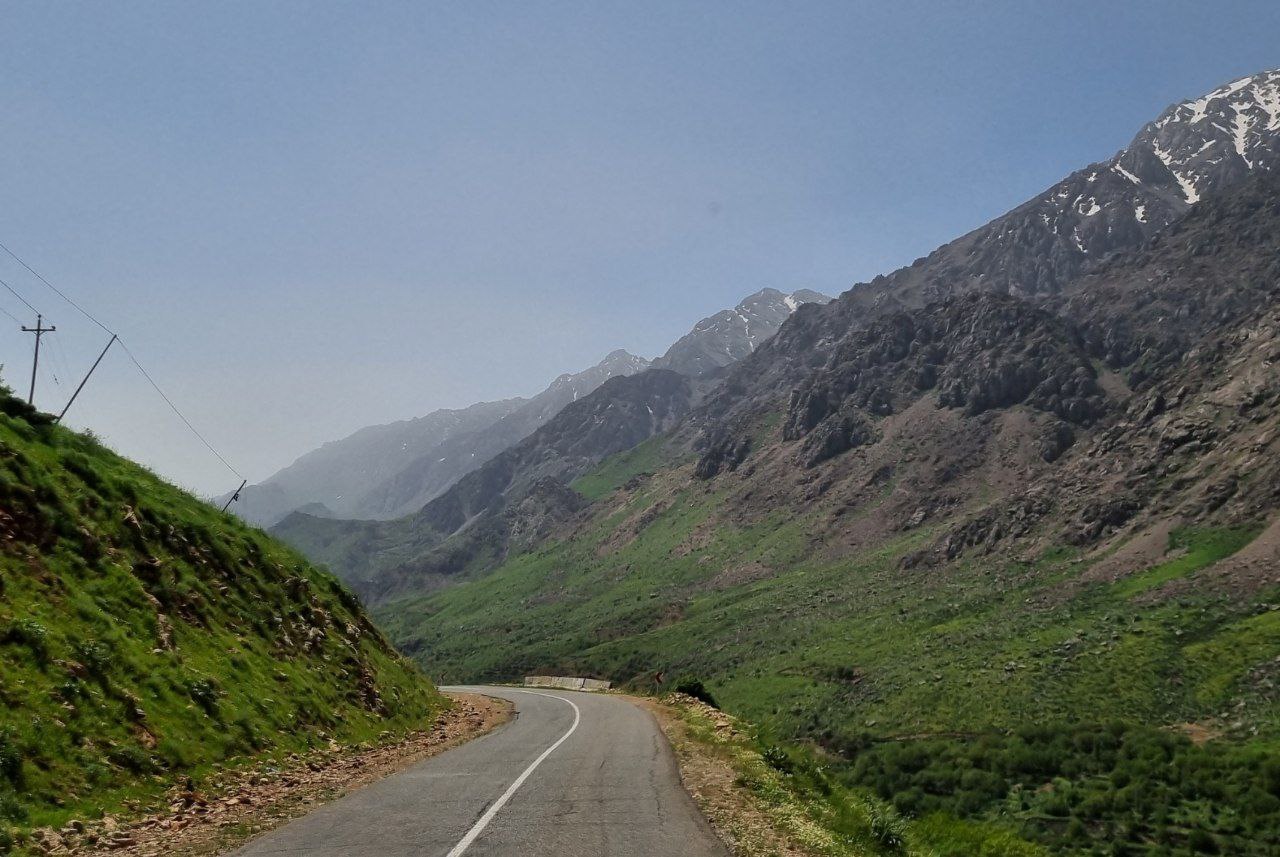
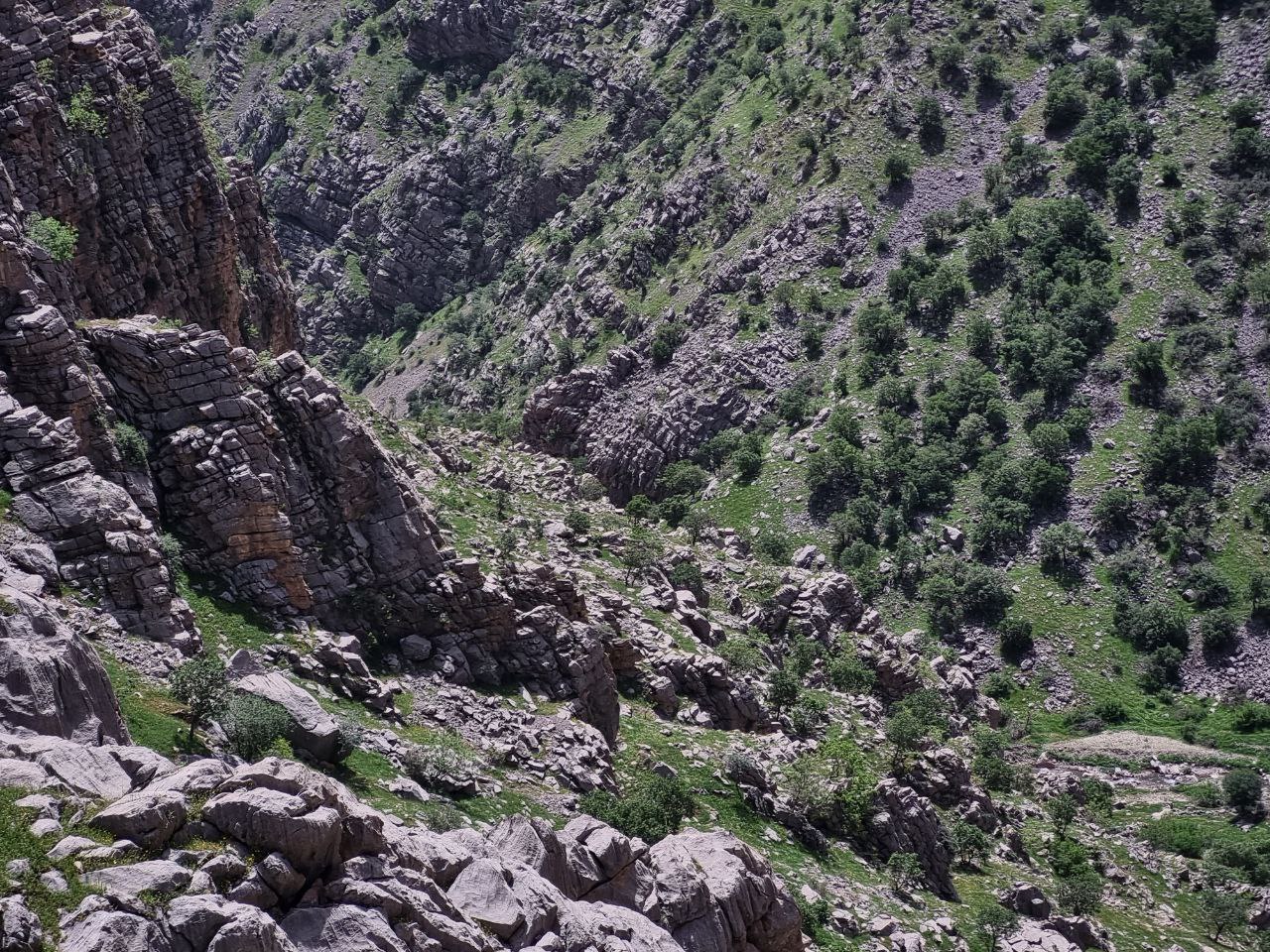
We took the train to Sanandaj, beyond Hamedan, then continued by bus to Hawraman/Uramanat, where we stayed. This trip was mostly spent outdoors, in green fields and on mountain roads. The camera photographs are dated 1 and 2 May 2025. The small notebook page below is from this second trip.
As though it had grown from the ground.
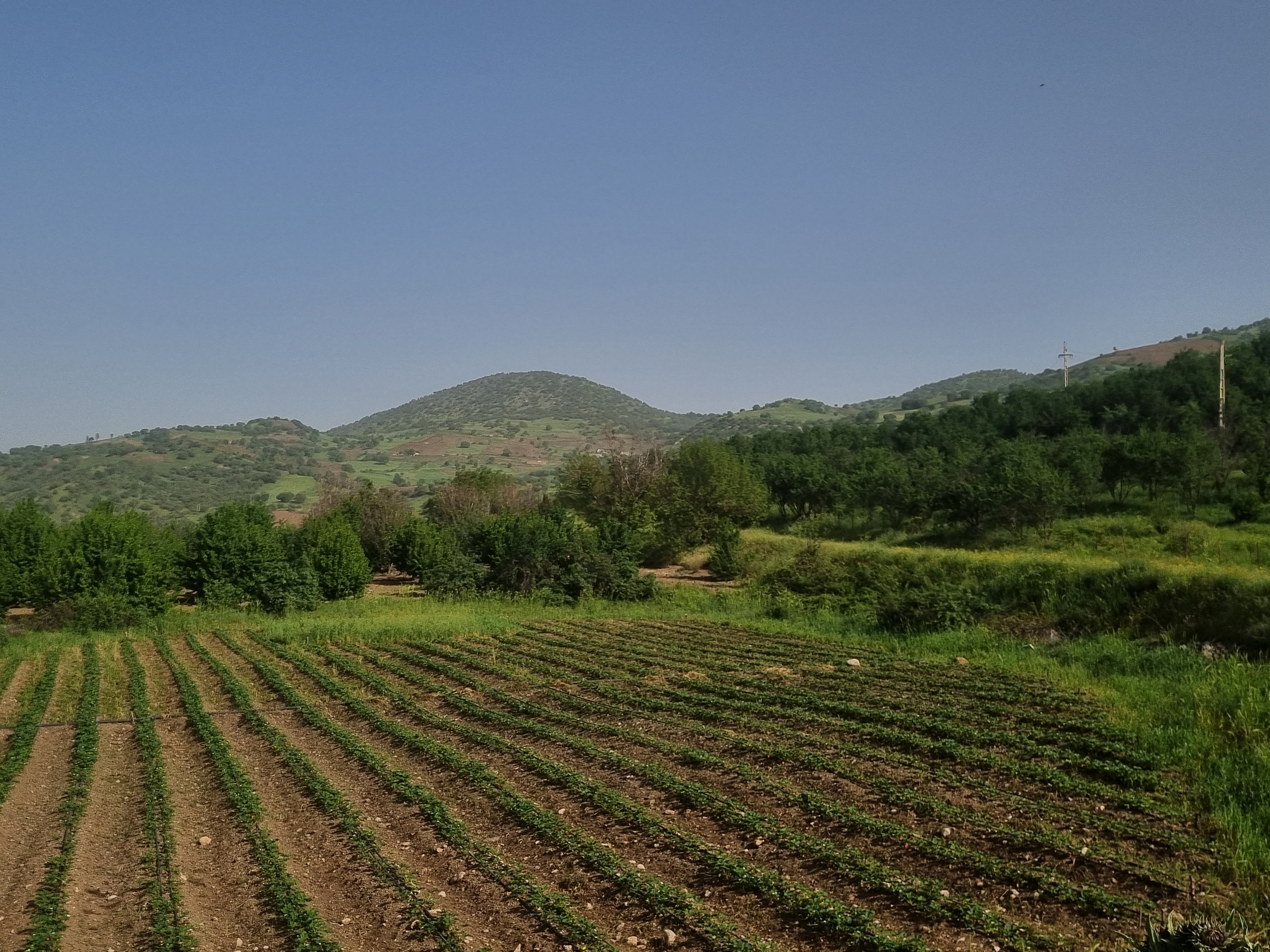
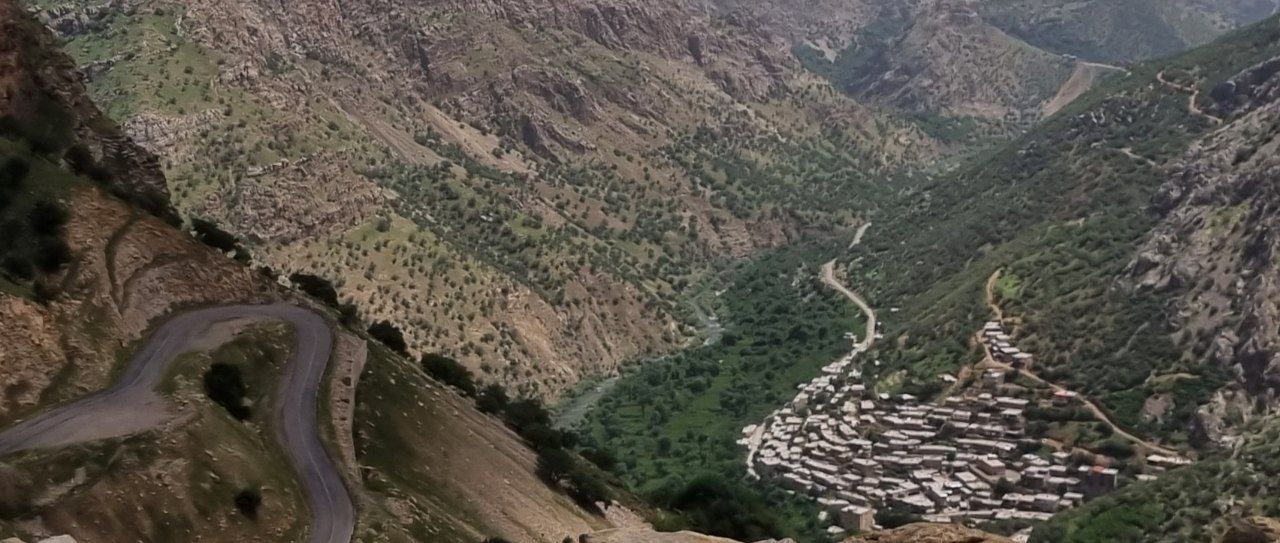
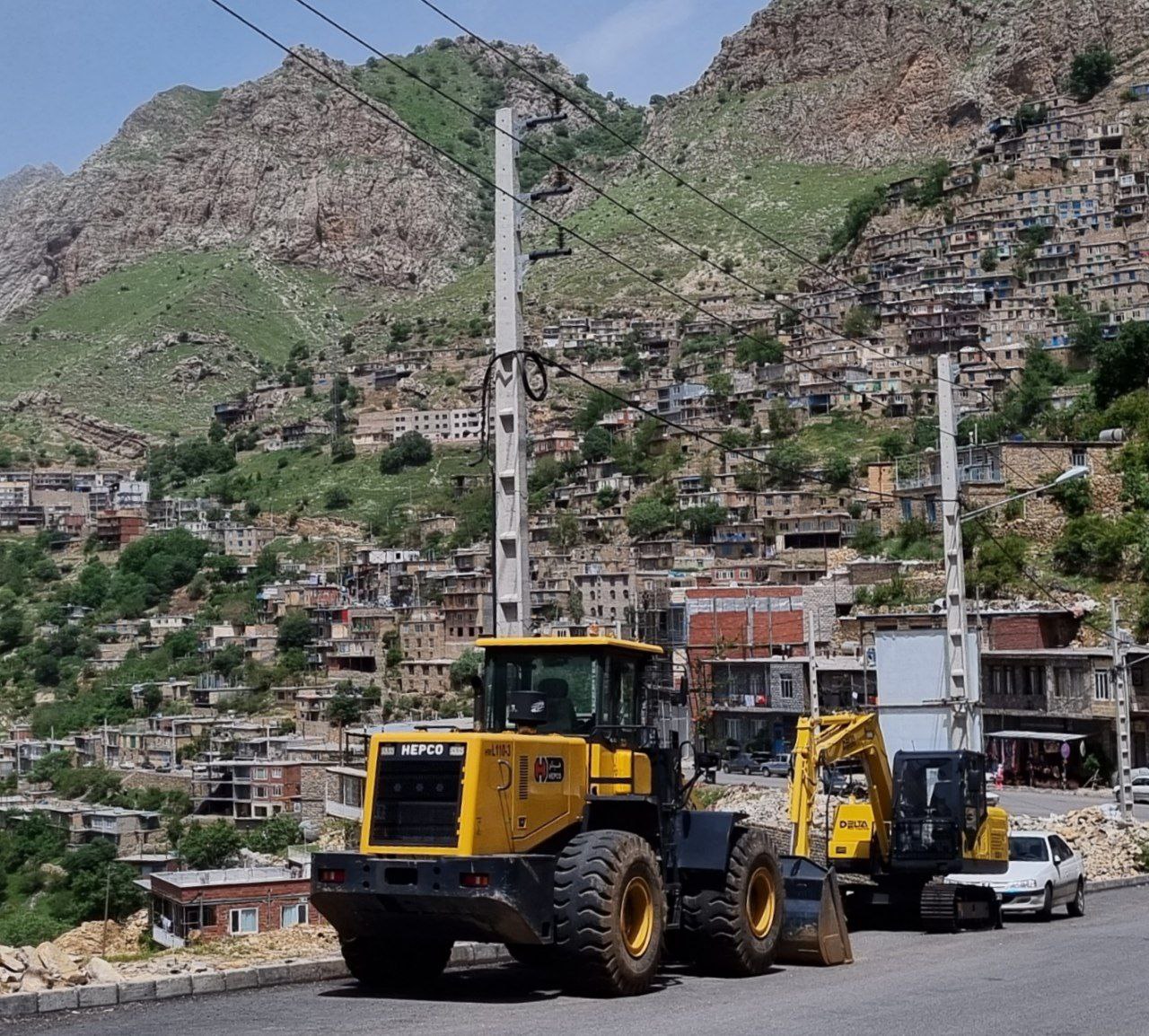
From the winding mountain road, the villages seemed to rise out of the same earth as the slopes around them. Their stone, scale and placement felt like part of the landscape. I remember thinking how different that was from cities that seem to have been placed over nature. The feeling was organic, even where construction and road work interrupted the view.
Zarivar, beside Marivan.
We also visited Marivan and Zarivar Lake, often called Zeribar. The broad water and reed beds here are a different setting from Daryan reservoir on the Sirwan River, where we took a boat ride near Uramanat. I remember both, but they belong to separate stops.
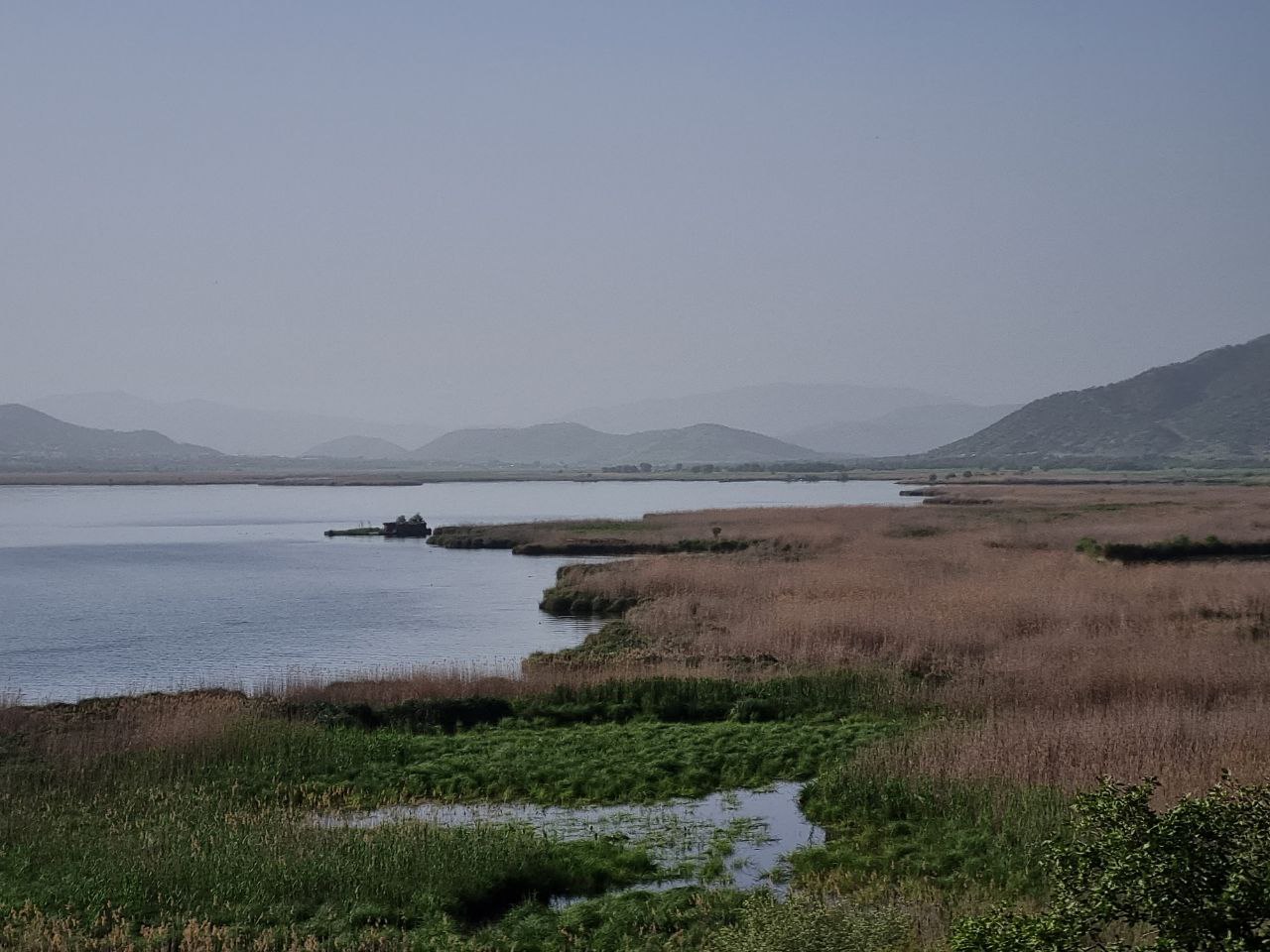
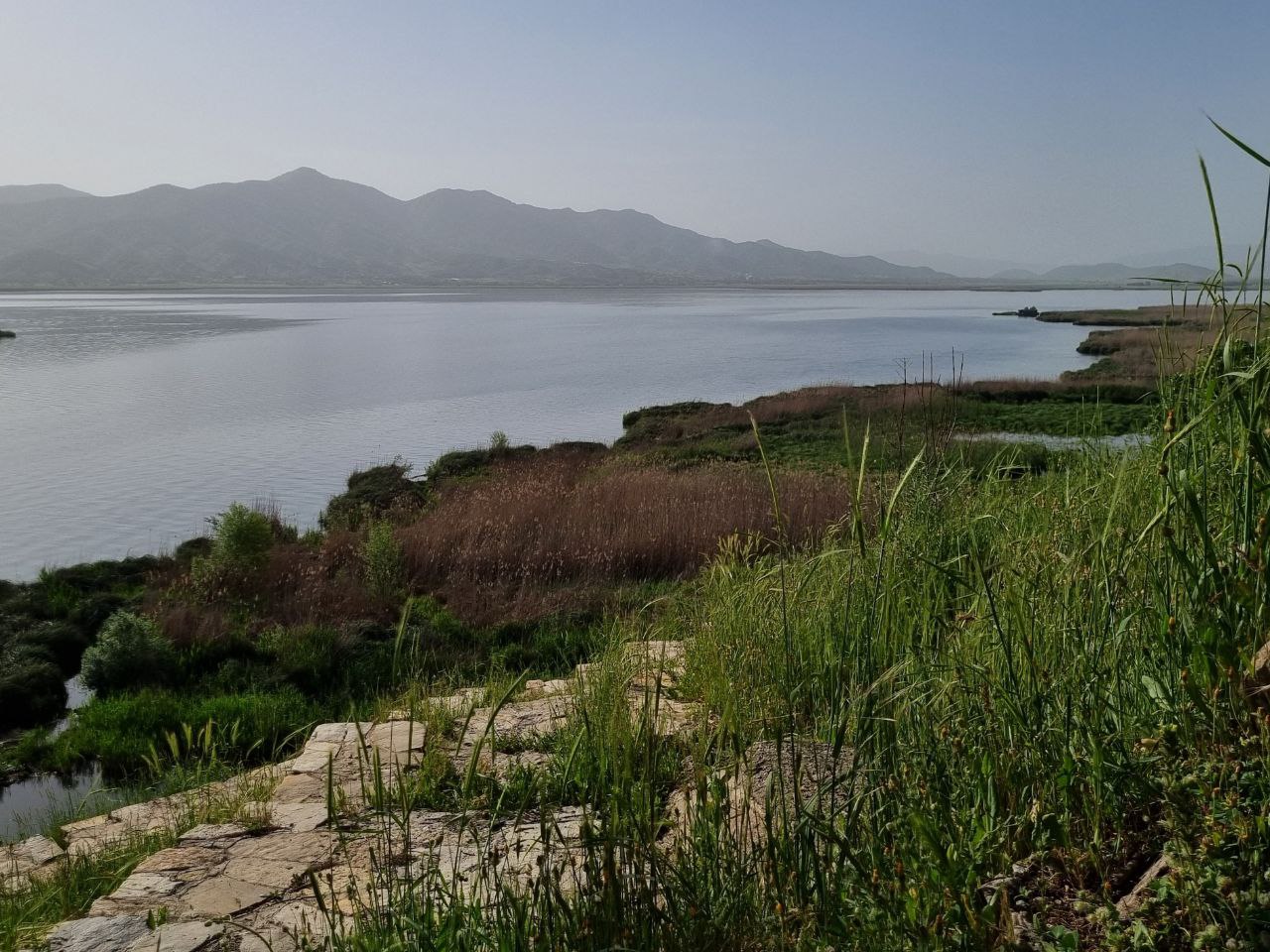
Between the banks.
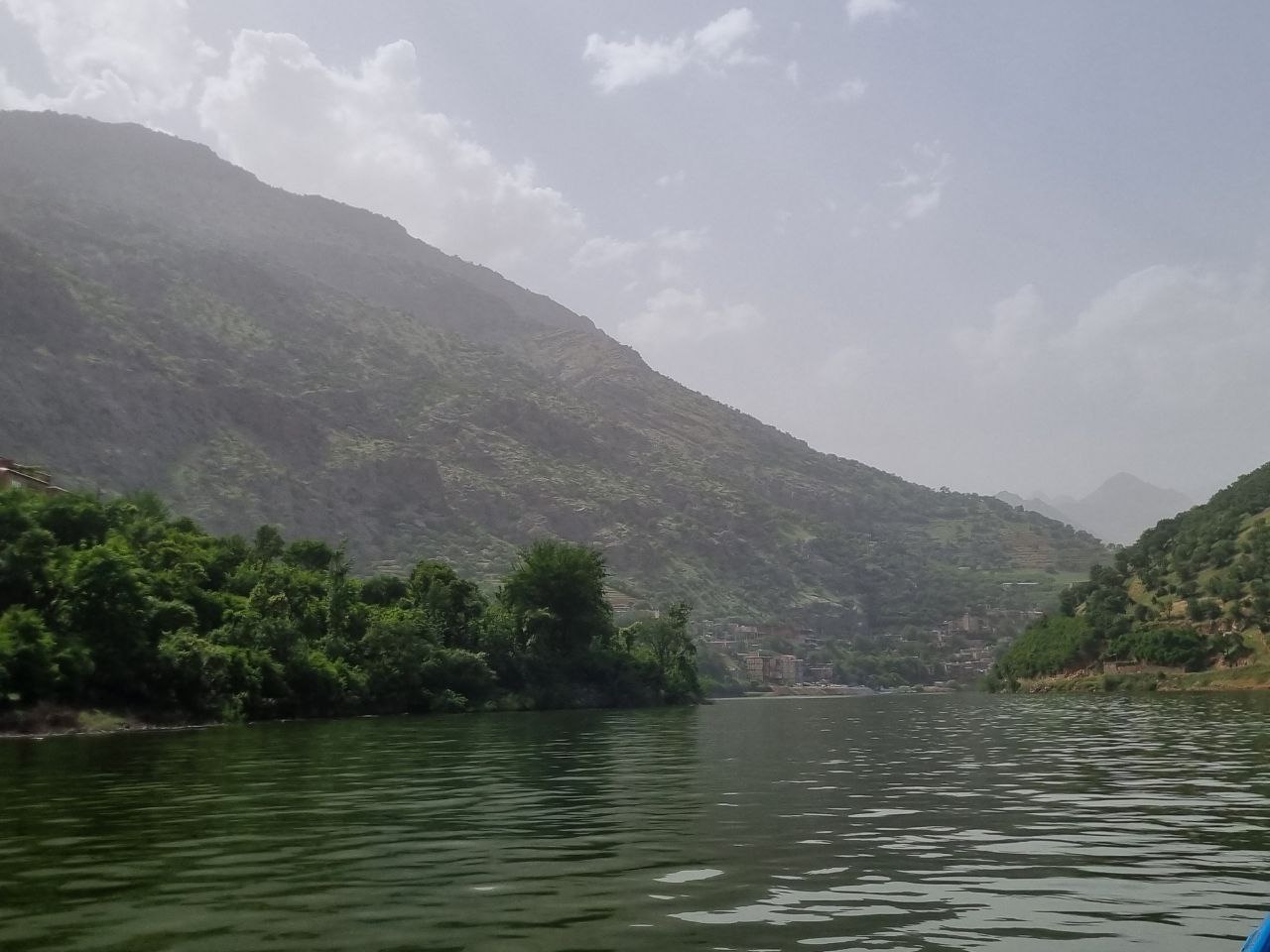
On the boat at Daryan reservoir, on the Sirwan River near Uramanat, the mountains came close to the water. Looking from that level changed the scale again: steep green banks, rock faces and another small boat across the surface. These photographs were made on and around that ride.
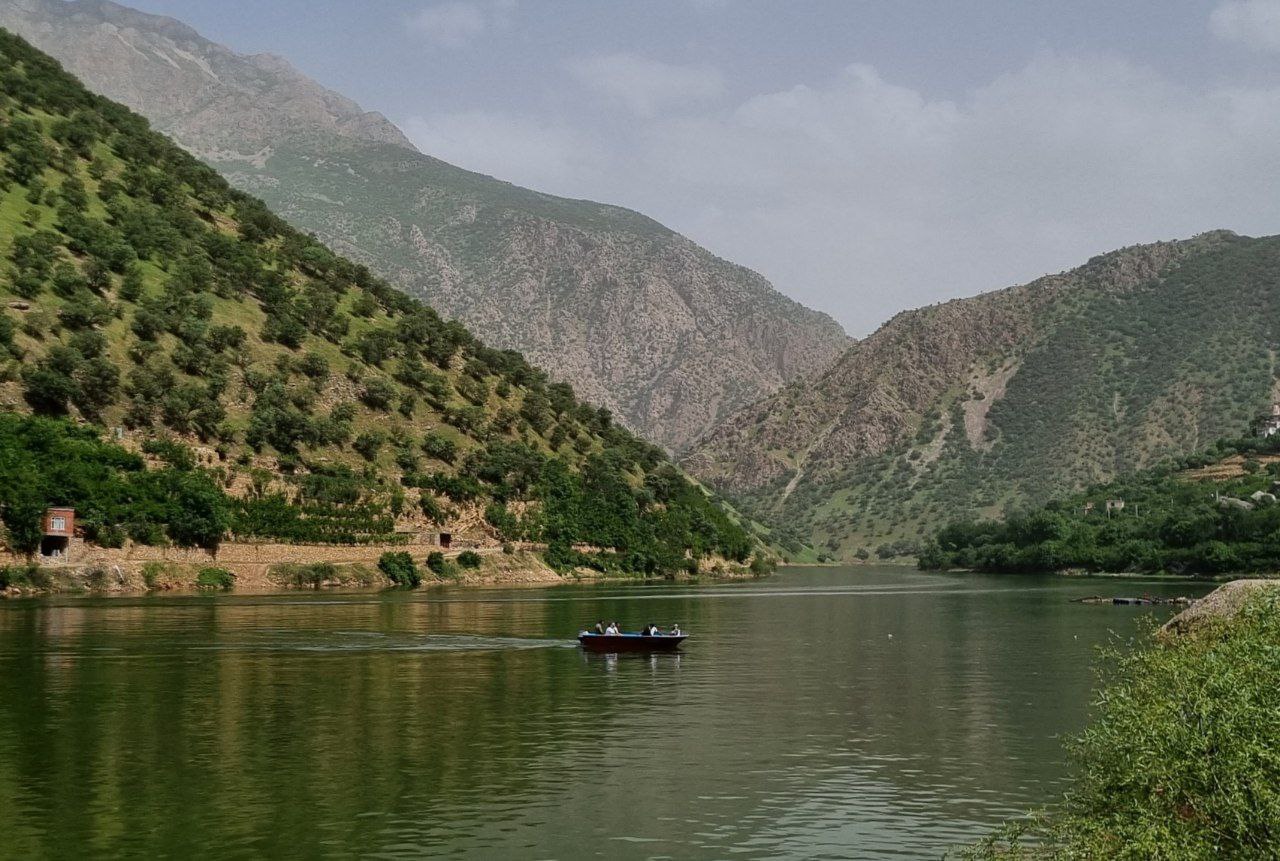
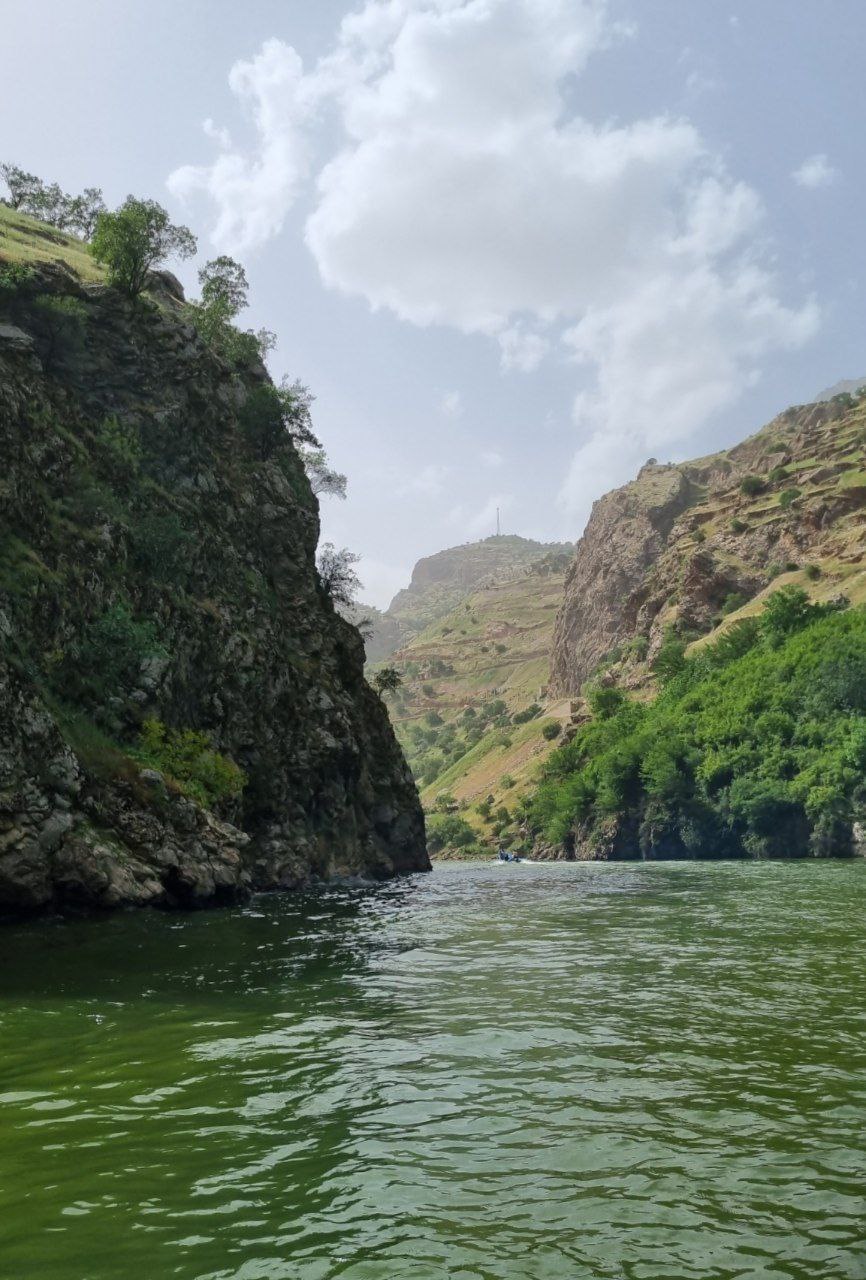
Sharing the landscape.
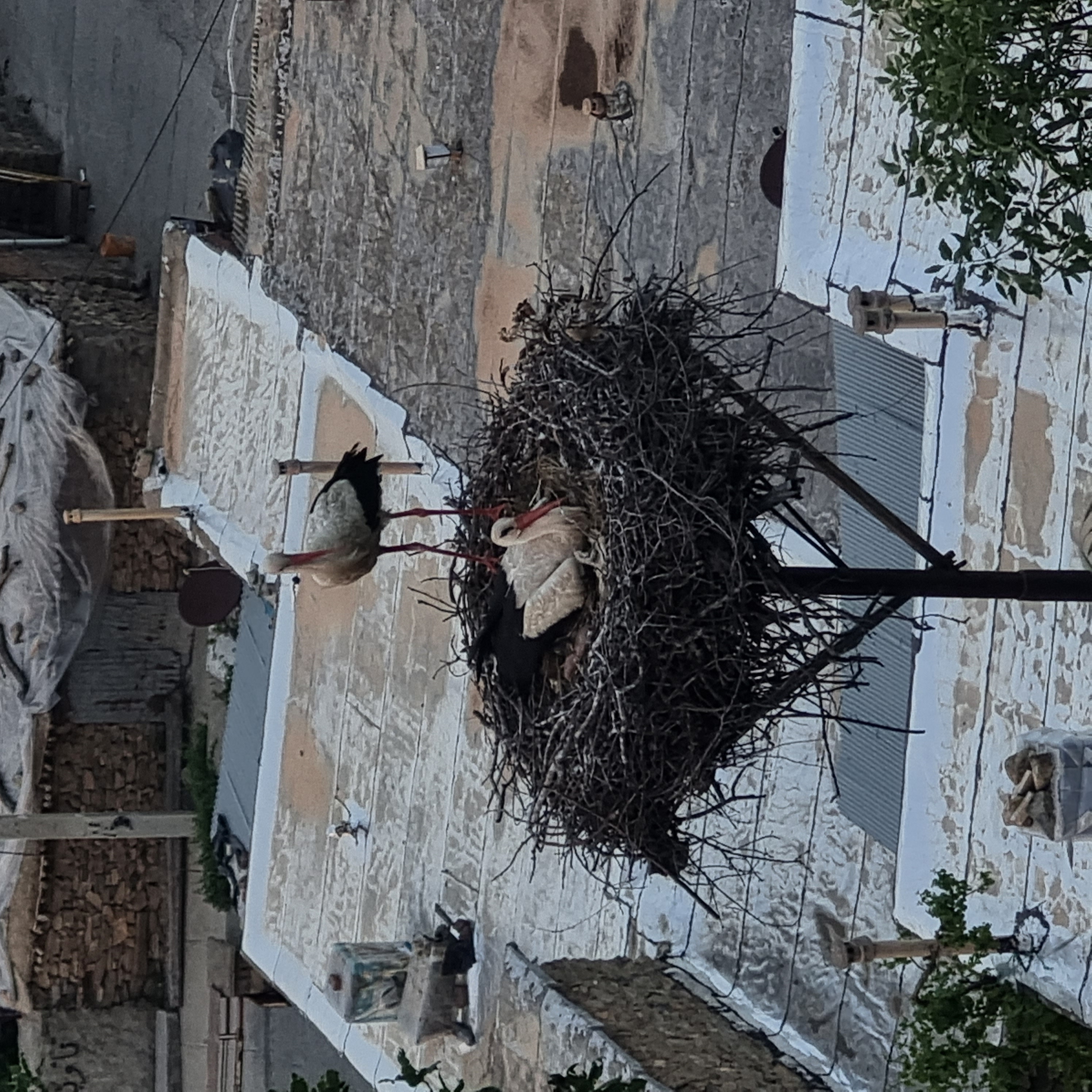
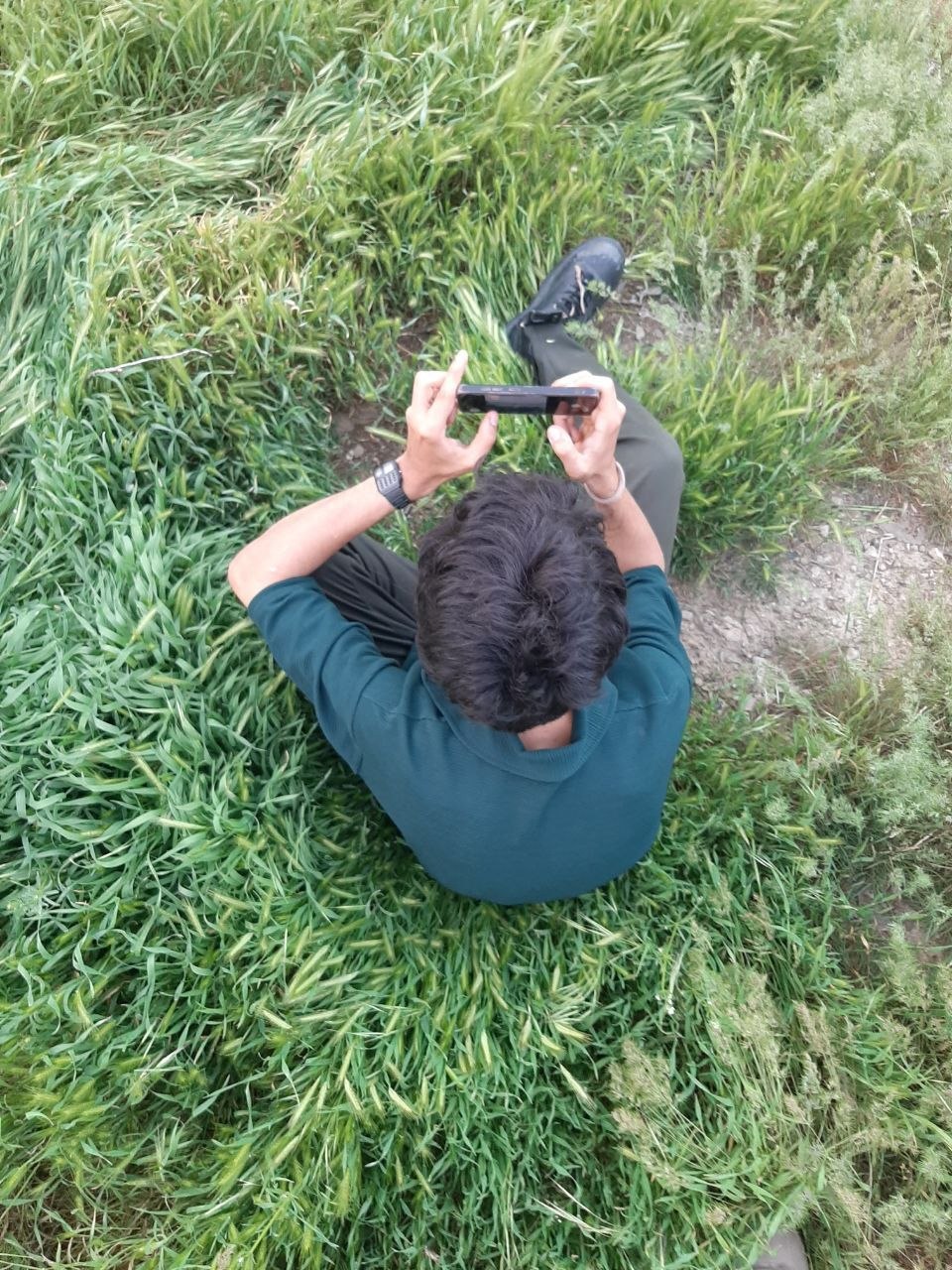
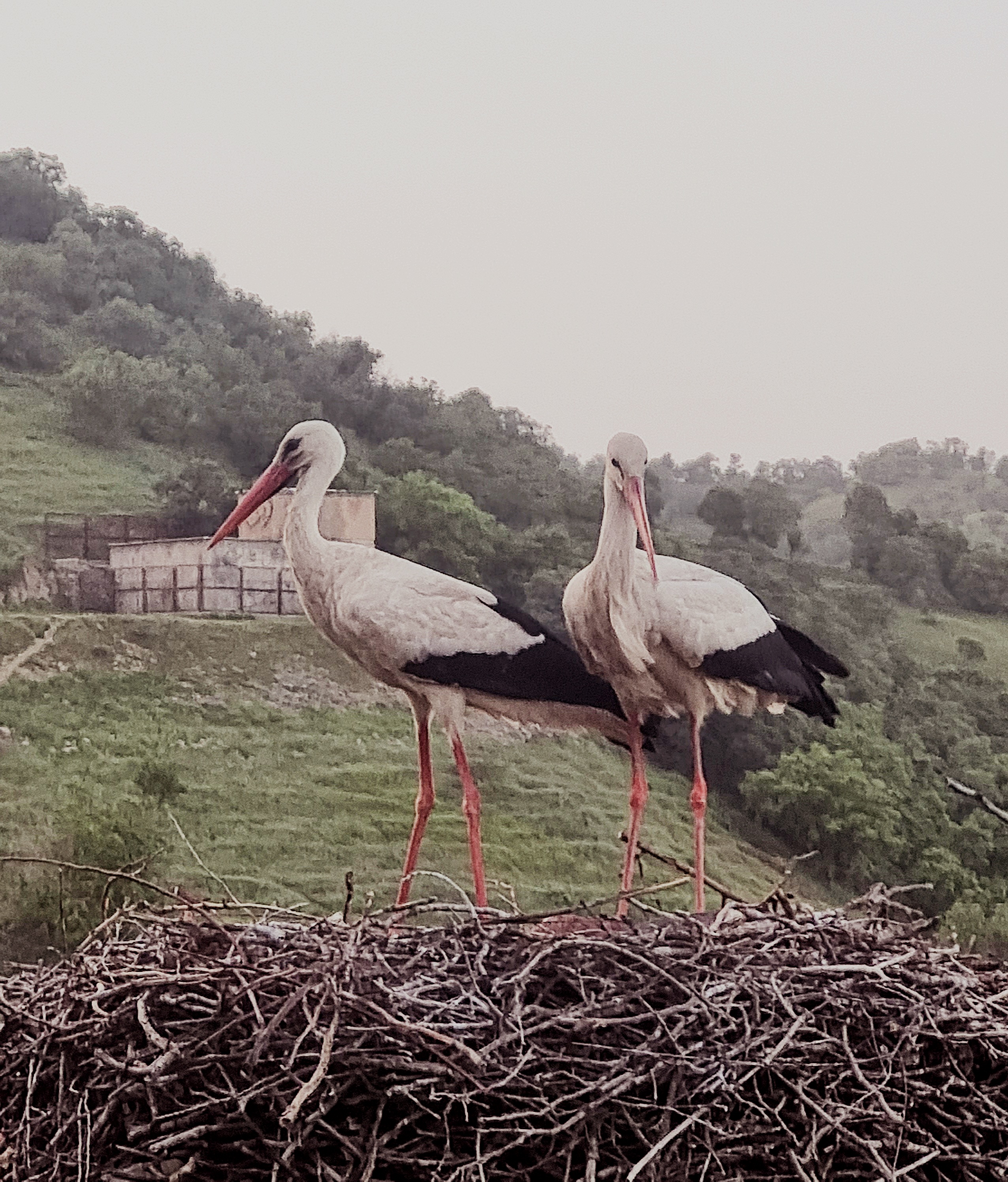
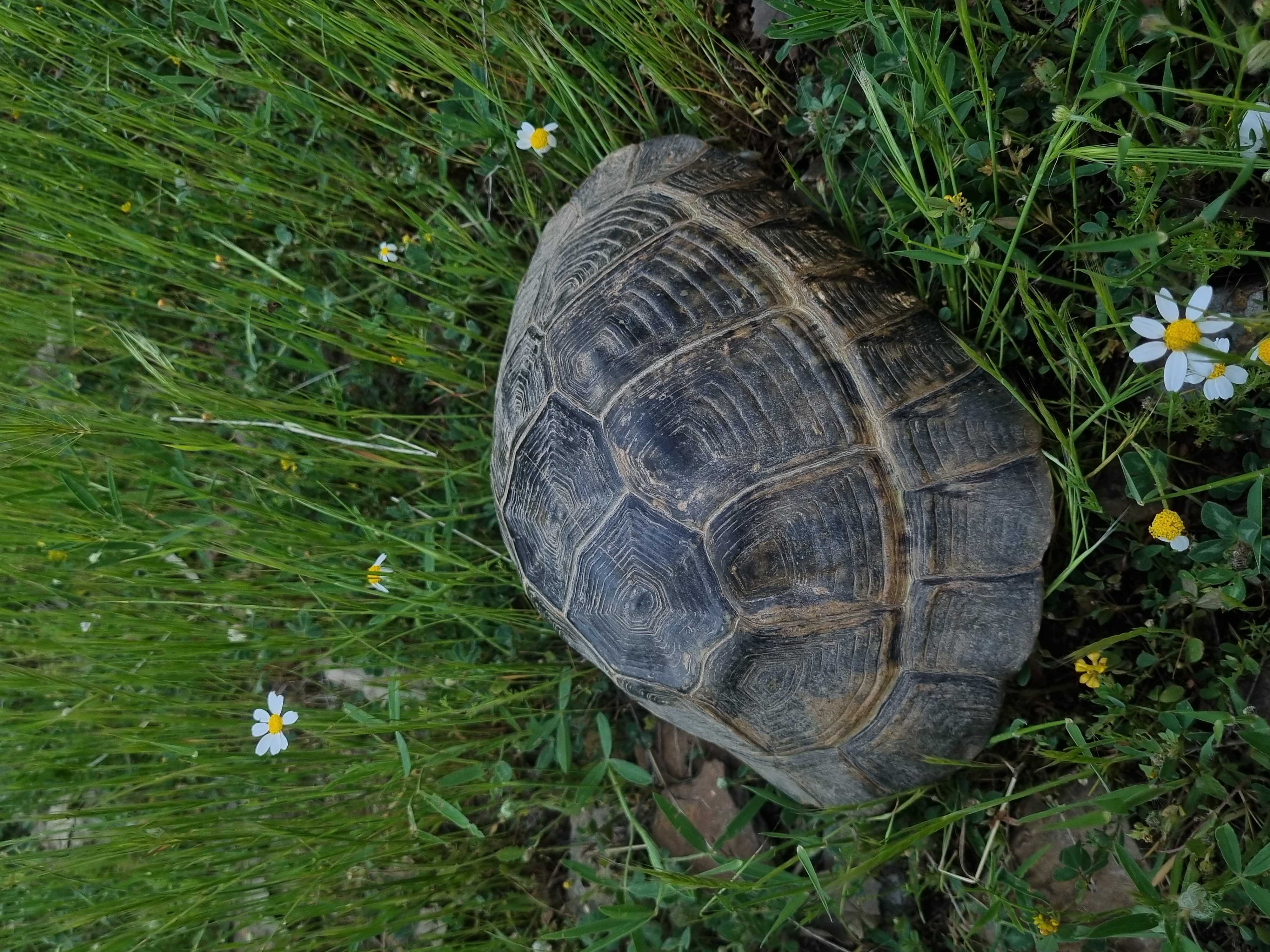
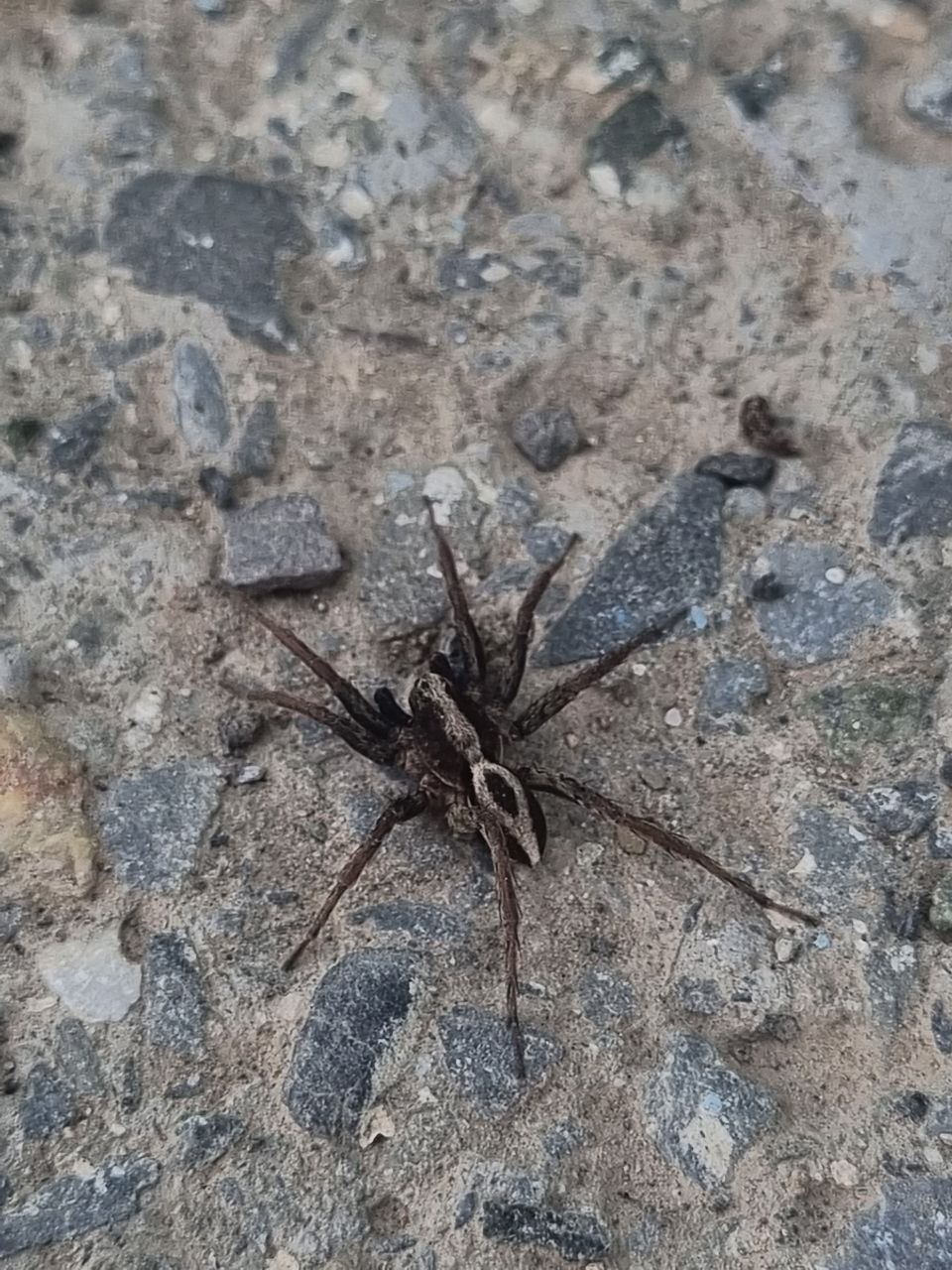
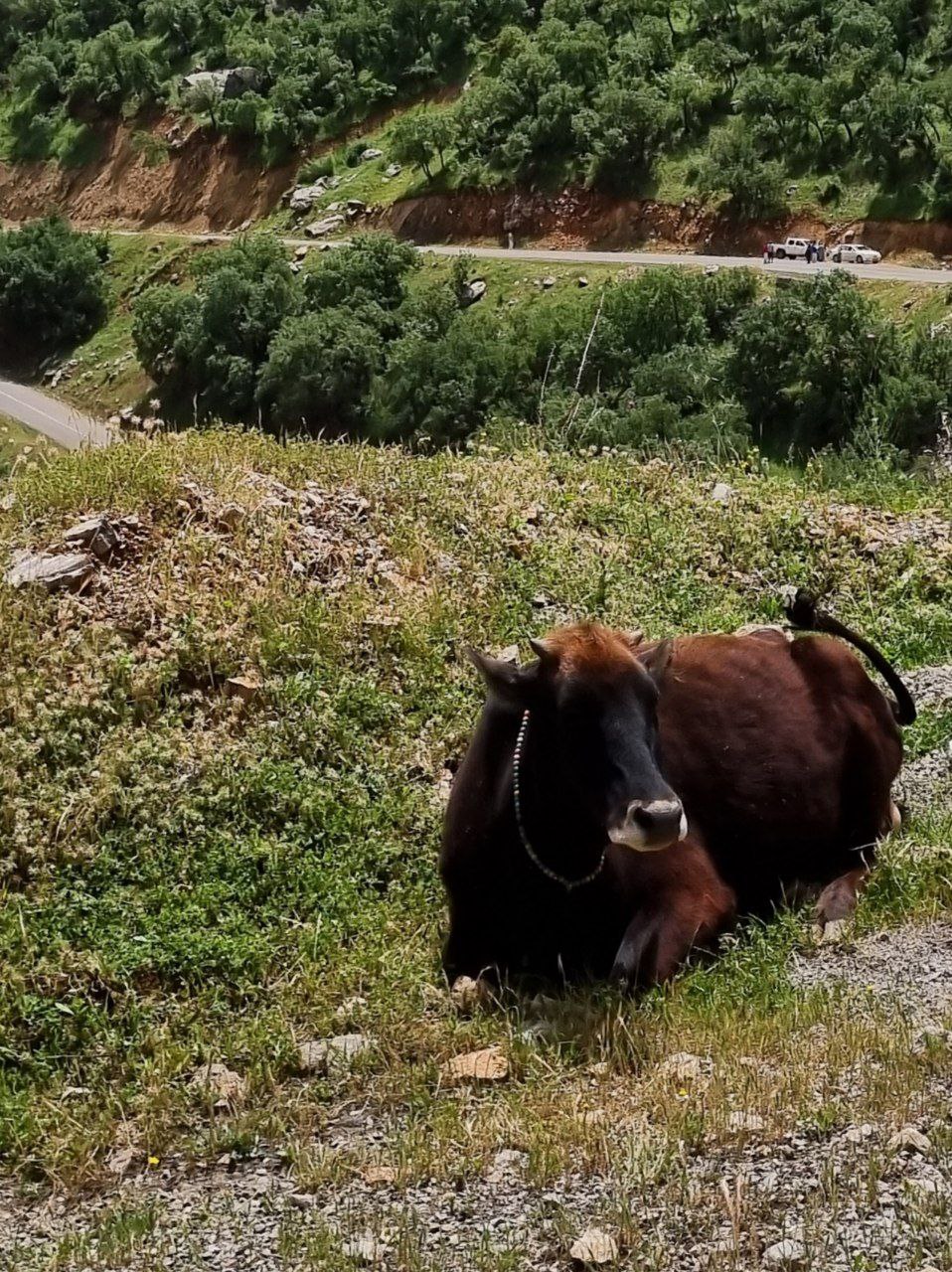
We stopped to watch the storks and photograph their nests. I also kept pictures of a tortoise in the grass, a spider on the ground and a cow resting above the road. These small encounters are part of how I remember the spring trip.
Back through Bijar.
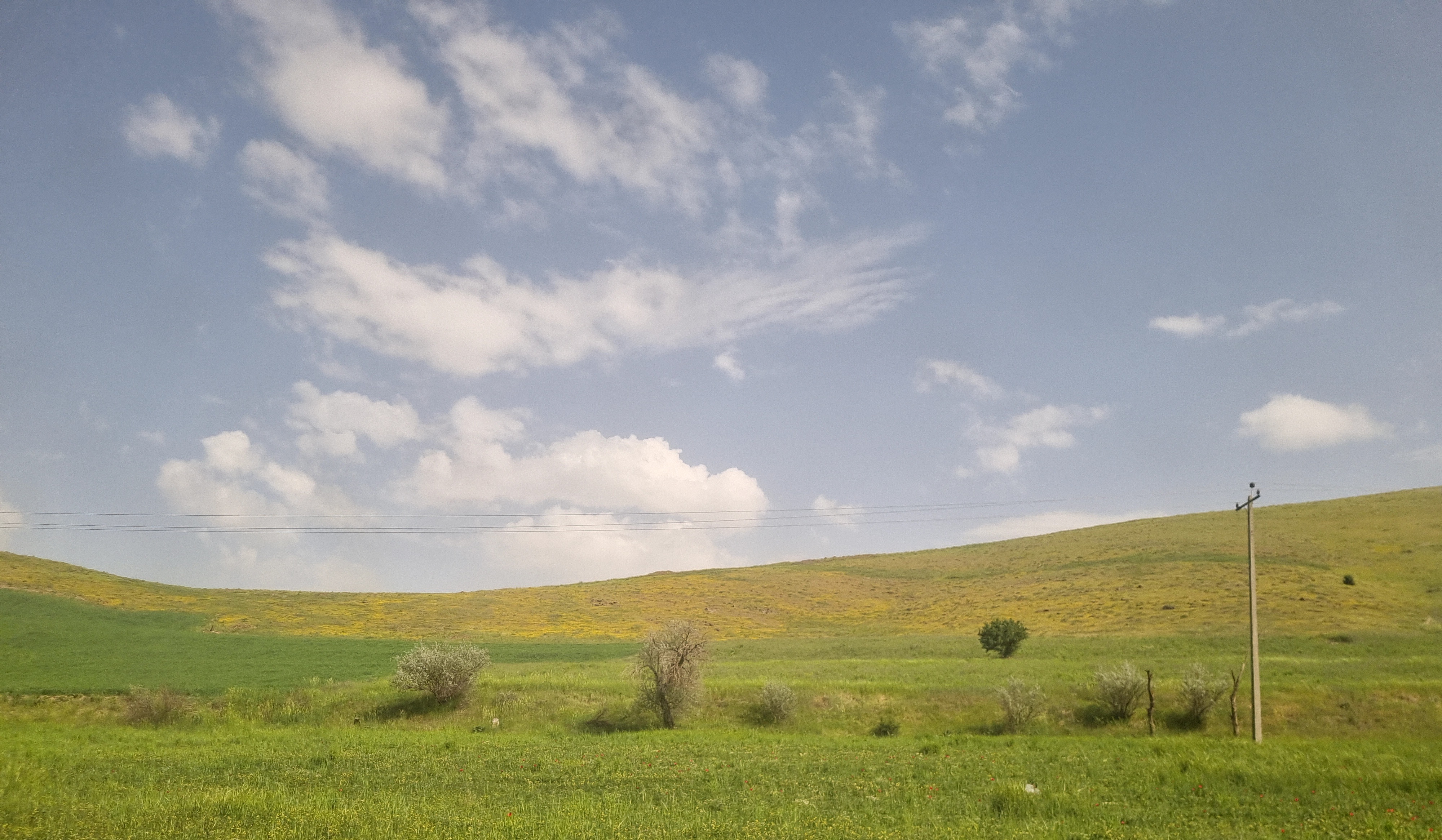
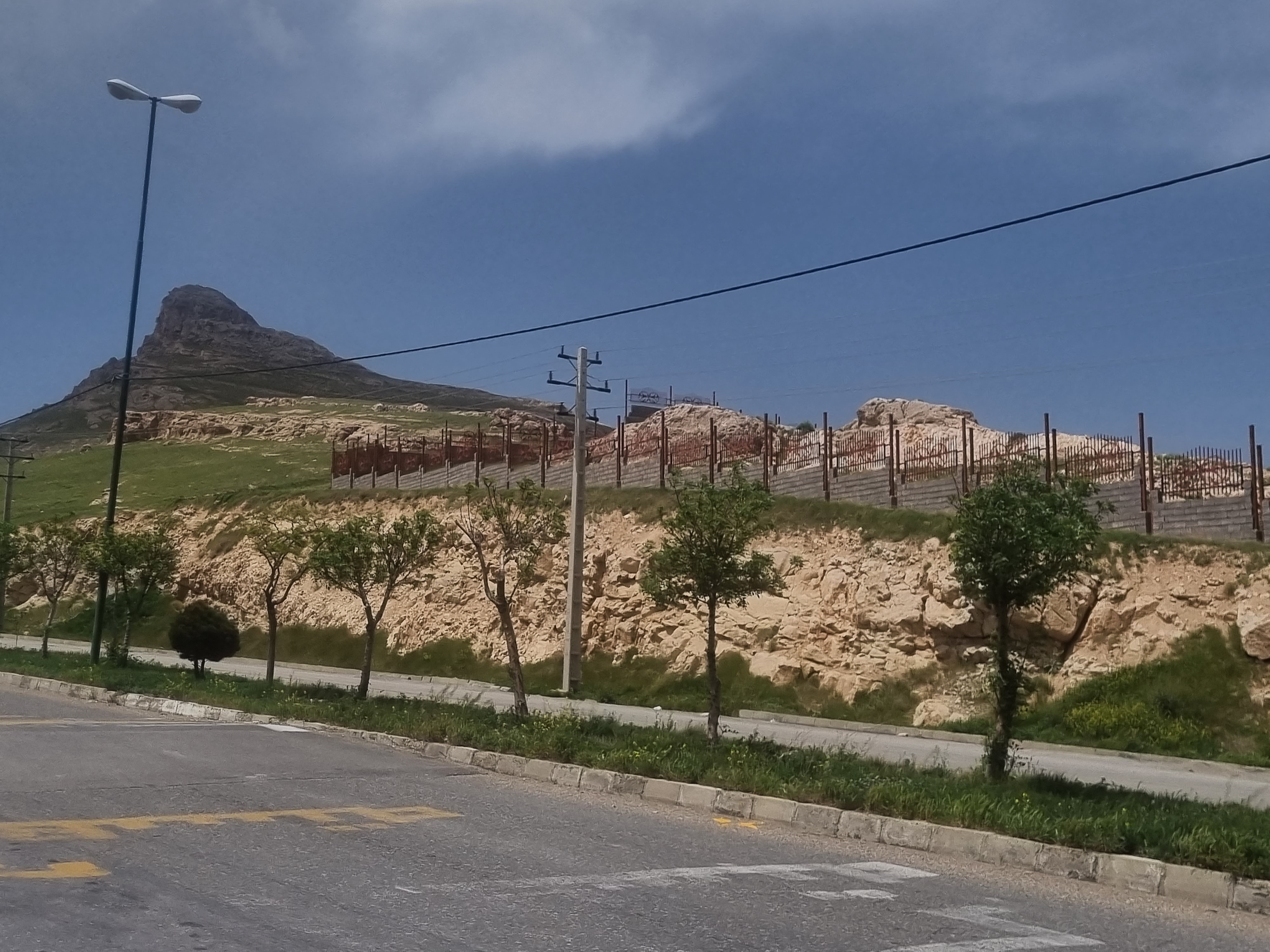
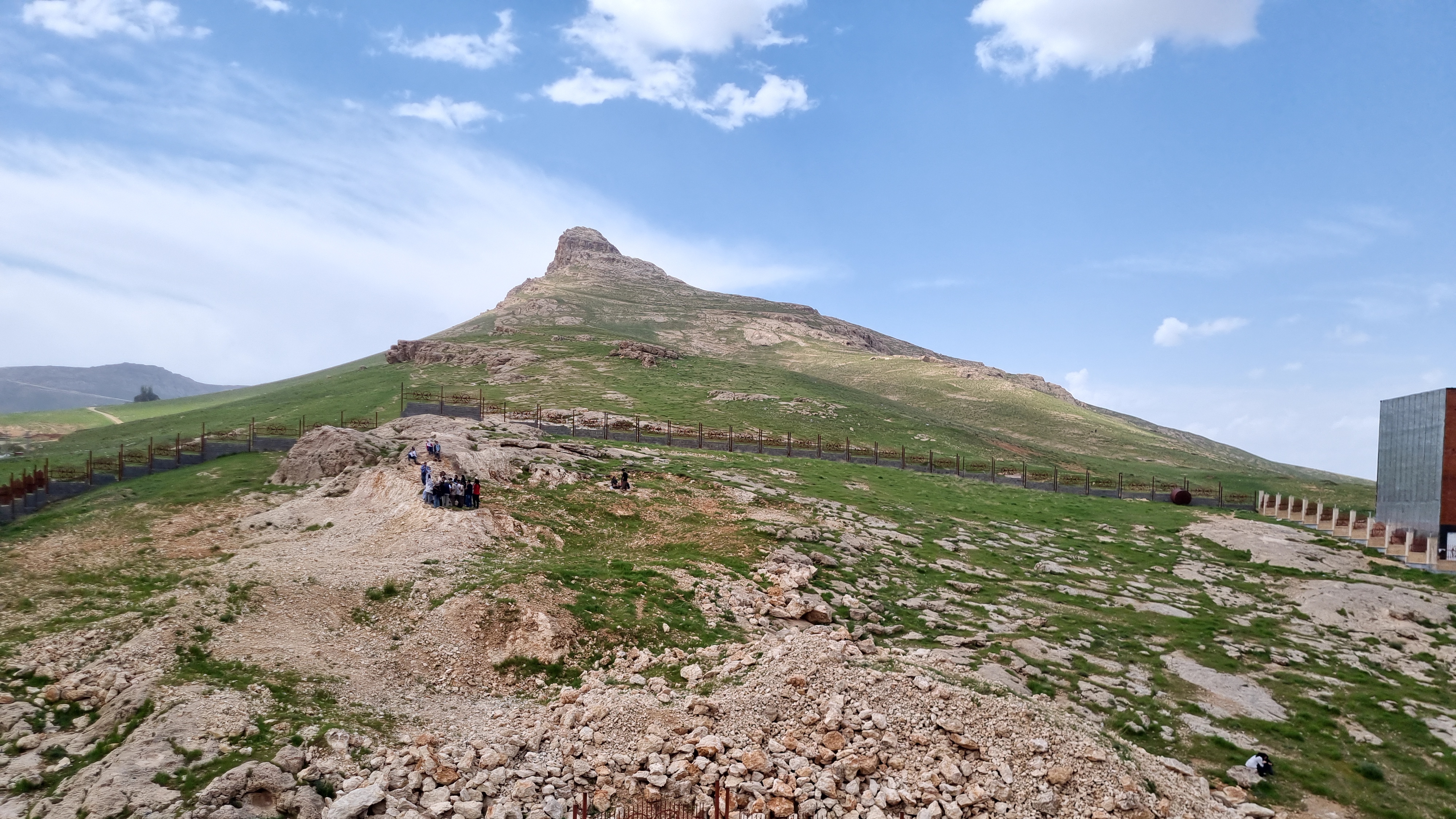
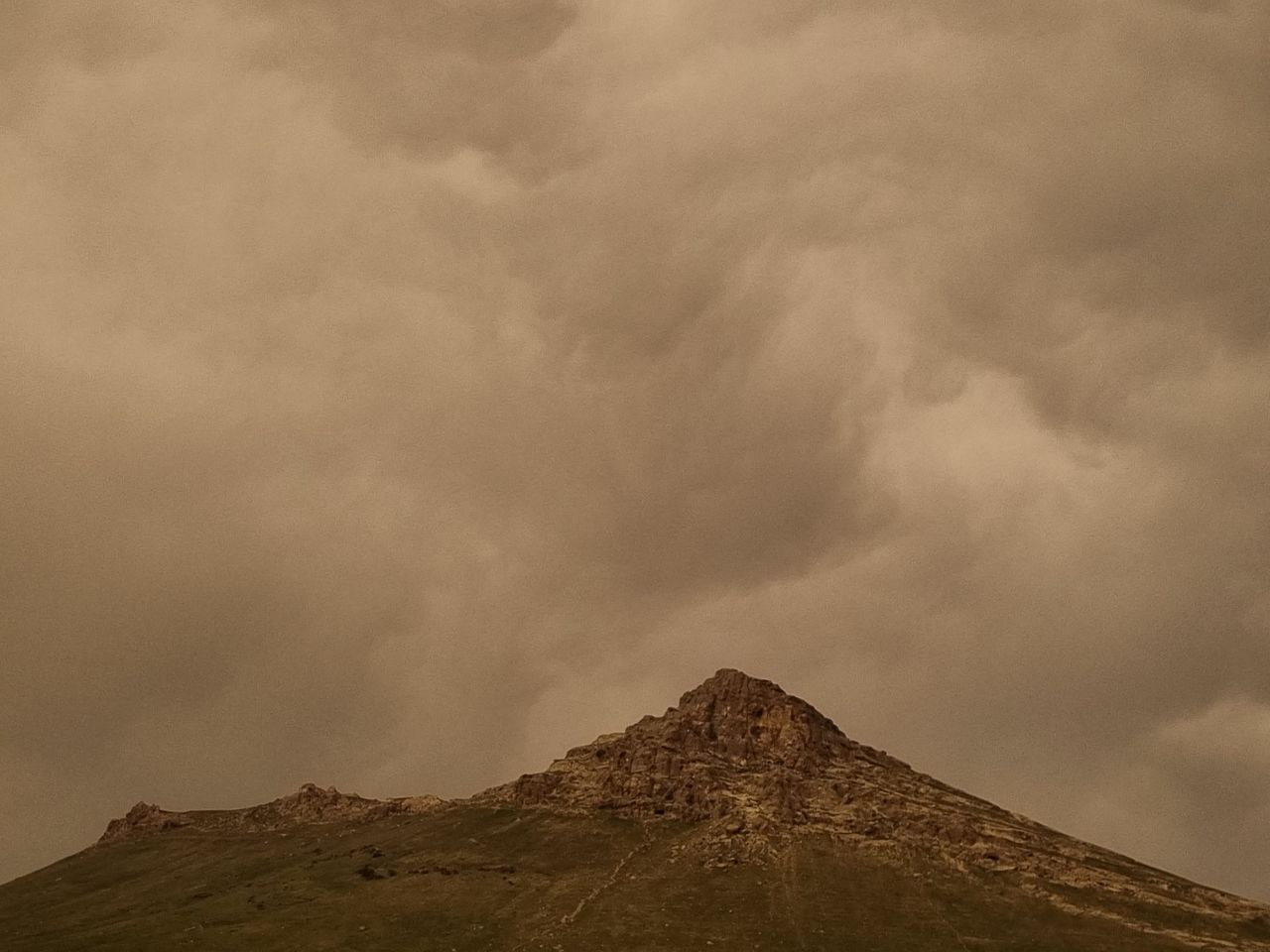
Coming back through Bijar in spring, I remembered the hills covered in snow on my first visit. The change in season was striking. The people I had met were equally memorable. They lived with a hard winter, yet welcomed me into their homes and shops. In the museum studio I kept returning to those experiences, and to the contrast between a soft, beautiful carpet and the hard work needed to make it.
 University field trip / photographs